African News
MTN urges unity amid South Africa-Nigeria tensions


MTN Group President and Chief Executive Officer, Ralph Mupita, has called for greater unity, stronger adherence to the rule of law and deeper economic integration across Africa, warning that rising anti‑immigrant sentiments and cross‑border tensions could undermine the continent’s development ambitions and deter investment.
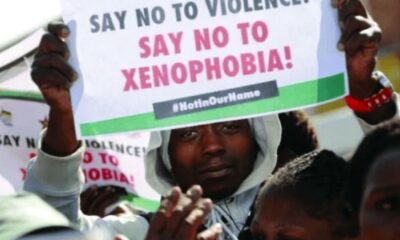
Mupita’s remarks come amid renewed diplomatic tensions sparked by anti-immigrant protests in South Africa and Ghana, which have drawn widespread criticism on social media and prompted threats of retaliatory actions against businesses associated with those countries in markets such as Nigeria.
Writing on LinkedIn ahead of a migration dialogue hosted by the Kgalema Motlanthe Foundation, Mupita noted that Africa’s long‑term prosperity would depend on its ability to strengthen social cohesion while accelerating economic cooperation among countries.
“The future of Africa depends on greater social solidarity, increasing economic integration and the observance of the rule of law,” Mupita said.

His remarks add to growing concerns among policymakers and business leaders over the economic consequences of recurring episodes of Afrophobia and xenophobic violence on the continent.
Analysts have long warned that such incidents damage Africa’s reputation among international investors at a time when governments are competing for foreign capital to support infrastructure, industrialisation and job creation.
The World Bank and other development institutions have repeatedly highlighted political instability and social unrest as factors that weaken investor confidence and reduce foreign direct investment inflows into Sub‑Saharan Africa.
For many observers, the latest tensions underscore the fragility of regional integration efforts under frameworks such as the African Continental Free Trade Area, which aims to create a single market for goods and services across the continent.
Mupita’s emphasis on the rule of law was particularly significant given longstanding concerns over the protection of foreign nationals and businesses operating across African borders.
Human rights groups have previously criticised authorities for failing to adequately prevent attacks on migrants and foreign‑owned businesses during outbreaks of xenophobic violence in South Africa. At the same time, businesses operating in host countries elsewhere on the continent have occasionally faced calls for boycotts or reprisals during diplomatic disputes.
Speaking to Bloomberg, Mupita said MTN had not experienced any direct impact on its operations from the recent tensions but remained alert to developments in key markets.
“We have not seen impacts specifically to our business, but we’re very sensitive in markets such as Nigeria and Ghana,” he said.
MTN, Africa’s largest mobile network operator by subscribers, has significant operations across several countries, including Nigeria, Ghana and South Africa, making regional stability critical to its business.
Industry observers note that the telecom giant’s footprint gives it a unique perspective on the importance of cross‑border cooperation and economic integration. The company serves millions of customers and supports extensive digital infrastructure that underpins commerce and communication across the continent.
Mupita argued that while governments have a responsibility to enforce laws and protect citizens and businesses, building lasting social solidarity requires stronger economic ties and shared prosperity among African nations. (Punch)
-

 Business15 hours ago
Petrol Hits ₦1,900/Litre as Depot Prices Surge Despite NNPC Cut
-
Metro16 hours ago
NYSC kidnap: Freed graduates get S’West posting offer
-
News16 hours ago
NAF crash: Wedding plans turn funeral tears as families await remains
-
Metro16 hours ago
Nigerian man’s nudity arrest sparks US political row
-
Politics16 hours ago
2027: Senate rules out fresh review of Electoral Act
-
Metro16 hours ago
Three Nigerian sisters committed suicide – UK coroner
-
Politics15 hours ago
ADC Unveils 38-Member Presidential Campaign Council Ahead of 2027 Elections
-
African News16 hours ago
Xenophobia: More Nigerians depart S’Africa