News
‘Climate change has altered rainfall patterns’ — FG asks Nigerians to prepare for floods

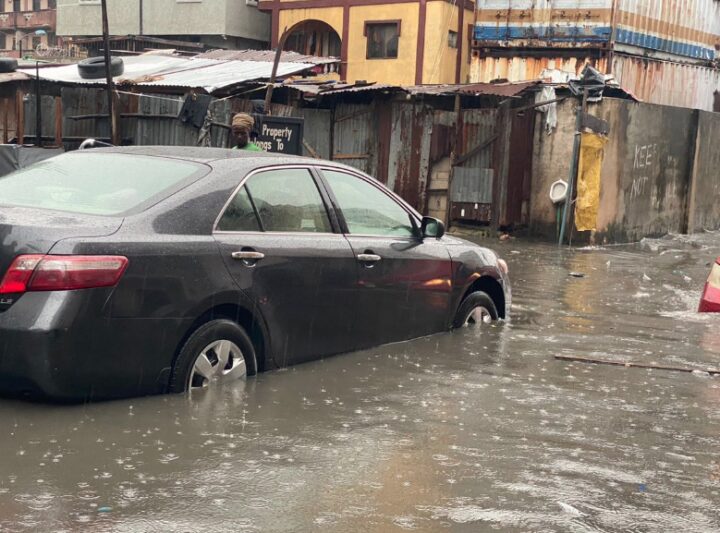
The federal government has urged Nigerians to begin immediate preparations for possible flooding as the rainy season intensifies.
In a statement issued on Wednesday in Abuja, Yussuf Kelani, special assistant to President Bola Tinubu on climate change matters, said climate change has significantly altered rainfall patterns and increased flood risks across the country.
Kelani said the recent flooding in Lagos and other parts of the country should serve as a wake-up call for governments, communities and citizens to prioritise disaster preparedness and climate resilience.
He said climate change is no longer a future environmental concern but a present-day national development challenge requiring coordinated action.

“Climate change has altered the frequency, duration and intensity of rainfall across many regions of the country,” he said.
“Instead of moderate rainfall spread over several days, communities increasingly experience short-duration but extremely heavy downpours that overwhelm drainage infrastructure, flood rivers, destroy roads and displace entire communities.”
According to Kelani, scientific evidence shows that rising global temperatures are increasing atmospheric moisture, resulting in heavier rainfall, more frequent flooding, coastal erosion, desertification and prolonged droughts in different parts of Nigeria.
He said the recent floods, which submerged roads, disrupted businesses and damaged homes in Lagos and other locations, underscored the growing vulnerability of urban centres to climate-related disasters.
Kelani said flood risks extend beyond Lagos, adding that communities along the Rivers Niger and Benue, as well as states in the north-central, south-south, south-east, parts of the north-west and coastal regions, remain highly vulnerable.
“Every flood is ultimately a human tragedy before it becomes an environmental statistic,” he said.
“As we move further into the rainy season, Nigerians living in flood-prone communities should begin preparations immediately. Waiting until floodwaters arrive is waiting too late.”
He called on state governments, local government councils, traditional institutions, religious organisations and community associations to strengthen public awareness campaigns, inspect drainage infrastructure and activate emergency response plans before the peak of the rainy season.
Kelani also urged Nigerians to adopt environmentally responsible practices, including clearing drainage channels, disposing of waste properly, planting trees and complying with weather forecasts and flood advisories.
The presidential aide said Nigeria should draw lessons from countries such as the Netherlands, Japan, Bangladesh, Kenya and Pakistan by investing more in modern drainage infrastructure, flood forecasting and early warning systems, sustainable urban planning and wetland restoration.
“Climate resilience begins with environmental responsibility,” he said.
“Floods cannot always be prevented, but disasters can be significantly minimised through planning, preparedness, engineering, public awareness and strong institutions.”
Kelani also identified climate education as a critical tool for reducing disaster risks, arguing that many Nigerians still view flooding only as heavy rainfall rather than the combined effect of climate change, poor urban planning, blocked drainage systems and environmental degradation.
“Climate literacy should become part of everyday public education. An informed population is a resilient population,” he said.
He added that the federal government’s renewed hope agenda remains committed to implementing the Climate Change Act, the energy transition plan and Nigeria’s nationally determined contributions to strengthen climate resilience.
However, Kelani said government efforts alone would not be sufficient to reduce flood risks.
“Government efforts can only succeed when matched by responsible citizen action. Climate change is no longer tomorrow’s problem. It is today’s reality,” he said.
“The actions we take today will determine whether future generations inherit safer, more resilient communities or continue to face recurring climate disasters.
“Together, through preparedness, responsible environmental stewardship, and sustained collaboration, we can reduce the devastating impact of flooding and build a Nigeria that is not only prepared for climate change but resilient enough to thrive despite it.”
Nigeria experiences widespread flooding during the rainy season, with climate change, rapid urbanisation, inadequate drainage infrastructure and indiscriminate waste disposal worsening the impact of heavy rainfall. (TheCable)
-

 Politics16 hours ago
If Buhari, A Retired General Could Not Wipe Out Insecurity, What Do You Expect Of Tinubu? – Yari
-
 Politics16 hours ago
Tinubu Campaign Spokesperson Breaks Silence On Wife’s Fresh Role At INEC
-
Business6 hours ago
FG targets ₦750tn capital market, seeks NNPC, NLNG listing
-
Politics16 hours ago
Stop sending money to relatives at home; tell them to vote for competent leaders – Obi tells Nigerians abroad
-
Business6 hours ago
I’d rather go to prison than lose my phone – Dangote
-
News16 hours ago
FCT Residents Make ‘Tough’ Adjustments Over Rising Cost Of Living
-
Politics16 hours ago
INEC Mum Over Rejection Of Tinubu Spokesperson’s Wife As Head Of Electoral Operations
-
News21 hours ago
JUST IN: Ex-Delta gov, Emmanuel Uduaghan is dead