African News
South Africa: Why Jacob Zuma won’t let go of the Guptas

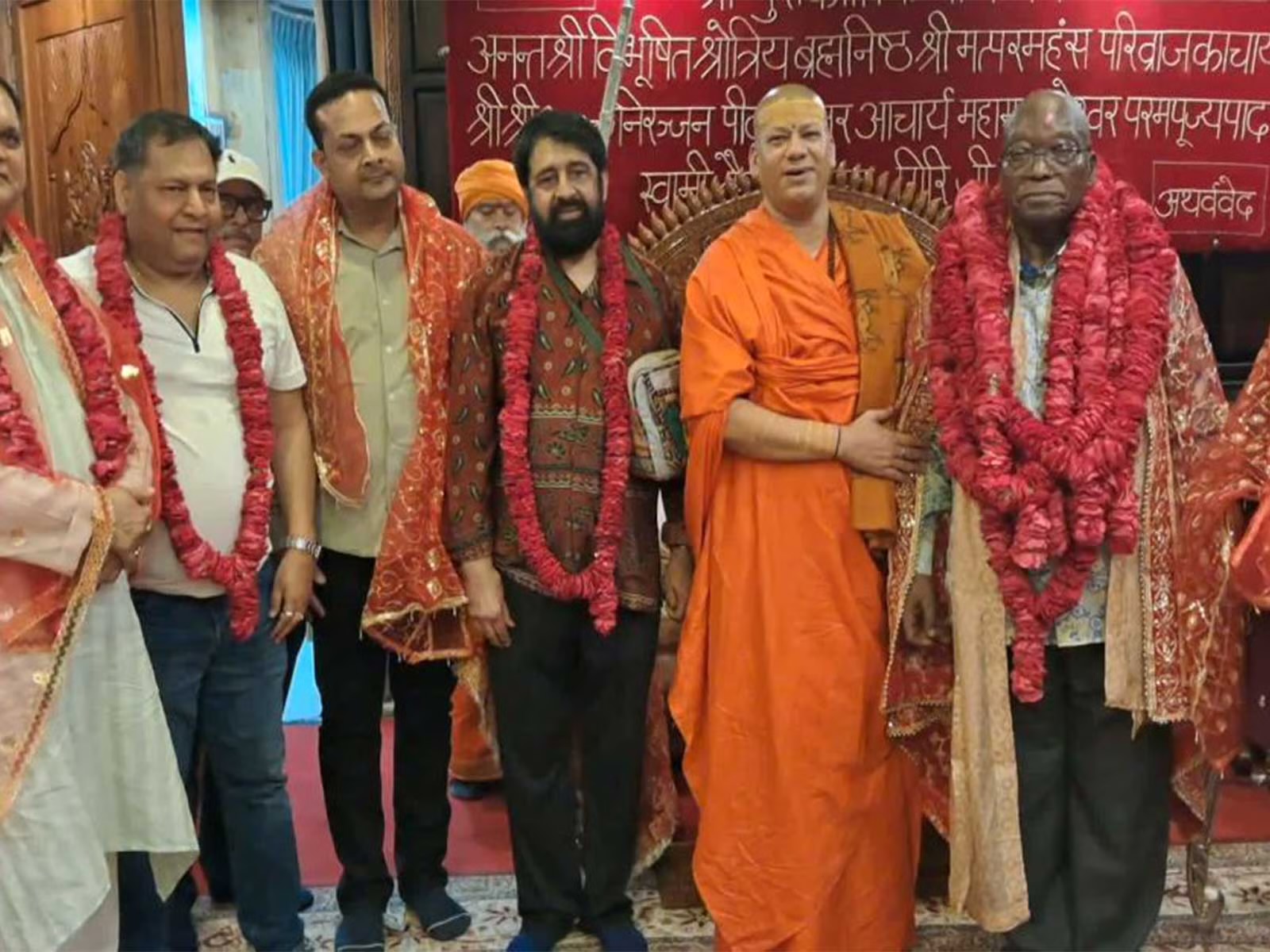
Photographs from Haridwar, India, showing the former president alongside Ajay Gupta – one of the three Gupta brothers whose close ties to Jacob Zuma became synonymous with state capture – have revived memories of one of the most controversial political alliances in democratic South Africa. What made things worse is that the visit had the appearance of having been officially sanctioned, as South Africa’s High Commissioner to India, Anil Sooklal, was pictured with them.
Zuma had travelled to northern India to attend a religious ceremony at a Hindu temple, a visit that critics described as politically insensitive. His uMkhonto weSizwe (MK) Party, however, dismissed the criticism, describing the visit as a longstanding spiritual pilgrimage that had been unfairly politicised.
“Zuma is a private citizen and is entitled to travel wherever he chooses,” party spokesperson Sifiso Mahlangu said, adding that the former president had attended the annual event for many years.
Mahlangu also accused critics of applying a double standard, noting that President Cyril Ramaphosahad met controversial figures including Zimbabwean businessman Wicknell Chivayo and Sudanese paramilitary leader Mohamed Hamdan ‘Hemeti’ Dagalo, without attracting similar public outrage.

South Africa’s Department of International Relations has been quiet on the role that Sooklal played during the visit, but the Democratic Alliance has submitted parliamentary questions to determine why he “rolled out the red carpet” for Zuma and Gupta.
Not an ordinary friend
For many South Africans, the name Ajay Gupta evokes far more than a personal relationship with Zuma. Together with his brothers, Atul and Rajesh, he became one of the central figures in the state capture saga that came to define Zuma’s presidency.
Their close relationship turned the Gupta name into shorthand for allegations of political patronage, corruption and the hollowing out of state institutions. Zuma and the Guptas have consistently denied wrongdoing. Although the warrant for Ajay’s arrest was withdrawn in February 2019, Atul and Rajesh remain wanted by South African authorities after efforts to extradite them from the United Arab Emirates failed.
The timing made the reunion in India especially awkward. As anti-immigrant rhetoric grows louderand politicians compete over who belongs in South Africa, Zuma was seen embracing perhaps the country’s most politically controversial immigrant businessman.
The images also handed his political opponents an immediate line of attack. ANC Secretary-General Fikile Mbalula accused Zuma of “spitting in the face of our law enforcement agencies” by meeting members of the Gupta family. “Instead of partying up a storm with runaway criminals, Zuma should inform the government where these people are who almost collapsed and captured our state,” Mbalula wrote on X on 1 July.
The alliance that poisoned an era
The Gupta story in South Africa began in 1993, when the three brothers established a business empire that eventually stretched across mining, media, technology and energy. For much of the post-apartheid era, they were regarded as a remarkable immigrant success story.
That changed dramatically after Zuma became president in 2009. It transformed the family from prominent businessmen into symbols of private influence at the heart of government.
The Zondo Commission, which Zuma established in January 2018 to investigate allegations of state capture, corruption and fraud in the public sector, later examined claims that the family used its access to the president and senior government officials to influence cabinet appointments, secure lucrative state contracts and shape decisions inside key state institutions.
As political pressure mounted and Zuma was forced to resign in February 2018, the political tide turned decisively against him and his long-time allies. The Guptas began offloading their South African assets before leaving the country as law enforcement agencies and other state institutions intensified investigations.
The Gupta name soon became shorthand for fears that unelected businessmen had gained extraordinary influence over the state while public institutions were hollowed out from within. Former ministers and senior ANC figures said that members of the family had discussed cabinet appointments with them, while state-owned enterprises became central to claims of political interference, patronage and looting.
The fallout fractured the ANC, hastened Zuma’s downfall and turned “state capture” into one of the most politically charged phrases in democratic South Africa.
The baggage won’t go away
Zuma has never distanced himself from the Guptas, describing Ajay as “a brother and friend”. Since leaving office, Zuma has cast himself as a victim of political persecution. Through the MK Party, he has returned to frontline politics, saying that South Africa declined after he was forced out. He repeated that message in India on Friday, blaming South Africa’s post-2018 leadership for “messing up” the country and “not taking the country forward”.
But analysts say every public appearance with the Guptas makes that argument harder to sustain. While Zuma wants voters to judge him against the current government’s record on unemployment, crime, sluggish growth, failing municipalities and deteriorating public services, photographs with Ajay inevitably pull the spotlight back to the scandal that came to define – and ultimately unravel – his presidency.
“For many South Africans, the Guptas are inseparable from allegations of corruption, institutional decline and economic mismanagement, says Jervin Naidoo, political analyst at Oxford Economics Africa. “Any renewed public association with them risks reviving those negative perceptions and remains a major liability for Zuma’s political legacy.”
Ryan Cummings, director at South Africa-based risk management firm Signal Risk, says the meeting suggests Zuma continues to put his personal loyalty to the Guptas ahead of what is best for his party and the country. “He has left his MK Party scrambling to defend his rendezvous with the Guptas, who, across South Africa’s political spectrum, remain highly maligned figures,” says Cummings.
A regional asset, a national liability
However, the political cost of Zuma’s relationship with the Guptas is not felt equally across South Africa. Political economist Phumlani Majozi says the former president’s enduring popularity in KwaZulu-Natal means the issue carries far less weight in the province.
“Zuma remains highly popular in KwaZulu-Natal, where the MK Party is the strongest political force,” Majozi says. “Within the province, Zuma’s association with the Gupta family is not a political liability because he enjoys deep-rooted and loyal support.”
Nationally, however, Majozi agrees that the calculation changes. “His continued ties with the family doom his national ambitions, as these connections cause discomfort to many South Africans. This association derails any political comeback he might have hoped for on a national scale.”
The immigration contradiction
If the reunion was awkward because of state capture, it was also awkward because of the moment in which it happened.
South Africa is once again arguing about foreigners. Anti-immigrant groups, some with business links to Zuma, have marched through townships and city centres demanding the removal of undocumented migrants. Political parties have hardened their language on immigration, while foreign-owned businesses in some communities have shut their doors for fear of attacks.
Then came the photographs from Haridwar. As much of the political debate focused on undocumented Zimbabweans, Somali traders and Ethiopian shopkeepers, Zuma was standing beside the most controversial foreign businessman. The Guptas have also been guilty of being treated preferentially by the Department of Home Affairs to obtain South African passports. The corruption in the issuance of immigration documents has also been at the heart of the grievances of those who marched against immigrants.
For Cummings, the reunion highlights the contradiction at the heart of Zuma’s politics. “The juxtaposition of a political leader who is a key component of an intensive anti-immigration movement meeting with a foreign national whose engagement in South Africa was associated with state capture and the degradation of public service provision is stark,” he says.
Naidoo argues that appearing publicly with Gupta may also have helped reinforce the MK Party’s stance. “The party has consistently argued that its focus is on undocumented migrants rather than foreign nationals in general,” Naidoo says. “Appearing alongside Gupta, an Indian-born businessman, reinforces that narrative and helps counter claims that the movement is driven by ethnic or racial prejudice.”
Why Zuma continues to stand by the Guptas remains a matter of debate. Naidoo says that by continuing to appear with the family, Zuma indicates that he has never accepted the state capture narrative that defined his presidency.
“Zuma has consistently denied that the Guptas captured the state and has portrayed many of the allegations against them as politically motivated,” Naidoo says. “By continuing to associate with them, he is signalling that he has not changed that position, even though it remains politically controversial.” (The Africa Report)
-

 Sports22 hours ago
Regulator has ‘power’ to force Man city sale if charges upheld
-
News22 hours ago
Fasoranti: My father had covenant with God to die at 100 – Son
-
News22 hours ago
Student loans voluntary, not compulsory – NELFUND tells tertiary institutions
-
Opinion22 hours ago
Can Tinubu campaign without campaigning?
-
News22 hours ago
After 8-Month Uncertainty, Mexico Clears Omokri To Serve As Ambassador
-
Politics20 hours ago
Denying Tinubu Second Term Could Trigger Crisis – Ex-NAHCON Chairman
-
News58 minutes ago
Ebola: Don’t panic – FG tells Nigerians
-
News20 hours ago
Military Replaces Pension Board Chair Amid Faceoff With Veterans