News
Danladi Umar, the tribunal chairman who acquitted Tinubu, is now on trial

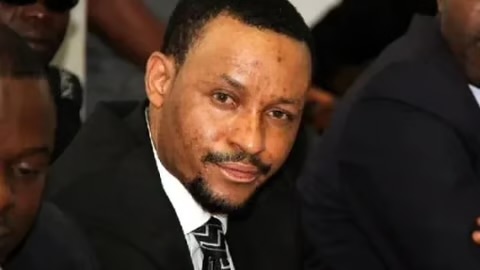
When former chairman of Nigeria’s Code of Conduct Tribunal (CCT), Danladi Umar, was arraigned on corruption charges and remanded in prison in Abuja last Thursday, it marked a sharp turn for a man who had spent more than a decade deciding the fate of some of the country’s most powerful public officials.
For more than a decade, Umar headed the special tribunal responsible for trying public office holders accused of false asset declarations or failing to declare their assets. At the height of his influence, one report noted, he issued notices for the arraignment of six former governors in a single day.
Among those who appeared before him were President Bola Tinubu, former Senate president Bukola Saraki and former Chief Justice Walter Onnoghen.
Of all the cases he handled, however, none has become more entwined with his own political story than Tinubu’s. In 2011, Umar dismissed corruption charges brought against Tinubu by the then ruling Peoples Democratic Party (PDP), freeing the country’s most prominent opposition leader at the time. Five years later, Umar said the tribunal had been under “serious influence” to convict Tinubu but resisted the pressure.

Thirteen years after that ruling, Tinubu became president, and Umar was out of a job. In 2024, Tinubu removed him from the tribunal, ending one of the longest and most politically consequential tenures in Nigeria’s judicial system.
“Ordinarily, one would have expected a reciprocal treatment,” says Yemi Omodele, a Lagos-based lawyer. “However, what I see at play is the separation of powers. In my view, Umar’s current trial is entirely a judicial process, not political.”
Journey to the bench
Umar, a native of Bauchi State, was appointed chairman of the Code of Conduct Tribunal by President Goodluck Jonathan in 2011, succeeding Justice Murtala Adebayo Sanni, who had died after barely a year in office.
At 36, he was thrust into one of Nigeria’s most politically sensitive judicial posts. The tribunal deals almost exclusively with senior public officials. Often, the defendants before the tribunal are either senior civil servants or former political office holders, making the proceedings as much political as judicial.
Within months of taking office, Umar found himself presiding over what would become the defining case of his career.
On 21 September 2011, the Jonathan administration brought Tinubu before the tribunal, accusing the former Lagos governor of operating 10 foreign bank accounts in breach of the Code of Conduct for Public Officers.
The case lasted just two months and nine days. Umar threw out all three charges, clearing Tinubu of wrongdoing. He ruled that the Code of Conduct Bureau (CCB) had failed to invite Tinubu for interrogation before filing charges, a procedural requirement that deprived the tribunal of jurisdiction.
“Consequently, it will be proper for me at this stage to cease further exercise of jurisdiction since the condition precedent was not met before the charge was filed,” Umar said.
Five years later, he disclosed that the tribunal had faced intense pressure over the politically charged case.
“In the case of Tinubu, we were under serious influence, but we did what we had to do and discharged,” he said in 2016.
The remarks reinforced the perceptions of the CCT as a courtroom where law meets politics. A conviction might have impacted Tinubu’s political trajectory, as by Nigerian law, a convict is barred from seeking public office for 10 years.
Different defendants, different rules
Umar’s profile rose further after Muhammadu Buhari came to power in 2015, promising to fight corruption. His tribunal quickly became one of the main arenas for some of Nigeria’s biggest political showdowns.
Among the first to appear before Umar was Saraki, whose relationship with Buhari had soured after he defied the APC leadership to win the Senate’s top job. Saraki had also fallen out with Tinubu after opposing the Muslim-Muslim ticket that would have paired Buhari with Tinubu in the 2015 presidential election.
Prosecutors accused Saraki of making false asset declarations while serving as governor of Kwara State between 2003 and 2011. His lawyers challenged the case, arguing that CCB had failed to invite Saraki for questioning before filing charges, the same procedural flaw that had led Umar to dismiss Tinubu’s case four years earlier.
Umar rejected the objection.
“On the discharge of the former Lagos State governor by the tribunal some years ago simply because the CCB failed to fulfil the condition precedent, we have since realised that we acted in error in discharging Tinubu on those grounds and we have since departed from that error,” he said.
The case went ahead, becoming one of the most closely watched political trials of Buhari’s presidency. But in June 2017, Umar acquitted Saraki, dismissing all 18 charges as “incurably defective”.
The end of the run
Umar appeared to see himself at the tribunal for decades to come. In 2019, during an exchange with journalists, he threatened to jail reporters for inaccurate coverage of proceedings and keep them there “until I retire – that is about 28 years from now.”
Instead, his tenure unravelled far sooner than he expected. After Tinubu became president in 2023, the new administration moved to replace him.
A year into his presidency, Tinubu announced the appointment of Mainasara Umar Kogo as chairman of the tribunal. A terse statement issued by the presidency on 13 July 2024 made no mention of Umar’s status.
Umar refused to step aside, insisting that his tenure had not expired. The standoff that followed exposed unresolved constitutional questions over how the tribunal’s chairman could be removed.
Under the constitution, the National Judicial Council (NJC) recommends candidates for appointment as tribunal chairman, while a serving chairman can only be removed after a resolution of the National Assembly.
Four months into the deadlock, Tinubu’s long-time ally and Senate majority leader Opeyemi Bamidele sponsored a motion seeking Umar’s removal, citing numerous petitions against him.
Among the allegations were his 2021 brawl with a security guard at a shopping complex in Abuja. He was also accused of staying away from duty even though his absence coincided with Tinubu’s appointment of a replacement.
The constitutional process unfolded in reversal. In June 2025, nearly a year after Tinubu had announced Kogo’s appointment, the NJC formally recommended him for the position.
From judge to defendant
Last Thursday marked a further dip for Umar, when he was arraigned before the Economic and Financial Crimes Commission and remanded in prison.
Few people are likely to have been more gratified by the turn of events than former Chief Justice Onnoghen, whom Umar aided Buhari to remove from office, through a controversial ex parte order, which the Court of Appeal later described as “clandestine manoeuvre”.
Umar went on to convict Onnoghen in 2019, ordering his removal from office as well as the forfeiture of his assets.
His legal team hailed Tinubu’s government for the “candour and forthrightness” demonstrated in the case, while rebuking Buhari.
For Omodele, however, Umar’s predicament should not be read simply as political revenge.
“I don’t share the view of those seeing Umar’s trial as a witch-hunt,” he tells The Africa Report. “ In the eye of the law, Umar is presumed innocent until proven guilty. Just as Tinubu was discharged and acquitted, Umar may also be discharged and acquitted.”
(The Africa Report)
-

 News16 hours ago
Court Orders Wike’s Son Jordan to Produce American Passport in $2.1m Abuja Land Suit
-
Politics15 hours ago
Pantami wins PDP repeat governorship primary in Gombe
-
News16 hours ago
NEMA deploys rescue teams as floods ravage states
-
News15 hours ago
After 68 Days Vacation, Lawmakers Embark On Another Recess
-
Metro16 hours ago
Lagos teen detained over slippers freed after four years
-
Politics15 hours ago
2027: Which running mate brings the most votes – Shettima, Amaechi or Kwankwaso?
-
News16 hours ago
Mixed reactions as FG demarcates First Niger Bridge
-
Sports16 hours ago
AFCON Qualifier: Guinea-Bissau Humble Super Eagles 3-0