News
PFIPC scandal: Fake State House letter helped fictitious agency gain recognition – Accountant-general

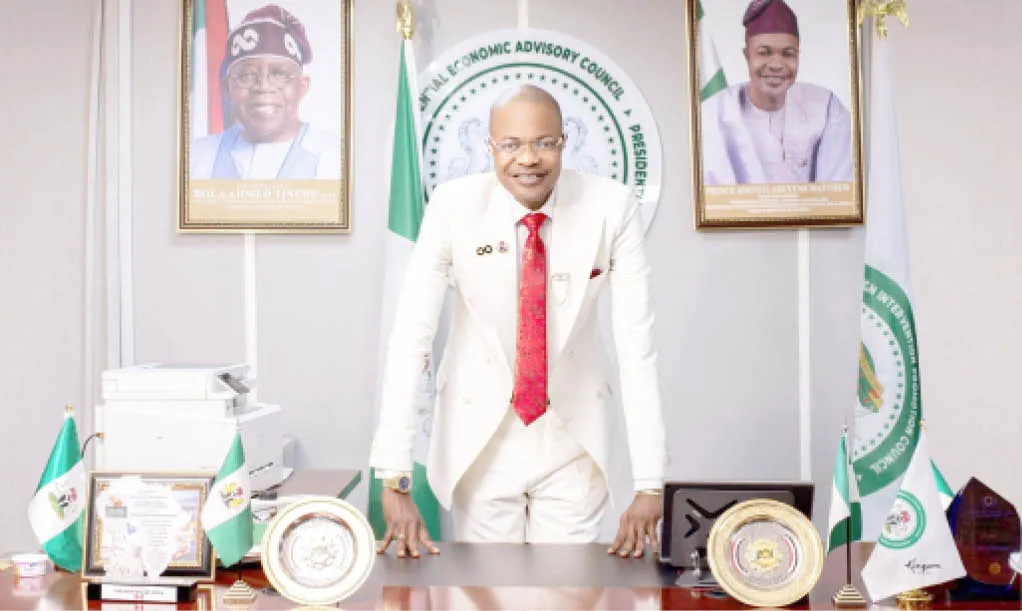
Fresh revelations emerged on Monday at the House of Representatives investigative hearing into the alleged operation of a fake presidential agency, as lawmakers uncovered how a letter purportedly originating from the State House was allegedly used to secure official government recognition for the controversial Presidential Economic Advisory Council.
The accountant-general of the Federation, Shamseldeen Ogunjimi, told the House committee that the Office of the Accountant-General acted on what appeared to be a genuine State House correspondence requesting the creation of an administrative code for the council, only for investigations to later reveal that the letter did not originate from the Presidency.
Presenting his report before the committee, Ogunjimi said the first interaction between his office and the purported council occurred in November 2024.
According to him, a letter dated November 7, 2024, bearing a State House reference number, requested the creation of an administrative code for the Presidential Economic Advisory Council for budgeting, accounting and reporting purposes.

He explained that, following established procedures, the Office of the Accountant-General created the administrative code and communicated the approval back to the State House while copying the Office of the Auditor-General.
He said the office subsequently received additional requests from the purported council, including applications for self-accounting status, staff deployment, Treasury Single Account (TSA) and domiciliary accounts, and funding approvals.
However, he stressed that despite the processing of some administrative requests, no government funds were ever released to the council.
“It is important to note that no funds were released under salaries, overhead, capital, or any form of intervention or special allocation to the council,” Ogunjimi told lawmakers.
The accountant-general disclosed that although the council requested an establishment grant of N27.4 billion, the request was never approved because there was no budgetary provision to accommodate it.
He also explained that while two domiciliary accounts were opened by the Central Bank of Nigeria for inflow purposes, they never became operational because the council failed to meet regulatory requirements.
During the hearing, lawmakers questioned how the purported agency successfully navigated government processes without raising suspicion.
Responding, Ogunjimi made a startling revelation that the original letter requesting the administrative code was not actually issued by the State House.
“The letter that was received by the Treasury… was respectfully addressed as coming from the State House,” he said.
“That letter was never issued by the State House.”
The disclosure prompted committee members to describe the correspondence as a “hijacked” State House letter allegedly used to mislead government institutions into processing requests for a non-existent agency.
Lawmakers also sought explanations on how staff originally posted to the Office of the Chief Economic Adviser to the President eventually became attached to the purported council without the knowledge of the Treasury.
Ogunjimi explained that two officers deployed to the Office of the Chief Economic Adviser in 2010 and 2013 remained there after the office was allegedly taken over by the new council, without any formal notification to the Office of the Accountant-General.
“It was never assumed or written to us that those two officers were being taken over,” he said.
“The staff also never reported to the office to say that another council had taken over the office and the name had changed.
“As far as I was concerned, we were dealing with a new agency, not the Office of the Chief Economic Adviser.”
He further revealed that when the purported council later requested the deployment of five additional staff, the Treasury approved only three because officials considered the organisation too small to justify the number requested.
“It was when all this matter came to light that I got to know that two of our staff were actually working or being absorbed by the agency.
“We never knew. We believed, based on the records available to us, that those officers were still with the Office of the Chief Economic Adviser,” he said.
The hearing forms part of the House investigation into allegations that forged presidential approvals, State House documents and other government records were used to establish and operate the purported Presidential Economic Advisory Council.
The committee has already received evidence from the Nigeria Police Force, which confirmed that criminal charges have been filed against the prime suspect, Adeyemi Martin, over alleged conspiracy and fraud.
The House committee has also directed the Inspector-General of Police to produce Adeyemi before lawmakers on Wednesday to answer questions over the alleged forgery of official government documents and the operation of the purported presidential agency.
-

 Politics18 hours ago
If Buhari, A Retired General Could Not Wipe Out Insecurity, What Do You Expect Of Tinubu? – Yari
-
 Politics18 hours ago
Tinubu Campaign Spokesperson Breaks Silence On Wife’s Fresh Role At INEC
-
Business7 hours ago
FG targets ₦750tn capital market, seeks NNPC, NLNG listing
-
Politics18 hours ago
Stop sending money to relatives at home; tell them to vote for competent leaders – Obi tells Nigerians abroad
-
Business8 hours ago
I’d rather go to prison than lose my phone – Dangote
-
Politics18 hours ago
INEC Mum Over Rejection Of Tinubu Spokesperson’s Wife As Head Of Electoral Operations
-
News18 hours ago
FCT Residents Make ‘Tough’ Adjustments Over Rising Cost Of Living
-
News23 hours ago
JUST IN: Ex-Delta gov, Emmanuel Uduaghan is dead