Opinion
Obi and the damning Nigerian reality

I am generally an optimist — a “Naija-optimist”, if you will — but I am also intelligent enough to understand that the country is troubled on every side and we are not going to get out of the woods in a jiffy. We left too many reforms and adjustments too late. For too long, we lacked focus. We kept taking one step forward and two steps backward for decades, particularly since this democratic order berthed in 1999. Nigeria is not irredeemable but even with the best of presidents and the best of intentions, we need to manage our expectations of a magical turnaround. It will take more than one president and one term to turn Nigeria around. Unpopular opinion but that is the naked reality.
Typically, election seasons are when politicians talk a good game. They promise to eradicate all the mosquitos and cockroaches and threaten to turn Nigeria into Dubai and Paris combined. But when they get the job, the story begins to change. We were all witnesses to the poetic campaign of the APC in their quest for power in 2015. You would think that by 2016, every Nigerian road would have been paved, every poor citizen saved, every hospital refurbished, every school distinguished, and every terrorist extinguished. When they eventually got hold of power and words needed to be translated to action, they started stammering and saying the PDP destroyed Nigeria “for 16 years”.
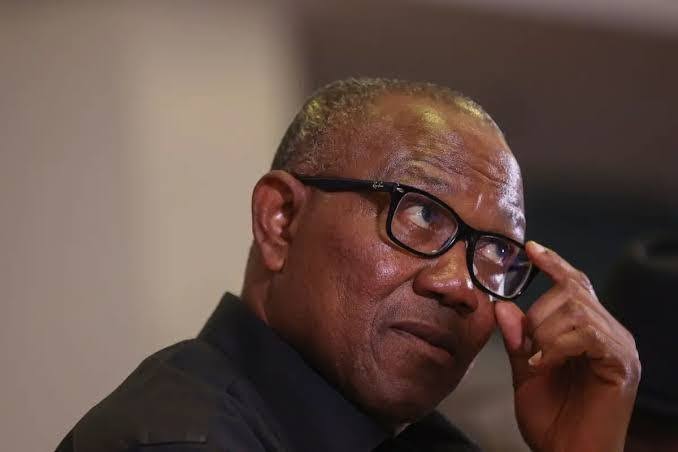
It seems Obi and his supporters are borrowing from the APC-style El Dorado promises. Obi says he needs just four years to “change” Nigeria. Wow! That is quite a commitment to make. He is either grossly underestimating Nigeria’s hydra-headed challenges or maybe he possesses an amazing capacity to turn stone to bread. It is comforting that Obi is now admitting that at least one thing cannot change in four years. His fans may not like it but it was also needed to jolt them to reality. I repeat: Nigeria will not change overnight. It is hard to rebuild in four years what was destroyed across decades. But, as I often say, we just must be sure we are facing the right direction day by day.

Now, to the second issue: Obi says it is impossible to attain uninterrupted power supply within four years. I find this scary — and this has nothing to do with him. President Olusegun Obasanjo was in office for eight years. He could not fix the sector. President Umaru Musa Yar’Adua was there or thereabouts for three years, same story. President Goodluck Jonathan held the fort for five years, no dice. President Muhammadu Buhari did not change the story in eight years. President Bola Tinubu has been in charge for three years and here we are. And Obi is now saying uninterrupted power cannot be assured by 2031 if he were elected president in 2027. What is so special about this sector?
It is not as if we are currently at ground zero. We have the power plants with unutilised capacities. We have the transmission lines that cover the entire country. We have the distribution facilities in virtually every community. Why should it take forever to fix the sector and end outages once and for all? Why can’t we improve on what we have on the ground and ramp up supply within four years? Even if Nigeria did not have electricity at all in 1999 — as in, not a single cable laid or pole hoisted — is 27 years not enough to have built all the infrastructure from scratch, with every village electrified and power supply uninterrupted, given the billions of dollars we have been sinking into the sector?
I travel quite a lot and I have to confess that I have not been to any country where power outages are near as frequent as in Nigeria. Even small West African countries enjoy stable power, at least in their major cities. South Africa lapsed into a severe power crisis a few years ago but tackled the issue in no time. So why is Nigeria so different? I wish I had the answers. Industry experts will explain and explain but there is no evidence. As Obi himself once jokingly told me, “Ghanaians don’t know how many megawatts their country is producing. All they know is that they flip their switch and the light comes on. When ordinary people begin to discuss megawatts, then something is terribly wrong.”
In fairness to Obasanjo, he tried to address the power issue during his second term. He launched the power sector reforms in 2005. Under his government, the federal government built new power plants for the first time in decades: Geregu, Papalanto, Alaoji and Omotoso. But many of the contracts were awarded apparently with the funding of the 2007 elections in mind, so due diligence and proper planning were bypassed in many cases. In fact, we were building power plants without thinking of how they would get gas supply. Such was the indecent haste. There was the scandalous case of Alaoji: the bridge leading to the site was not strong enough to bear the weight of the turbine.
On assuming office in 2007, Yar’Adua, who had vowed during his campaign to declare emergency in the power sector, put all Obasanjo’s projects on hold in order to probe the contracts. He had campaigned on the promise of promoting transparency, rule of law and due process. The turbines were rotting away at the ports while “rule of law” was making newspaper headlines, and we spent the next two years arguing over whether or not Obasanjo did the right thing by unilaterally spending savings from the excess crude account on the projects. By the time Yar’Adua asked contractors to resume work, the ship had sailed. We had lost precious time in what was a national emergency.
The Nigerian factor also came into play: many communities devised schemes to stall the projects by trying to extort the contractors over the right of way for gas pipelines and transmission lines. Suddenly, new houses started springing up on corridors for which the right of way had been secured and compensation fully paid. Some communities demanded fresh compensation. Some youths claimed the initial payments were for the elders; they wanted their own. It was another battle for the national cake. After many years, the issues were resolved and the projects were completed, but the privatisation by the Jonathan administration was a total mess. We are paying the price till today.
Thanks largely to Obasanjo’s “illegal” use of excess crude savings, our generation capacity improved significantly. We can now produce over 10,000mw. This is still insufficient for a country of 230 million people, but when you realise that we were stuck at 3,000mw for decades while our needs were exploding, then the improved capacity should make sense. Sadly, the national grid — old, tired and deficient — cannot handle more than 5,000mw. It is like you have an estate that requires 100kVA and you have generators that can produce just 50kVA — but you can only send 25kVA to the houses. Many GenCos are now dealing with managing idle turbines that were engineered to be active 24/7.
Meanwhile, the DisCos themselves are not investing enough to improve distribution, which is the end point at which Nigerians can enjoy power supply. Their inefficiency might have stemmed from the misconception before privatisation that power would be as lucrative as telecoms. On the other hand, the tariffs do not cover the costs while energy theft and unsettled bills remain a headache. What the DisCos have done in recent years is to divert available power to “Band A” customers who pay cost-reflective tariffs. Every single thing seems complicated in the power sector. This does not mean the sector is beyond redemption but we can see that the problems are not just technical.
Charging cost-reflective tariffs across the board may be an obviously logical step, but will that not send another shock to the system — like the removal of petrol subsidy? Leaders are faced with these tough choices all the time. The problems and challenges facing the Federal Republic of Nigeria are not just technical. They are deeply cultural and highly political. And when the development problems of a country are entangled in a cultural and political web, they cannot be solved with rhetoric. It will take more than poetry to untangle the web. I, nonetheless, concede that it is election season and politicians must promise us heaven and earth. But some of us stopped being gullible ages ago.
AND FOUR OTHER THINGS…
BALANCING ACT
Governor Uba Sani of Kaduna state has named Mr Jerry Adams, the executive chairman of the Kaduna State Internal Revenue Service (KADIRS), as his running mate. Normally, this is no headline. However, religious balancing in the delicately poised state has been on the ropes since 2019 when then-governor Nasir el-Rufai decided to go with a Muslim-Muslim ticket. Unlike at the national level where fielding a northern Christian as running mate could pose an electoral risk, Kaduna state had no justification to abandon its religious balancing. Even though Muslim-Muslim tickets won the last two elections, the political tension has been obvious. I commend Sani for playing good politics. Inclusion.
POLICE AND POLITICS
Two weeks to the Osun governorship election, key leaders of the Accord Party, the ruling party in the state, are in trouble. Alhaji Teslim Igbalaiye, secretary to the state government, was arrested by the police for “vote-buying” — although the election is still two weeks away. This must be some record. Governor Ademola Adeleke has alleged that over 60 leaders of the party were arrested by the police and transferred to prisons in Abuja and Nasarawa. It is very clear that those using the police in Osun state have unfettered access to federal powers — and do I need to say they are the APC leaders? People say this abuse will stop if we have state police, but should the police be partisan at all? Sad.
70 HEARTY CHEERS
Dr Muhammed Alimi AbdulRazaq, founder of the Bridge House College, Lagos, clocked 70 on Friday. The first time I met him, as I recall, was when I went to interview his father, the late Alhaji AGF AbdulRazaq, ahead of his own birthday in 2004. Dr AbdulRazaq was later appointed the executive commissioner for legal, licensing and enforcement at the newly established Nigerian Electricity Regulatory Commission (NERC). The celebrated promoter of knowledge holds a PhD in law from the University of Hull, UK. The Mutawali of Ilorin Emirate has endowed the AGF AbdulRazaq Professorial Chair in Public Law at the University of Ilorin. Here is to more fulfilling decades ahead. Cheers!
NO COMMENT
Mr Shamseldeen Ogunjimi, accountant-general of the federation, has added one more embarrassing dimension to the Presidential Foreign Intervention Promotion Council (PFIPC) scandal. He said Prince Adeniyi Adeyemi, the so-called DG of the council, hijacked a letter sent to the State House that could have revealed the PFIPC documents were forged. Did you hear that? The office of the accountant-general of the federation (OAGF) sent a letter to the federation’s seat of power and it was hijacked? Who was the courier? Who signed for delivery? If OAGF’s letter to the almighty State House could be so easily hijacked, then how many other hijacked letters didn’t make the news at all? Hahahaha…
-

 News20 hours ago
UK universities withdraw admission offers to Nigerians over visa crackdown
-
News20 hours ago
Benue: Suspected herdsmen kill nine in fresh Ukum attacks
-
News20 hours ago
Why kidnappers target NYSC members — Security experts
-
Politics20 hours ago
2027: Protest, relief as INEC releases final candidates’ list
-
Politics20 hours ago
2027: Opposition, APC clash over campaign funding
-
World News20 hours ago
US gunman shoots dead 7 relatives, family friend
-
Opinion20 hours ago
Did Obi actually win in 2023?
-
Business20 hours ago
Fitch revises Nigeria’s outlook to positive, affirms ‘B’ rating