News
Hardship still rages two years after #EndBadGovernance protest

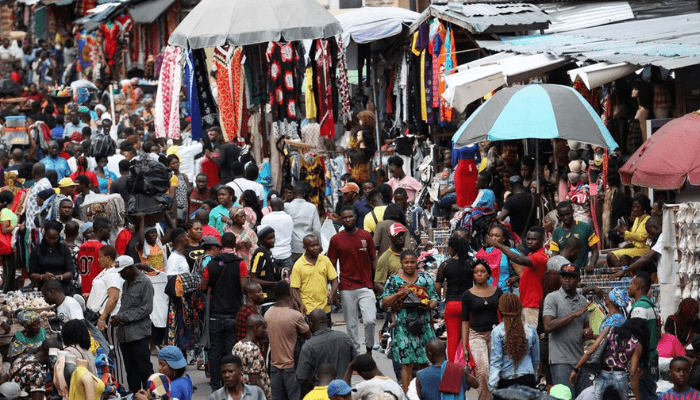
About this time in 2024, many disgruntled Nigerians filled out on the streets to protest the impact of the worsening hardship in a seemingly ‘mother of all protests’ tagged ‘#EndBadGovernance’.
Today, and two years down the line, nothing seems to have changed as people decry that governance is even worsening.
But observers are more worried that the protests are not happening again despite today’s harsher economic realities.
“When well-conceived, protests bring results because they force the government or authorities to bend to people’s will,” Benson Alimi, a human rights activist, said.

“But the reverse is the case in Nigeria today because situations seem to get worse after protests. I think, that is the case with the #EndBadGovernance protests and why people are not eager to protest again”.
Alimi, a lawyer and youth empowerment promoter, decried that people have been intimidated, victimised and even prosecuted for leading or joining protests perceived to be against the government, hence the apathy to protest today.
“Even as that, today’s government is different and does not have listening ears. No matter the protests, they do what they want. A sitting minister said on social media that the people will not decide for the government, rather the government decides and the people obey. He even went on to buttress same view on a national television talk-show. “Don’t blame helpless Nigerians because autocrats are in power,” he decried further.
For Marvelous Ifemodor, a senior banker, there are more reasons to protests today in Nigeria beyond bad governance and worsening hardship.
“When you hear that gunmen invaded communities and killed, herdsmen sacked farmers, terrorists beheaded people, those are real stories that required mass protests. Sadly, we keep our eyes and mouth closed and that is what the government wants and sadly the reason governance is worsening today,” Ifemodor, lamented.
According to him, the political class has succeeded in dividing Nigerians as they keep politicising issues even when they are big threat to national security or unity.
We all heard the ruling government blaming the Oyo State government for the abduction of school teachers and students.
“Imagine politicising such as a serious issue. What about Kaduna and Benue states that are same party yet their people are being killed everyday by terrorists. Bad governance has no other colour but bad. It is inefficiency and wickedness to the helpless electorates and should be stopped,” the chartered auditor, said.
Hassan Yibor, a clergy, also decried that the protests are not happening because the government has never listened to balanced advise, hates critical views and honest opinions.
“We Northern Christians protested against same-faith presidential candidacy in 2023, they did not listen. We met them and repeated same for 2027 election, they also did not listen. We joined families in Plateau to protest ethnic cleansing, they also did not listen.
There is no hope, except God’s intervention because we have autocrats in power,” Yibor said.
Paul Agada, a US-based communication expert and researcher, said that advocating against bad governance is the job of the citizens.
According to him, Nigeria is currently witnessing louder outcries against misrule, with more Nigerians leveraging digital tools to campaign for good governance.
“For instance, look at what BudgIT does, they use numbers to tell a story of what the government does with budgets.
“Now, people can go the extra mile to simplify those numbers for the less educated folks,” Agada said.
While it is within the rights of citizens to demand #GoodGovernance, it is also morally right for citizens to push the right narratives as we approach the 2027 general elections.
On the back of this, the US-based communication expert urged Nigerian electorate and political stakeholders to take advantage of crowd-sourced fact-checking mechanisms on various social media designed to combat the spread of misinformation online ahead of the 2027 general elections.
Agada told BusinessDay that the 2023 elections spotlighted the invaluable contribution of social media to citizen participation in democratic dialogues and electoral exercises.
However, he noted that while social media has democratized access to mass dissemination of information, it has equally enabled the spread of falsehood.
“I appreciate how the Nigerian voters have embraced the value of social media platforms like Facebook, X, Instagram, TikTok, and the likes when it comes to campaigning and canvassing votes for their preferred political aspirants and candidates,” he said.
He observed that social media platforms have introduced various citizen-led mechanisms for combating the spread of misinformation.
“But this phenomenon is a double-edged sword because unscrupulous individuals can also take advantage of this access to peddle misinformation in favour of their candidates or against a disliked candidate,” he said.
Agada urged politically minded citizens, journalists, civic-interest groups, researchers and political observers to leverage these tools to curtail the manufacture and dissemination of information capable of stoking tension in the Nigerian polity ahead of the general election.
“X, Meta platforms and TikTok have all launched crowd-sourced fact-checking measures known either as Community Notes or Footnotes, these tools permit regular social media users to sign up to become fact-checkers,” he said.
According to Agada, the country needs eligible Nigerians at home and in the diaspora with good intentions to sign up to participate in these communities in ensuring issue-based discourse ahead of the 2027 elections.
“Studies have established that posts that get community attention lose their spread and credibility, so imagine if we have enough journalists, trained fact-checkers, and informed citizens to contribute to this crowd-sourced system, they would inadvertently regulate the quality of discourse surrounding the election,” he said.
Agada also encouraged spokespersons of various candidates to shun peddling falsehood and bigotry, but adhere to ethical and issue-based communication practice that would ensure national unity is not jettisoned to attain electoral success.
However, some think that the protests, especially the #EndBadGovernance, did not succeed because they are politically motivated.
“I don’t believe in all these fraudulent activist and politically motivated struggles,” Badru Saleh, a scholar from the University of Ibadan, told BusinessDay.
According to him, politically motivated protests have little or nothing to change the polity; hence #EndBadGovernance failed to lift the needle because the people behind the movement were politicians.
“We have witnessed a series of protests in the past aimed at addressing pressing issues in the country, particularly those relating to the economy, politics and human rights abuses.
“The primary objective of these protests has been to correct identified wrongs, demand accountability and, where necessary, bring an end to practices considered detrimental to the interests of the people,” Saleh said.
According to him, recent protests have resulted in additional hardship for the very people—the masses, particularly petty traders and other vulnerable groups, whose interests the protests were ostensibly meant to protect.
“By my assessment, these protests have achieved little in terms of addressing the fundamental problems they were intended to solve,” he said.
He added that every protest must be driven by clearly defined and realistic objectives. According to him, there must be specific and measurable outcomes that the organisers seek to achieve.
More importantly, Saleh said that there should be credible and identifiable leadership capable of articulating the demands of the protesters and interfacing constructively with the government and relevant stakeholders.
According to him, opposition political groups and other stakeholders should not be completely excluded from such engagements.
“While protests may serve as a powerful tool for expressing public dissatisfaction, they are more likely to produce meaningful results when they are backed by clear demands, strategic leadership and a well-defined channel for dialogue and negotiation,” he added.
He disclosed that the success of any protest should not be measured merely by the number of people on the streets, but by the extent to which it achieves its stated objectives and brings about tangible improvements in the lives of the people it represents.
For Marcel Amachree, a University of Port Harcourt lecturer, protests are not working today because the country and the people are more divided today than united.
“How can you explain that at every protest, there is a counter version that same day or the following day. Who are behind it? He queried.
“If people protest against hardship today, another set will protest in support of good governance tomorrow as if they are in a different economy and country. Who is deceiving who?
According to him, the government and the people are to be blamed because those who are benefiting today do not want protests.
However, observers decry the silence of the people, especially civil society organisations, who were vocal during Muhammad Buhari’s administration.
Something is wrong with all of us. We seem hypnotised. Nobody is talking for the fear of being victimised or even killed. There are enough reasons to protests against bad governance in Nigeria, at least insecurity and corruption,” Yibor said. (BusinessDay)
-

 Politics19 hours ago
Tinubu using foreign reserves to create misleading impression of economic growth – Makinde
-
Politics19 hours ago
ADC mocks APC over ‘rented crowds, empty seats’ at Kaduna rally
-
Politics19 hours ago
2027: It’s Our Turn To Repay Tinubu – Shettima Tells Northerners
-
Politics19 hours ago
2027: Forget About Social Media News, Nigerians Love Tinubu – Information Minister
-
Metro19 hours ago
How AI-generated photo cost kidnap victim N4m ransom – Freed Benue graduate
-
Politics19 hours ago
Ebola: Parties reject campaign suspension
-
Metro18 hours ago
Expert warns of declining sperm concentration in Nigerian men
-
Politics19 hours ago
2027: Pantami, Adebutu, Gwarzo’s fates uncertain