News
Fuel Subsidy Removal Should Be Reversed To Ease Nigerians’ Hardship – Expert

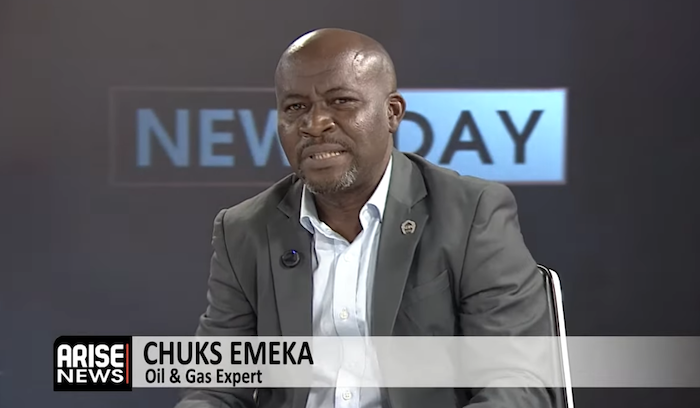
Nigeria should reverse the removal of fuel subsidy to ease the economic hardship facing citizens, according to oil and gas expert, Chuks Emeka.
Speaking during an interview on ARISE News on Friday, Emeka said subsidy is an economic principle used globally to cushion the effects of rising costs and should not be treated solely as a political issue.
“Subsidy is a global phenomenon used to cushion effect across the countries so that the citizens of that country can be able to get the benefits of most of these petroleum products and other commodities.”
He criticised the hurried removal of fuel subsidy, stating that the government should have first addressed the criminal activities and fraudulent practices associated with the previous subsidy regime.

Emeka, who said he has worked in the oil and gas industry for about 20 years, explained that some individuals allegedly obtained subsidy payments using false documentation for products that were never imported.
“What I would have suggested the President should have done at that time… is first of all deal with the… cut off these criminal activities going on inside that oil and gas.”
He said addressing such practices would have reduced discrepancies in the subsidy system and made it possible for the government to identify legitimate beneficiaries.
Emeka stated that subsidy removal had contributed to economic difficulties, citing the impact of higher energy costs on industries, aviation and employment.
He said the removal of diesel subsidy, for instance, had contributed to the collapse of some industries, including the textile sector, as businesses struggled with higher operating costs.
“The only thing we see was not benefit, but economic destruction, because most of the industries shut down.”
On the way forward, Emeka said the government should first fix Nigeria’s refineries and restore domestic refining capacity.
“The solution that I think the government should begin to look into, first of all, is to find a way to fix the refineries.”
He also called for the reversal of fuel subsidy removal, arguing that Nigerians need immediate relief from the high cost of petrol.
“The second thing that needs to be done, which should be an urgent thing that should be done now, is to find a way to reverse this fuel subsidy and bring us to the status quo before you start talking about solving the problem.”
Emeka said petrol remains critical to the livelihoods of Nigerians across income groups, arguing that alternative energy initiatives such as compressed natural gas cannot immediately address the country’s current fuel crisis.
He emphasized that the immediate priority should be to make petrol affordable while longer-term reforms are implemented.
“Let the Nigerians breathe. Let them breathe from 1,200 and something Naira to at least 500 Naira.”
Emeka also highlighted the effect of high transportation costs on agricultural and export activities, citing the increased cost of transporting dry hibiscus from Kano to Lagos.
He said the higher transportation costs have affected the profitability of exporters and contributed to a decline in export activities.
According to him, the proposed shift toward supporting locally refined petroleum products would only be meaningful if it ultimately addresses the economic hardship faced by Nigerians.
“Model, principles, and whatever terms they want to use to code it does not count when somebody cannot eat two square meals in a day.”
Emeka said the impact of high fuel prices extends beyond motorists, affecting small businesses, farmers and households that depend on petrol for transportation and electricity generation.
He cited the example of a female hairdresser who, according to him, uses between 12 and 15 litres of petrol to operate her business, leaving little or no profit after expenses.
“Turnover is just going around the cycle. There’s no profit! People are not making profit anymore!”
He said the decline in petrol consumption should not necessarily be interpreted as evidence that Nigerians no longer need the product, arguing that many people simply cannot afford to buy it.
Emeka maintained that Nigerians are currently adapting to worsening economic conditions by reducing their fuel consumption and finding ways to survive.
“So that is how Nigerians are now bootstrapping, they are managing, living in below average poverty, trying to balance and keep going.”
He said the government must urgently reconsider its policies and address the cost-of-living crisis before the situation becomes more difficult.(Arise News)
-

 News20 hours ago
UK universities withdraw admission offers to Nigerians over visa crackdown
-
Politics20 hours ago
2027: Protest, relief as INEC releases final candidates’ list
-
News20 hours ago
Benue: Suspected herdsmen kill nine in fresh Ukum attacks
-
News20 hours ago
Why kidnappers target NYSC members — Security experts
-
Politics20 hours ago
2027: Opposition, APC clash over campaign funding
-
World News20 hours ago
US gunman shoots dead 7 relatives, family friend
-
Opinion20 hours ago
Did Obi actually win in 2023?
-
Business20 hours ago
Fitch revises Nigeria’s outlook to positive, affirms ‘B’ rating