Business
FG’s food banks strategy cannot fix food crisis without securing farms – UN, farmers warn

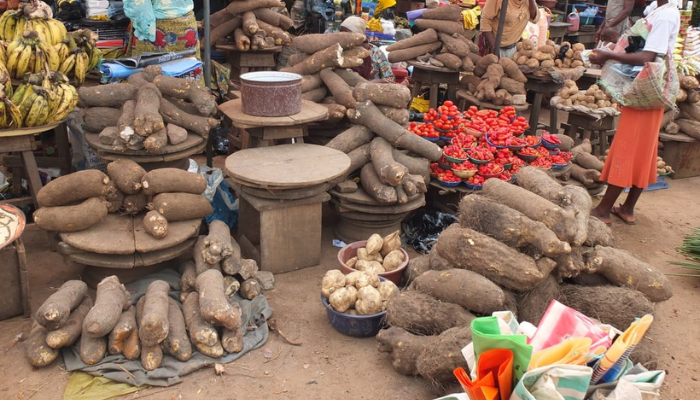
Nigeria’s efforts to tackle rising hunger and malnutrition through community food banks risk becoming a permanent relief mechanism unless the government simultaneously addresses insecurity that is keeping farmers away from their fields, farmers, humanitarian officials and agricultural experts have warned.
The concern is becoming more pronounced as attacks on farming communities, farmer-herder conflicts, displacement and destruction of agricultural assets continue to disrupt food production across several states, particularly in the North and parts of the North-Central.
The warnings come as Oluremi Tinubu, First Lady, expands the National Community Food Bank Programme across the country, with the initiative targeting children under six, pregnant women and lactating mothers with free nutritional support.
While stakeholders acknowledge that emergency food assistance is necessary amid worsening hunger, they argue that distributing food without restoring the productive capacity of rural communities could leave Nigeria trapped in a cycle in which government continuously feeds people who are unable to return to their farms.

The United Nations has also urged the Federal and state governments to prioritise the security of farmers and ensure that they have safe access to their farmlands, particularly in Borno, Adamawa and Yobe (BAY), where the humanitarian situation remains severe.
Mohammed Fall, UN Resident and Humanitarian Coordinator in Nigeria, made the call during a media engagement in Maiduguri to mark World Humanitarian Day, themed ‘Act for humanity.’
Fall said declining humanitarian funding, including reduced support from the United States, should push Nigeria towards developing stronger domestic mechanisms for financing humanitarian and development interventions rather than relying heavily on international assistance.
He said that securing farmers and restoring access to their farmlands must form part of Nigeria’s response to the humanitarian crisis.
“This is not all about Nigeria. It is a global challenge that funding for humanitarian activities is declining. We must start looking for domestic solutions to our funding needs that can provide humanitarian support. The safety of farmers should be prioritised to ensure they have access to their farmlands,” Fall said.
He added that Nigeria had the economic resources to take greater responsibility for addressing its humanitarian and development challenges, urging stronger collaboration between government and the private sector.
Fall said the prolonged conflict in the North-East had created severe humanitarian consequences, including malnutrition and health emergencies.
He disclosed that more than one million children in Borno, Adamawa and Yobe were suffering from acute malnutrition, highlighting the scale of the crisis confronting the region.
The figures underscore the urgency of food interventions. However, humanitarian and agricultural stakeholders say the government must address the underlying causes of food shortages if such interventions are to produce lasting results.
The National Community Food Bank Programme, implemented through the Office of the First Lady, the Federal Ministry of Health and Social Welfare, the National Primary Health Care Development Agency and the Bank of Agriculture, is designed to provide nutritional support to vulnerable households.
The programme has been rolled out across the country, with the South-West launch marking the fourth zonal flag-off.
The North-East rollout was launched in Borno in April, followed by the North-West launch in Jigawa in June and the North-Central rollout in Kogi in July.
The programme is expected to reach 500,000 vulnerable households in its first year, with food bank hubs positioned around primary healthcare facilities to provide nutritional support and health monitoring.
Experts, however, insist that the programme’s impact will depend largely on whether Nigeria can restore security in the agricultural belts where food is produced.
Maxwell Duu, an agricultural stakeholder, said the initiative was important but would struggle to achieve its objectives if insecurity continued to prevent farmers from cultivating their land.
He said many Nigerians still depend on subsistence agriculture, while insecurity had weakened the transition to commercial farming by discouraging investment and keeping farmers away from their fields.
“As long as peace is not restored in the north, agricultural programmes will not fully succeed,” Duu said.
He said recent efforts to decentralise military operations through the creation of additional formations could help restore confidence among rural communities if properly implemented.
Austin Ajayi, another stakeholder, also supported the food bank initiative but warned that insecurity remained one of the biggest threats to food availability.
He cited Ukum Local Government Area of Benue State, where recurring farmer-herder conflicts have forced farmers away from their farms.
Ajayi said Ukum was an important food-producing area and that prolonged disruption of farming there could have consequences beyond the affected communities.
“Without security guarantees that farmers can work without fear of losing their crops, I doubt they will go out,” he said.
According to him, protecting farmers and creating safe spaces for agricultural production should be regarded as a central component of Nigeria’s food security strategy.
The situation in Plateau State provides another illustration of the link between insecurity and food insecurity.
In Mangu Local Government Area, renewed attacks on rural communities have resulted in deaths, destruction of homes and displacement.
The reported attack on Bin-Per community, where 24 victims were reportedly buried after gunmen invaded the area, has further highlighted the vulnerability of rural populations.
Beyond the immediate humanitarian consequences, attacks on farming communities undermine local economies by forcing farmers to abandon their fields, destroying crops and disrupting supply chains.
For communities that depend largely on agriculture, displacement means losing not only homes but also farms, livestock, markets and access to local food systems.
Farmers in Benue, one of Nigeria’s major food-producing states, have therefore urged the Federal Government to prioritise security and the reconstruction of basic infrastructure before expanding food assistance programmes.
Farmers including Ayila Iortimbir, Shiebee Igbadoo, Terlumun Hemen and Gbenda Vernumbe, who operate in Gwer-West, Guma, Logo, Ukum and Katsina-Ala local government areas, said many farming communities remained displaced by violence.
They said their communities needed security, schools, healthcare facilities, markets and the restoration of livelihoods to enable displaced residents to return home and resume farming.
The farmers argued that food assistance could not substitute for the restoration of their communities.
“We don’t know what they really mean by Community Food Bank and what it intends to achieve. For Benue, let it be called IDPs Food Bank programme because who is in the communities? Farmers are fleeing their communities daily,” they said.
They questioned why government was focusing on food distribution while many farmers remained unable to return to their ancestral homes.
The farmers also alleged that previous government promises to strengthen security, rehabilitate displaced communities and support internally displaced persons had not produced the expected results.
They said prolonged displacement had deprived children of education and communities of healthcare and other basic services.
Ernest, the Benue State chairman of the All Farmers Association of Nigeria, said the food bank initiative did not address the insecurity preventing farmers from returning to their farms.
The farmers’ concerns reflect a broader policy dilemma facing Nigeria: whether emergency food distribution can meaningfully improve food security when the country’s agricultural production base is being weakened by insecurity.
Food banks can provide immediate relief to households facing hunger and malnutrition, particularly children and women who are nutritionally vulnerable. But experts say they cannot replace functioning farms, secure communities and reliable agricultural supply chains.
This distinction is increasingly important as Nigeria grapples with rising food prices and persistent pressure on household incomes.
The country’s agricultural regions in the North and North-Central supply significant quantities of grains, tubers and other food crops to markets across the country. When insecurity prevents farmers from planting or harvesting, the consequences are transmitted through the food supply chain, affecting consumers far beyond the affected communities.
For the government, the challenge therefore goes beyond determining how much food should be placed in community food banks. It also involves ensuring that farmers can produce enough food to replenish those stocks.
The success of the National Community Food Bank Programme may ultimately be measured not only by the number of households receiving food but by whether the number of households requiring emergency assistance declines.
Fall’s call for stronger domestic financing of humanitarian interventions also highlights the need for Nigeria to move from repeated emergency responses towards sustainable solutions that combine security, agriculture, healthcare, nutrition and rural development.
For farmers in Benue, Plateau and other affected states, that transition begins with security.
Securing farming communities, protecting farmlands, enabling displaced farmers to return home and rebuilding damaged schools, health centres and markets could restore local production and reduce dependence on relief supplies.
The food bank initiative could therefore serve as an important safety net for vulnerable Nigerians, but its long-term success will depend on whether the government can make the communities it seeks to feed safe enough for farmers to produce food.
A food bank can provide food for a household today. A secure and productive farm, however, gives that household a better chance of feeding itself tomorrow.(BusinessDay)
-

 Metro24 hours ago
Nigerian man, Adebayo arrested in Canada after exposing self to three victims
-
News7 hours ago
Experts caution as IMF offers fresh advice on subsidy
-
Politics7 hours ago
2027: Nigerians Won’t Renew A Mandate Of Hardship – Atiku Tells Tinubu
-
Sports7 hours ago
CAF Hands NFF, Other Member Federations $175,000 Boost In Annual Subvention
-
Politics7 hours ago
Stop Eyeing A Position That Is Not Available – Akpabio Warns APC Govs
-
Sports24 hours ago
30 Years After Atlanta ’96, I Still Haven’t Received Olympic Gold Medal – Jo Bonfrere
-
News7 hours ago
Many soldiers feared killed as terrorists attack military post in Borno
-
Politics6 hours ago
2027: We know how to stop Tinubu from getting second term - Momodu