Opinion
Sanwo-Olu has not signed out: Akinsuyi’s verdict is premature, his facts need context

BY ABDUL-AZEEZ OLUMIDE
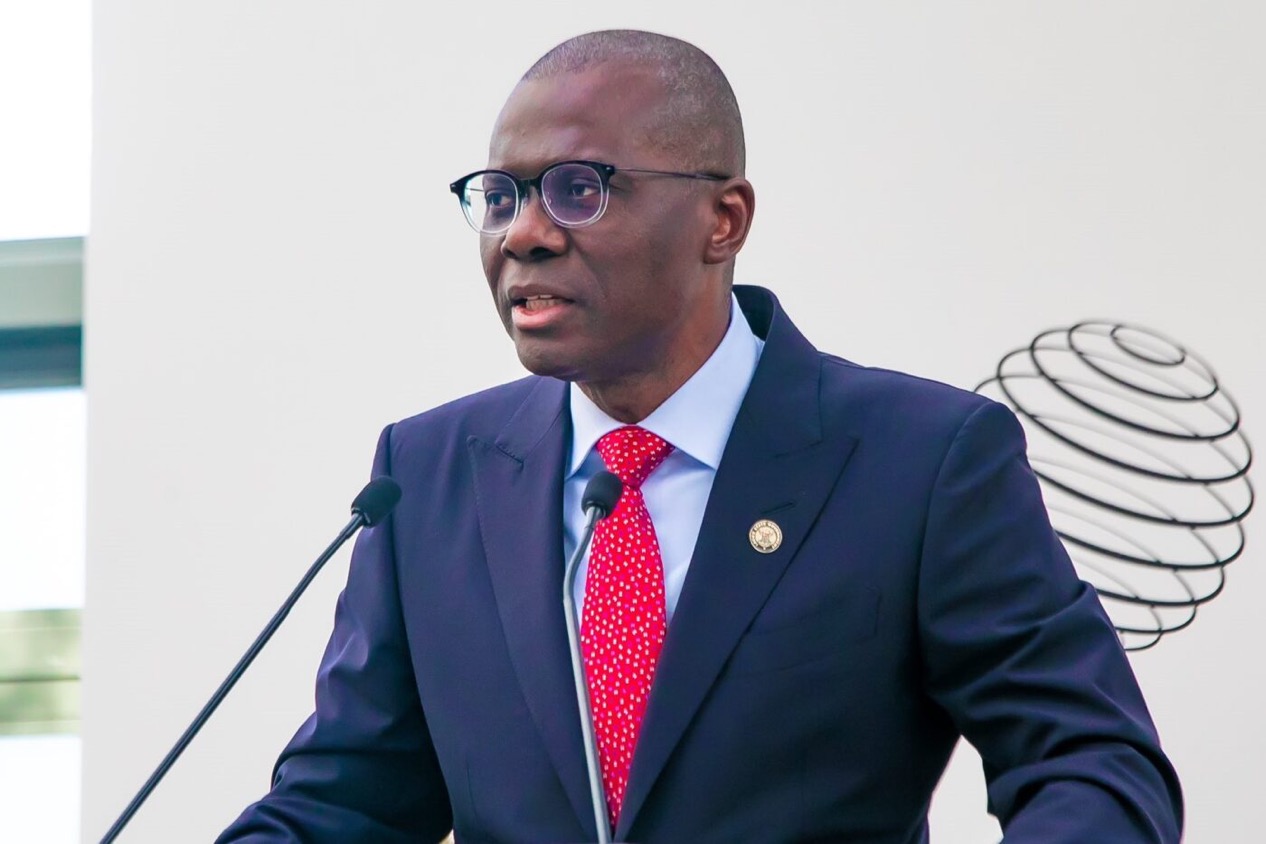
I have read Temidayo Akinsuyi’s recent commentary on Governor Babajide Sanwo-Olu. While I respect his long-standing background as a political editor and journalist, his central conclusion—that the governor has “mentally signed out” or “technically handed over the reins of government”—is entirely unsupportable by facts, logic, or the ongoing reality of governance in Lagos state. The article is written with passion, but passion is not a substitute for balance. A collection of complex, ongoing urban challenges cannot automatically be presented as evidence that a government has folded its arms. That is a heavy allegation, and the full context tells a very different story.
Akinsuyi notes that Governor Sanwo-Olu has about nine months remaining in office. Nine months in public administration is not a footnote or a waiting room—it is an extensive window for execution, project completion, and continuous service delivery. The suggestion that an active administration with nearly a year remaining on its constitutional mandate has already mentally checked out ignores the daily, uninterrupted machinery of state governance.
I currently serve within the Lagos state government. I am also a fellow of the Lateef Jakande Leadership Academy. My proximity to government has not taught me to pretend that everything is perfect. Quite the opposite. Public service teaches you that managing Africa’s largest megacity is far more complex than sensational headlines suggest. Responsible commentary requires the ability to acknowledge operational hurdles without falsely claiming that the entire administration has ground to a halt.

So let us address the issues directly without being defensive.
Waste Management and Environmental Enforcement
Yes, the waste situation in certain communities requires a more aggressive and sustained response. But Akinsuyi cites the government’s June 18 statement directing waste evacuation across Lagos as though the statement itself is proof of helplessness. I see it as the exact opposite: it demonstrates active executive intervention, coordination, and accountability.
Waste management in a megacity of over 20 million residents involves an intricate operational chain: collection, evacuation, transportation, transfer loading stations, landfill operations, PSP logistics, enforcement, and public behaviour. Government has a strict responsibility to provide infrastructure and enforce regulations, but citizens also bear a duty not to sabotage the system. Government cannot clean Lagos indefinitely while some residents continue to dump refuse illegally, cart pushers create black spots under the cover of night, and individuals turn major drainage channels into private dumpsites. Environmental enforcement against illegal dumping, street trading, and urban disorder remains continuous across the state.
Managing a rapidly expanding megacity requires non-stop enforcement, investment, and public adaptation—which is precisely why the Governor continues to push the system. From about 3000 tonnes daily, Lagos waste generation has hit about 13,000 tonnes— no thanks to the unrestricted influx of people (about 6000 daily). Old landfills are filled up, and new ones are a bit far from the city centre, slowing down trucks’ turnaround considerably. Many of the trucks are old and unserviceable. New trucks are coming in as of next month.
Infrastructure and the Contradiction of Continuity
If the argument is simply that certain inner roads require urgent rehabilitation, no one in government is denying that. The state actively tracks and fixes infrastructure deficits daily through the Lagos State Public Works Corporation (LSPWC) and major contractors. But if the argument is that the government has stopped working on roads altogether, the physical record completely contradicts that claim. Lagos has about 9040 roads that must be maintained and rebuilt- in some cases. This is no joke.
The Sanwo-Olu administration has delivered massive road networks (362 roads since 2019, about 347.17 kms); 130 roads in the last one year, flyovers, and strategic transport infrastructure across all divisions of Lagos. Furthermore, Akinsuyi himself acknowledges and praises the Governor for resisting the temptation to abandon the projects of his predecessor, Akinwunmi Ambode, and for completing them—a rare standard of political maturity in Nigerian governance.
This creates a glaring contradiction in Akinsuyi’s narrative. How can the same Governor who built unprecedented institutional continuity, reconciled political leadership, and completed inherited multi-billion naira projects now be portrayed as someone who has effectively abandoned governance?
The truth is that government is not judged by whether every single road is pristine at every moment; it is judged by whether it continuously identifies deficits, allocates resources, and executes solutions. The Lagos Rail Mass Transit (LRMT) Blue Line is operational. The Red Line is real. Regional road networks, strategic bridges, upgraded hospitals, and modern school infrastructure across the state are active proofs of a working government.
Urban Order, Security, and the Street Urchin Menace
The menace of street urchins (Omo Onile and co), extortionists, and daylight harassment of motorists is completely unacceptable. No Lagosian should face threats or property damage simply for driving through the state. The government recognises this burden and continues to push for firmer enforcement.
However, Akinsuyi’s commentary oversimplifies the constitutional architecture of security in Nigeria. While the governor serves as the chief security officer of the state, policing remains constitutionally a federal mandate. The Lagos state government does not directly command the Nigeria Police Force; instead, it provides critical structural and logistics backing through the Lagos State Security Trust Fund (LSSTF)—supplying patrol vehicles, communication gear, and operational allowances to keep security agencies functional.
Critiquing security leadership—whether referring to Inspector-General of Police Tunji Disu or Lagos State Commissioner of Police Tijani Fatai—requires recognising that federal officers operate within nationwide operational command structures. The Lagos state government will continue to demand higher accountability, push for tactical raids on known black spots, and ensure security agencies remain focused strictly on protecting the lives and property of residents.
The Executive Work Ethic and the Final Stretch
Earlier in the administration, when critics questioned the Governor’s official schedule over public events or private engagements, many fair-minded observers pointed out that executive governance is judged by systemic output, not by denying a leader personal time. The same principle applies today: executive governance is driven by policy implementation, cabinet coordination, continuous project commissioning, and public administration.
Projects are actively being executed. MDAs are functioning at full capacity. Infrastructure is being delivered daily. The machinery of state has not paused because a commentator feels the Governor looks tired.
Akinsuyi is right about one thing: legacy matters. But a legacy is built over eight full years, not erased by a snapshot of seasonal urban challenges.
Governor Sanwo-Olu assumed office in May 2019. Lagosians gave him an eight-year mandate that runs until May 29, 2027. There will be no lame-duck mentality, no coasting, no early exit, and no waiting for the next administration. The mandate demands continuous delivery until the very last day in office: work, deliver, fix, improve, and finish strong.
An honest evaluation of governance must weigh the full record: the rail lines, transport reforms, massive bridge projects, health and education investments, environmental interventions, housing developments, and digital transformations—alongside the areas that still need work.
Lagos is a dynamic, fast-growing work in progress. Governor Babajide Sanwo-Olu has not signed out; the government has not stopped, and the work continues unabated until the finish line.
Abdul-Azeez Abdul-Azeez Olumide is a fellow of the Lateef Jakande Leadership Academy.
-

 News7 hours ago
Experts caution as IMF offers fresh advice on subsidy
-
Politics7 hours ago
2027: Nigerians Won’t Renew A Mandate Of Hardship – Atiku Tells Tinubu
-
Sports7 hours ago
CAF Hands NFF, Other Member Federations $175,000 Boost In Annual Subvention
-
Politics7 hours ago
Stop Eyeing A Position That Is Not Available – Akpabio Warns APC Govs
-
News7 hours ago
Many soldiers feared killed as terrorists attack military post in Borno
-
Politics7 hours ago
2027: We know how to stop Tinubu from getting second term - Momodu
-
Politics7 hours ago
No one owns voters – Obidients tell Wike
-
Politics7 hours ago
Nigerians better off under Tinubu – APC spokesman insists