News
Reforms raised revenue, but worsened hardship – Minister

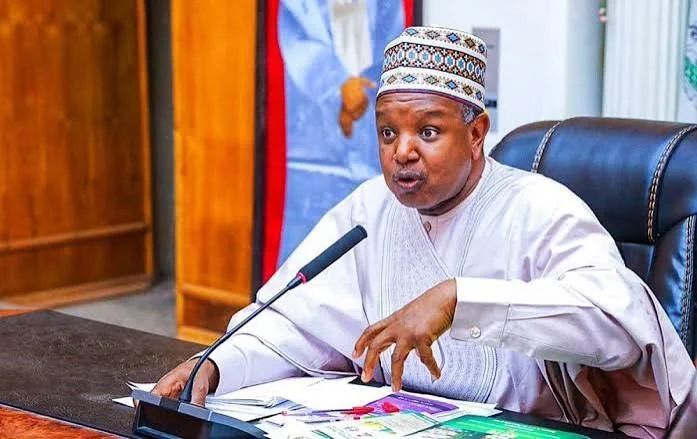
The Minister of Budget and Economic Planning, Senator Abubakar Bagudu, has acknowledged that economic reforms introduced by President Bola Tinubu’s administration contributed to the cost-of-living pressures confronting Nigerians.
Bagudu, however, said the government remained committed to the reforms, arguing that they were necessary to strengthen public finances, stabilise the economy, and lay the foundation for sustainable and inclusive growth.
According to a statement issued by the Federal Ministry of Budget and Economic Planning on Wednesday, the minister spoke while delivering a keynote address at the Federal Appointees Strategic Summit on the presentation and review of ministerial and Ministries, Departments and Agencies’ budget implementation.
“He acknowledged that the reforms, along with international economic pressures, had contributed to cost-of-living challenges and other pressures facing citizens, but maintained that the administration remained focused on achieving long-term economic stability and inclusive growth,” the ministry said.

The reforms have included the removal of the petrol subsidy and changes to the foreign exchange market, two major policy shifts undertaken after Tinubu assumed office in May 2023.
Bagudu said the decisions were taken against the backdrop of significant economic challenges, adding that the government did not anticipate the scale of the turbulence that subsequently hit the global economy.
He identified global uncertainties, conflicts and pressures on international trade and tariffs as additional factors affecting food prices and the broader cost of living.
Despite the pressures on households, Bagudu said the reforms had strengthened the fiscal position of the three tiers of government by increasing resources available to the Federal Government, states and local governments.
He argued that the higher revenues accruing to subnational governments were in line with Tinubu’s commitment to strengthening fiscal federalism and giving states and councils greater capacity to discharge their constitutional responsibilities.
“Rather than keeping additional revenues at the centre, the President has taken the position that we should give local governments and states more money and energise everyone so that we can interrogate and fulfil our responsibilities,” he was quoted as saying in the statement.
Bagudu also said the Federal Government had taken steps to address outstanding financial obligations to states as part of efforts to strengthen the federation and improve public service delivery.
He recalled that several states had previously struggled to meet salary obligations despite relatively high international crude oil prices, while spending on infrastructure and essential public services remained constrained.
According to him, the improved fiscal position of states now provides greater room for investment in infrastructure, education, security and other areas under their constitutional responsibilities.
On the wider economy, Bagudu said some economic indicators were beginning to improve, including Nigeria’s revenue-to-GDP ratio. He added that the administration’s tax reforms were designed to improve the efficiency of revenue collection rather than impose unnecessary burdens on citizens.
The minister nevertheless cautioned that the progress recorded should not be regarded as sufficient, saying Tinubu had continued to demand greater results from members of his administration.
He said the government remained focused on expanding domestic production and ensuring that improvements in macroeconomic conditions translated into better outcomes for Nigerians, particularly at the grassroots.
Bagudu added that discussions at the National Economic Council had focused on measures states could adopt to increase domestic production and broaden the benefits of the reforms.
He also reiterated the administration’s ambition to build a $1tn economy by 2030 through inclusive growth capable of improving living standards and reducing poverty. The ministry has previously said the government plans to pursue the target by seeking annual economic growth of about seven per cent under the 2026–2030 National Development Plan.
Bagudu described the $1tn target as ambitious but achievable, stressing the need to put the necessary elements of the National Development Plan in place to support Nigeria’s long-term economic transformation.
He also urged federal appointees to improve their understanding of the administration’s policies and communicate the government’s achievements and reform objectives more effectively to Nigerians, especially at the grassroots.
On the allocation of public resources, Bagudu rejected suggestions that Federal Government expenditure was designed to favour particular sections of the country.
He said major spending areas, including security, infrastructure and livelihood support, served national objectives and were intended to address the needs of Nigerians across different parts of the country.
According to him, security expenditure directly supports communities confronting insecurity, while investments in infrastructure are intended to improve connectivity and stimulate economic activity nationwide.(Punch)
-

 Politics24 hours ago
‘Our support isn’t ceremonial’ — northern students endorse Tinubu for 2027
-
Business1 hour ago
Energy costs rise as gas hits ₦1,500/kg
-
News2 hours ago
NCDMB promotes reading culture at book reading event
-
Politics2 hours ago
Wike Must Stop Sowing Division In The Party – APC Group Warns
-
News19 hours ago
Police take over King’s College premises
-
Business2 hours ago
Lekki Port stakeholders decry worsening traffic congestion
-
Politics2 hours ago
PHOTOS: Atiku hosts Aisha Buhari in Abuja, says visit underscores need for ‘better Nigeria’
-
Entertainment22 hours ago
BREAKING: Veteran Nollywood Actor Olu Jacobs Dies at 84