Metro
THE FAMILY THAT WENT TO WAR: The Vast Estate, The Property Battle, The DNA Demand And The Fight Over Alao-Akala’s Legacy

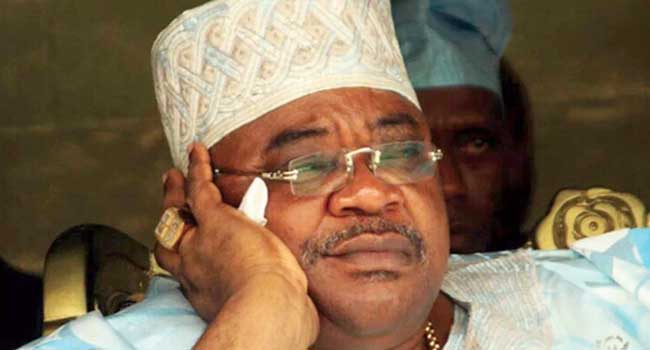
He was a governor, a businessman, a former police officer and one of the most recognisable political figures to emerge from Ogbomoso.
When Otunba Christopher Adebayo Alao-Akala died on January 12, 2022, aged 71, the expected story was one of mourning, tributes and the preservation of a political legacy.
But beneath the grief was another story waiting to unfold.
A battle over an enormous estate.

Houses in Ibadan. Properties in Lagos and Abuja. Vast parcels of land in Ogbomoso. Commercial ventures. Filling stations. A radio station. A microfinance bank. Properties in Britain and the United States. And a five-star hotel in Ghana.
Then came the courtroom battle.
Then the allegations.
Then the extraordinary demand for DNA tests.
And finally, a request that could take the dispute to the grave itself: the exhumation of the late governor’s remains for a DNA examination.
This is the story of how the death of a former governor became the beginning of one of the most extraordinary family inheritance battles to emerge from Nigeria’s political elite.
THE GOVERNOR WHO LEFT A FORMIDABLE ESTATE
Alao-Akala governed Oyo State from 2007 to 2011 and remained a major political figure in the state after leaving office.
He died in Ogbomoso on January 12, 2022.
According to court-related reports, he died intestate, meaning the administration of his estate became subject to the applicable succession and probate process rather than being governed by a will.
What followed was the emergence of a dispute over who should administer the estate and who should ultimately benefit from it.
The scale of the assets listed in court-related reporting is remarkable.
Among them are properties in Old Bodija and other parts of Ibadan, houses and commercial interests in Ogbomoso, properties in Lagos and Abuja, land holdings, business interests and overseas properties.
The reported asset list includes a five-star hotel in Ghana, a property in Queens, New York, and another in Essex, England. It also includes several filling stations, a gas plant, Parrot FM, Olowolagba Microfinance Bank, farms, warehouses and extensive land holdings.
One of the listed holdings is approximately 7,000 acres of land beside the Ibadan Golf Club, while another is a reported 1,000-acre holding in Ikoyi, Ogbomoso.
But the question that would eventually shake the family was not simply:
Who gets what?
It became:
Who exactly qualifies to inherit?
THE FIRST DAUGHTER SPEAKS

At the centre of the litigation is Oluwatoyin Alao-Aderinto, described in the court reports as the late governor’s first daughter.
She went to court challenging the administration of her father’s estate.
Her suit, identified as I/443/2024, names Oluwakemi Alao-Akala, the late governor’s widow, and Olamide Alabi as defendants. Court reports identify them as executors and administrators of the estate.
Aderinto’s complaint, as reported from her court filings, is that she has legal and equitable interests in her father’s estate but was excluded from the administration process.
She alleged that some properties had already been sold without her knowledge or consent and that there were moves involving other assets, including proposed transactions and joint ventures.
Those are allegations before the court, not findings of fact.
But they were serious enough for the court to intervene.
THE LETTER OF ADMINISTRATION CONTROVERSY
The dispute did not begin with the DNA application.
It had been brewing for years.
Reports traced an earlier flashpoint to the obtaining of Letters of Administration over Alao-Akala’s estate.
Aderinto challenged the process, alleging that the widow and Olamide Alabi obtained the letters without her consent and excluded her from the administration of the estate.

In an August 2023 letter cited in subsequent reports, her lawyer, Senior Advocate of Nigeria Oladipo Olasope, complained about her exclusion and warned that the disagreement could deepen divisions within the family.
The dispute eventually moved firmly into the courtroom.
THEN CAME THE PROPERTY LIST
As the litigation progressed, details of the estate began entering the public domain.
And the list was extensive.
In Ibadan, the reported properties include the late governor’s residence at Old Bodija, guest houses, properties at Dugbe and Samonda, land around the Ibadan Golf Club and other residential and commercial holdings.
In Lagos, the list includes properties in Ikoyi, Ikeja, Surulere and Oniru.
In Abuja, properties were listed in Asokoro and Games Village.
In Ogbomoso, the list becomes even longer.
It includes houses, filling stations, a gas plant, a radio station, warehouse and farm interests, commercial buildings and extensive land.
There are also reported overseas holdings in New York and Essex, as well as the hotel in Ghana.
The existence, ownership and legal status of individual assets remain matters to be determined where they are contested.
But their appearance in the court-related records dramatically changed the public understanding of what was at stake.
This was no longer simply a disagreement over a family house.
It was a battle over a sprawling estate.
THE COURT PUTS THE BRAKES ON EVERYTHING
Then came a major development.
In March 2026, the Oyo State High Court in Ibadan granted an interlocutory injunction restraining the defendants, their agents and persons acting through them from selling, disposing of or entering into joint-venture transactions involving the contested properties pending determination of the substantive case.
The court also ordered accelerated hearing of the matter.
In practical terms, the order placed the disputed properties under judicial protection while the court considers the competing claims.
It was a significant development.
The family could no longer simply continue business as usual with the assets covered by the order.
The courtroom had taken control of the next chapter.
AND THEN CAME THE DNA BOMB


Just when the property dispute appeared dramatic enough, another dimension emerged.
Aderinto asked the court to order DNA testing involving herself and six other people identified in reports as Olamide, Adebukola, Olamipo, Olamiju, Tabitha and Olamikunle.
One of those named, Olamijuwonlo Alao-Akala, is a serving member of the House of Representatives.
The request is not simply for a routine laboratory test.
Aderinto asked that the examination be conducted at a court-approved accredited laboratory.
She also requested that the results be submitted directly to the judge in a sealed envelope and opened for pronouncement in court.
But there was an even more extraordinary part of the application.
She asked the court to order the exhumation of her late father’s remains from his mausoleum in Ogbomoso so that his DNA could be used in establishing the biological relationships in dispute.
That request transformed an already bitter inheritance battle into something far more personal.
WHY DNA MATTERS TO AN INHERITANCE FIGHT
The significance of the DNA application is obvious.
If biological relationships are disputed in an estate case, determining who is legally entitled to inherit can become central to the administration of the estate.
But it is important not to go beyond the court record.
There has been no judicial finding that any named person is not Alao-Akala’s biological child.
The DNA test is a request made by the claimant as part of the ongoing litigation.
Whether the court grants the application, whether testing is eventually conducted and what legal consequences may follow are matters for the judicial process.
THE FAMILY’S PRIVATE BATTLE BECOMES PUBLIC
What makes the dispute particularly striking is the stature of the man whose legacy is at stake.
Alao-Akala was not an obscure businessman.
He was a former governor of one of Nigeria’s most politically important states.
His political career stretched from the police service into elective politics and the highest political office in Oyo State.
His name became associated with Ogbomoso politics and the wider political struggle in the state.
His death therefore left behind not only family memories but also a public legacy.
Now, the family dispute over his estate has placed intimate questions about inheritance, family relationships and property before the courts.
THE ASSETS AT THE HEART OF THE STORM
The reported inventory makes clear why the dispute has attracted such attention.
Among the properties and interests identified in court-related reporting are:
A residence in Old Bodija, Ibadan;
Properties in Dugbe, Samonda and other parts of Ibadan;
Properties in Ikoyi, Ikeja, Surulere and Oniru, Lagos;
Properties in Asokoro and Games Village, Abuja;
Multiple residences and commercial properties in Ogbomoso;
Eternal Mega Filling Station;
TDB Filling Station;
NIPCO Filling Station;
TDB Gas Plant;
Parrot FM;
Olowolagba Microfinance Bank;
warehouses and farm interests;
extensive land holdings in Ogbomoso;
reported properties in Queens, New York and Essex, England;
and a five-star hotel in Ghana.
The reported list is not itself a judicial determination of the value or ownership of every asset.
But it shows the enormous range of property and business interests that the court has been asked to consider.
WHAT THE WIDOW AND OTHER ADMINISTRATORS SAY
The litigation has involved competing interests, and the allegations of the claimant should not be mistaken for findings against the defendants.
Oluwakemi Alao-Akala and Olamide Alabi are identified in the proceedings as executors/administrators of the estate.
The substantive case remains before the court, where the parties will have the opportunity to present their respective positions and evidence.
The March 2026 injunction was therefore an interim preservation measure. It did not finally determine who owns each disputed property, whether any asset was unlawfully sold or who should ultimately inherit.
THE LEGACY OF ALAO-AKALA
There is an irony in the story.
A man who spent much of his public life navigating the turbulent waters of Nigerian politics left behind a family dispute that is now being played out under the far stricter rules of a courtroom.
Politics has its winners and losers.
Inheritance law has beneficiaries and administrators.
And DNA has no political party.
The court must ultimately determine the legal questions.
THE QUESTIONS THAT REMAIN
Who will finally control the estate?
Were any of the disputed properties transferred before the court’s intervention?
What exactly happened in the administration of the estate after Alao-Akala’s death?
Will the court order the requested DNA tests?
Will the court permit the extraordinary request for exhumation?
Who qualifies legally as a beneficiary?
And when the dust eventually settles, what will remain of the former governor’s legacy?
For now, there is no final answer.
There is only a court battle, a vast estate under dispute, a family divided by competing claims and a judge being asked to resolve questions that go far beyond bricks, land and bank accounts.
At the centre of it all lies the legacy of a former governor who died in January 2022.
Four years later, his final resting place itself has become part of the legal battle over what he left behind.
The grave may be silent.
The courtroom is not.
Sources: Oyo State High Court proceedings as reported by The PUNCH, The Guardian, Channels Television, TheCable, Independent Newspapers and other contemporaneous reports.
All allegations in this report are attributed to court filings or published reports and remain subject to judicial determination. (First Weekly Magazine)
-

 News20 hours ago
N267bn in education funds lie idle as 70% of Nigerian children can’t read
-
Sports18 hours ago
Celebrity boxing: Boom for entertainers, bane of professional boxers?
-
News20 hours ago
Child soldier: US threatens to cut military aid to Nigeria
-
Metro20 hours ago
Hardship: Jigawa almajiri pupils lament decline in free food
-
News20 hours ago
Obasanjo urges increase in 13% derivation for oil-producing states
-
Business18 hours ago
Power plants record zero output amid grid instability
-
Politics20 hours ago
Tinubu’s re-election crucial to Nigeria’s prosperity – Hamzat
-
Politics20 hours ago
Pantami Gives INEC 72 Hours To Publish Name On guber List