Politics
Ogun 2027: Equity, Performance And The Road Ahead

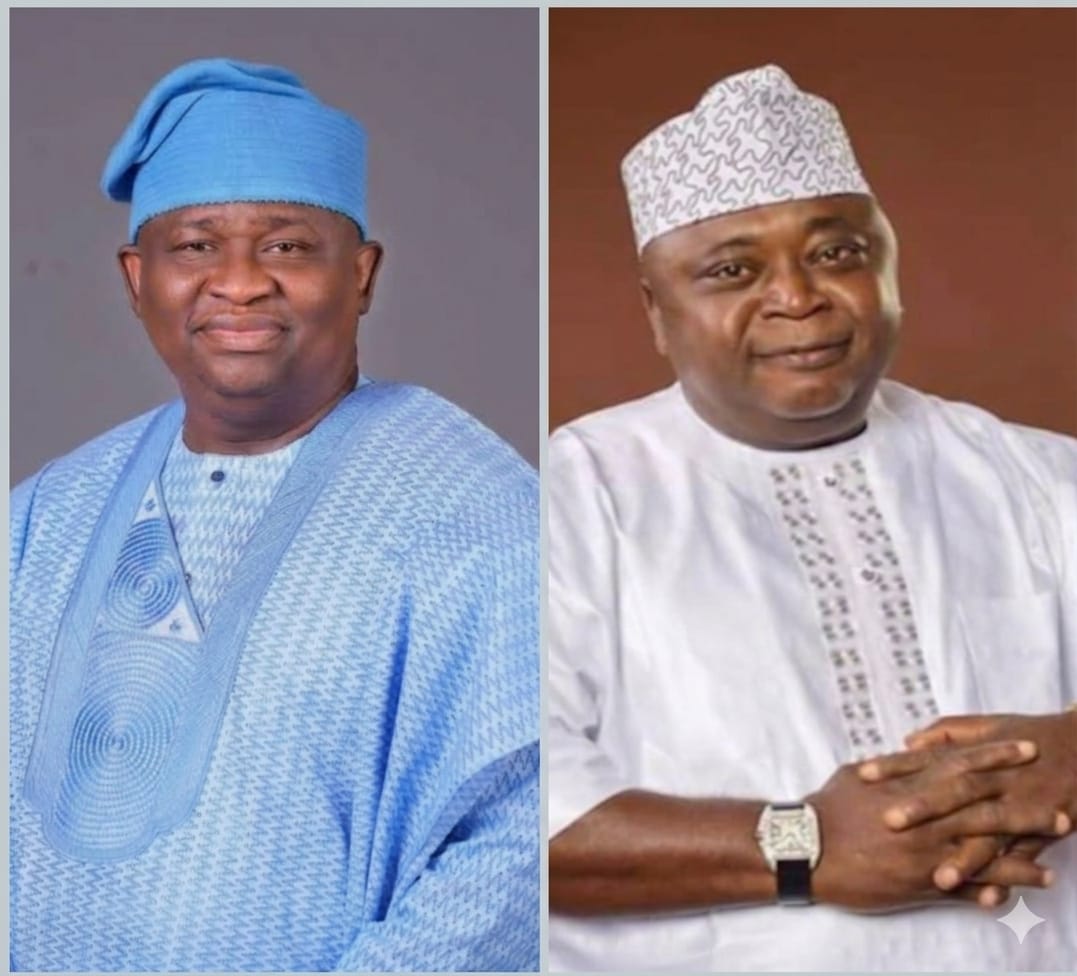
As Ogun State moves towards the 2027 governorship election, three issues are increasingly shaping the political conversation: equity, the performance of the Dapo Abiodun administration, and what voters expect from the next government.
The election is already taking shape around the question of whether power should move to Ogun West, which has never produced a governor since the creation of the state. The argument has gained renewed momentum as political groups call for a rotation of power after 16 years of governorship from Ogun East through Gbenga Daniel and Dapo Abiodun.
The equity argument
Ogun has three senatorial districts — Ogun East, Ogun Central and Ogun West. While Ogun East has produced two governors since 1999, Ogun West has yet to occupy the state’s highest political office.

This has made zoning and equity a central theme of the 2027 contest.
Governor Abiodun and the APC have already backed Senator Solomon Olamilekan Adeola, popularly known as Yayi, from Ogun West as the party’s candidate. Abiodun has described the decision as an attempt to correct what he considers a longstanding imbalance.
Supporters of the zoning argument, however, still face an important question: should geographical equity determine the choice of governor, or should voters ultimately prioritise the individual candidate’s record, competence and programme?
That question will likely remain at the centre of the campaign.
The Abiodun performance test
The APC will also enter the election with the record of the Abiodun administration as a major part of its campaign.
The Ogun government has highlighted investments in roads, infrastructure, education, healthcare, housing and industrial development. For the 2026 budget, the state proposed N1.669 trillion, with N1.044 trillion allocated to capital expenditure. Infrastructure received the largest sectoral allocation at N526.15 billion, while education was allocated N275.40 billion and healthcare N210.59 billion.
The administration has also pointed to projects including the Gateway International Airport, road construction and planned industrial developments as evidence of its development agenda.
But government figures and project announcements will inevitably face another test: how do residents assess their impact on everyday life?
For voters, the relevant questions include whether roads have improved mobility, whether economic opportunities have expanded, whether healthcare and education have improved, and whether development has been distributed fairly across the state’s different communities.
The opposition’s opportunity
The opposition enters 2027 with evidence that the APC’s dominance is not necessarily reflected in overwhelming margins.
In the 2023 governorship election, Abiodun polled 276,298 votes, compared with 262,383 for PDP’s Ladi Adebutu and 94,754 for ADC’s Biyi Otegbeye. The APC therefore won by 13,915 votes over the PDP candidate, while the combined votes of the two leading opposition candidates were substantially higher than the APC’s total.
That history gives opposition parties an electoral argument, although there is no guarantee that their 2023 support bases will align in 2027.
The PDP, ADC and other parties will therefore have to convert dissatisfaction, if it exists, into a coherent statewide political structure.
APC’s internal challenge
The ruling party also has an internal issue to resolve.
Adeola’s emergence has been challenged by Abayomi Hunye, who disputes the process through which the APC candidate was selected and has pursued a legal challenge. The APC, however, maintains that Adeola is its legitimate candidate and has rejected Hunye’s claims.
There have also been reports of disagreements involving other influential figures and aspirants within the party.
The ability of the APC to reconcile its different factions could therefore become an important part of the road to 2027.
What Ogun voters may ultimately consider
The 2027 election is unlikely to be determined by zoning alone.
For some voters, equity and rotation may be important. For others, performance and continuity may carry greater weight. Others may focus primarily on employment, infrastructure, education, healthcare, security, the cost of living and opportunities for young people.
That creates a broader test for every candidate seeking the governorship.
The question is not simply which zone should produce the next governor?
It is also what kind of government should come next, and how should its performance be measured?
Ogun’s growing industrial base and proximity to Lagos give the state significant economic potential. The next administration will inherit both opportunities and challenges: sustaining investment, improving infrastructure, expanding employment and ensuring that economic growth translates into tangible improvements in residents’ lives.
As the 2027 contest develops, equity may determine the political conversation, but performance will remain part of the electoral argument.
And ultimately, Ogun voters will decide which combination of political representation, record and policy programme they consider relevant when they cast their ballots.
-

 News19 hours ago
Abuja Workers Turn To Pick-Up Trucks Amid Rising Transport Costs
-
 Politics24 hours ago
Security Operatives Guard Tinubu’s Billboards Ahead Campaign Launch
-
 News19 hours ago
Ebola patient in Nigeria is Swiss, had not visited DR Congo – Foreign Ministry
-
Politics19 hours ago
Results With Discrepancies Won’t Be Uploaded On IREV – INEC
-
 News19 hours ago
Zamfara Community Fights Back
-
Politics19 hours ago
2027: You Can’t Hide Voters’ Register And Expect Trust – Atiku Tells INEC
-
Politics18 hours ago
South-East has better presidential options than Peter Obi – Umahi
-
Metro18 hours ago
Fasoranti To Be Buried December 17 – Family