Business
Infrastructure deficit threatens Nigeria’s growing gas market – NLNG

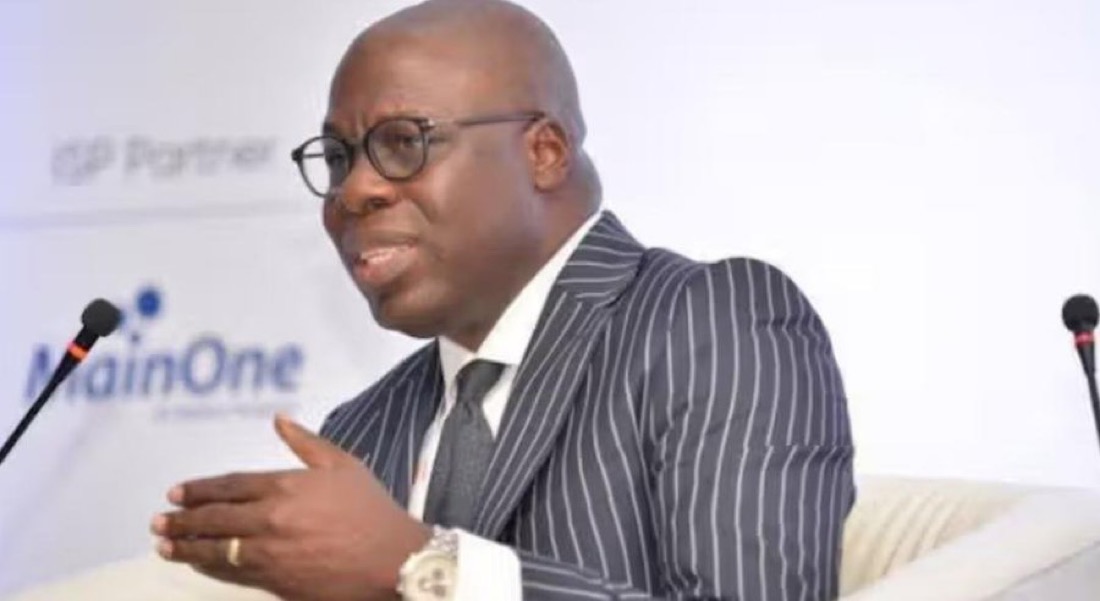
Adeleye Falade, managing director (MD) and chief executive officer of Nigeria Liquefied Natural Gas (NLNG), says inadequate infrastructure is constraining Nigeria’s growing gas market despite the country’s substantial gas resources.
Falade spoke on Tuesday at the completion ceremony of ASIKO Energy’s first-phase LPG and propane terminal in Ijora, Lagos, an MDGIF-sponsored project.
The MD said Nigeria had substantial gas resources but remained constrained by inadequate infrastructure.
He said NLNG had dedicated all its LPG production to the domestic market since 2022, despite being an export-oriented company.

Falade said NLNG pioneered the introduction of cooking gas into Nigeria in 2005, when it started with 70,000 tonnes and held the entire market share.
“As of last year, we were already producing in-country 500,000 tonnes of LPG, but guess what? It’s now just about 40 per cent of the country’s demand, which means demand is growing, which means we need to look for more opportunities in order for us to be able to bring the gas in,” he said.
Speaking at the event, Felix Ekundayo, managing director of ASIKO Energy, said the terminal had reached mechanical completion, with instrumentation and electrical works now being carried out.
“We are mechanically complete. We are now going into instrumentation and electrical, where we are testing the wires, testing the valves and testing the emergency systems,” he said.
Ekundayo said the remaining works would be completed within the next few weeks, and the company expects its first ship cargo in November.
ASIKO TERMINAL TO RECEIVE LPG FROM NLNG, OTHER PRODUCERS AS DEMAND RISES
Ekundayo said the terminal would enable ASIKO to receive gas from NLNG and other Nigerian producers and distribute it through the company’s existing network in the hinterland.
He said the facility would also allow the company to receive LPG from producers whose products may not initially meet the required specification and blend them to the required standard.
“NLNG material is already pure, ready for the cooking gas market. There are other producers who make LPG that may not meet the specification but it can be blended to correct specification, potentially lowering cooking gas price,” he said.
Ekundayo said the terminal would have blending skids that could combine products as a ship brought in its cargo before the material was loaded onto trucks.
He said the company could also use blending pumps to combine products in the storage tanks.
“The whole drive is to start to make cooking gas more affordable,” he said.
Ekundayo said ASIKO had not fully maximised Nigeria’s gas resources and that greater use of gas could help displace other fuels.
“For every dollar of gas flared, it must be replaced with 30–40 dollars,” he said.
Ekundayo said ASIKO was moving from LPG into natural gas, with plans for CNG facilities at two locations and LNG as the next stage of the development.
“We started off with LPG and then moving up the chain to natural gas,” he said.
He said ASIKO currently had operations in Kano, Abuja and Edo State, with expansion into Port Harcourt and Rivers State planned.
Ekundayo said between 200 and 300 people had worked on the project at different stages of construction, while ASIKO currently had about 150 employees.
“This project itself alone will double what ASIKO already is,” he said.
Ekundayo also said lack of funding remained a major challenge for gas infrastructure development, although he did not identify any major technical fear with the project.
He said MDGIF had helped catalyse the completion of the first phase and the development of the next phase.
Alex Ogedegbe, chairman of ASIKO Energy Holdings, said the ceremony marked the completion of the first phase of the LPG and propane terminal.
Ogedegbe said the federal government, through MDGIF, had shown confidence in the project and supported its development.
The chairman said the terminal was designed to provide reliable, safe and efficient storage and distribution of LPG and propane for households, businesses and industries.
Ogedegbe said the fully mounded design reflected the project’s focus on safety and operational integrity.
He thanked Ekperikpe Ekpo, minister of state for petroleum resources (gas), MDGIF, the Nigerian Midstream and Downstream Petroleum Regulatory Authority (NMDPRA), financiers, technical advisers, engineers, contractors, vendors, consultants and ASIKO staff involved in the project.(TheCable)
-

 News19 hours ago
Abuja Workers Turn To Pick-Up Trucks Amid Rising Transport Costs
-
 Politics23 hours ago
Security Operatives Guard Tinubu’s Billboards Ahead Campaign Launch
-
 News18 hours ago
Ebola patient in Nigeria is Swiss, had not visited DR Congo – Foreign Ministry
-
Politics18 hours ago
Results With Discrepancies Won’t Be Uploaded On IREV – INEC
-
 News18 hours ago
Zamfara Community Fights Back
-
Politics18 hours ago
2027: You Can’t Hide Voters’ Register And Expect Trust – Atiku Tells INEC
-
Politics18 hours ago
South-East has better presidential options than Peter Obi – Umahi
-
Metro18 hours ago
Fasoranti To Be Buried December 17 – Family