News
How Nigeria’s Population Commission mismanaged N245 billion on undelivered products, other controversial contracts – Auditor-General

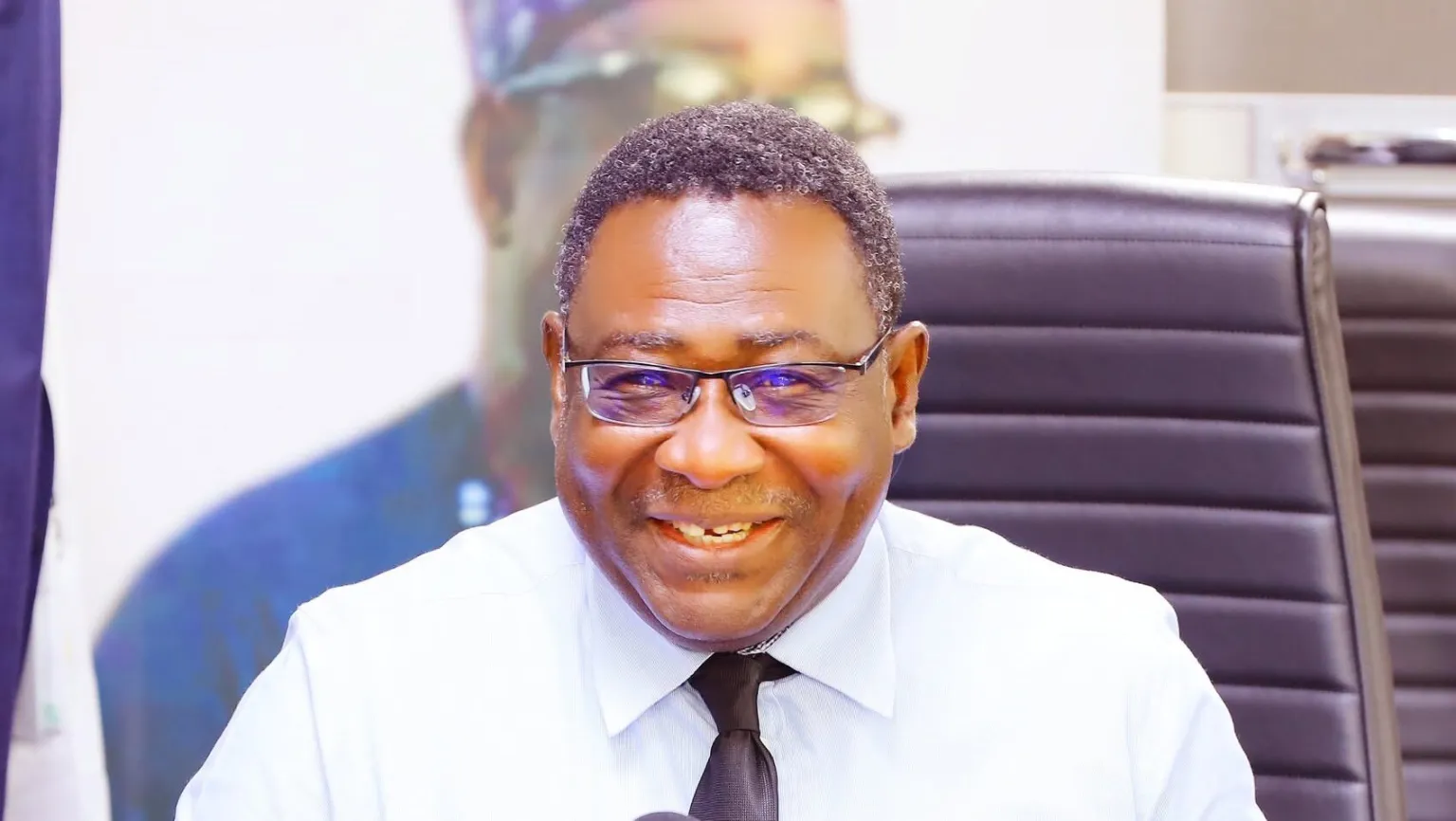
The National Population Commission (NPC) awarded and paid for census-related contracts worth billions of naira without adequate evidence of delivery, according to the Auditor-General for the Federation, who said it also inflated the prices of some contracts and breached procurement rules.
The findings are contained in the Auditor-General’s 2024 Annual Report on Non-Compliance, submitted to the National Assembly in July.
The report examined the commission’s activities for the 2023 financial year and identified several breaches involving contracts for Personal Digital Assistants (PDAs), mobile device management, local content, information technology infrastructure and other census-related procurements.
The findings on the NPC involve more than N245 billion in contracts and payments. The office attributed the irregularities largely to weaknesses in the NPC’s internal control system and recommended that the commission’s Director-General account to the National Assembly’s Public Accounts Committees and recover billions of naira for remittance to the Treasury.

In several of the cases, the NPC did not respond to the audit queries. The auditor general consequently said the findings remained valid until the commission implemented the recommendations.
During the 2023 audit period, Ojogun Osifo served as the Director-General of the National Population Commission (NPC). He was appointed to the position by the late former President Muhammadu Buhari in August 2022. His tenure expired in July 2026, after which President Bola Tinubu appointed Abuh Muhammed as his successor.
Issue 1: N131.5 billion paid for PDAs without evidence of delivery
The largest finding concerns N131.56 billion paid for the procurement of 800,000 PDAs and accessories for the planned 2023 population and housing census.
According to the report, the NPC awarded contracts worth N131 billion to six contractors between 1 December 2022 and 2 May 2023.
The commission told auditors that it had received 760,000 of the 800,000 devices.
But the auditors said the NPC failed to provide credible evidence that the devices had been delivered.
The report said there were no store receipt vouchers, delivery notes, waybills or inspection reports to substantiate receipt of the devices. Instead, the commission relied on handwritten entries on unofficial papers.

The audit team was also denied access to physically inspect the locations where the devices were supposedly stored or deployed.
The auditor general said the failure was attributable to weaknesses in the NPC’s internal control system.
The finding breached paragraph 708 of the Financial Regulations, which provides that payment should not be made for goods not supplied or services not performed. It also cited paragraph 603(i), which requires payment vouchers to contain full particulars and be supported by relevant documents.
The NPC did not respond to the query.
The auditor-general recommended that the NPC Director-General account to the Public Accounts Committees for the entire N131.56 billion, recover and remit the money to the Treasury and submit evidence of the remittance to the committees.
The report further recommended sanctions under paragraphs 3106 and 3115 of the Financial Regulations for irregular payments and failure to account for public funds.
Issue 2: Inflation of three PDA contracts by N1.45 billion
The auditors also found that the NPC inflated three PDA contracts by a combined N1.45 billion.
The report said the Bureau of Public Procurement(BPP) had approved the supply of 80,000 Gisen Tab A7 Lite 8 devices for N7.36 billion. The NPC, however, awarded a contract for Seedstar PDAs at N7.85 billion, resulting in an alleged N485.57 million increase.
The auditors said the BPP-approved Gisen devices had been tested and certified by the original equipment manufacturer for compatibility with biometric applications, encryption systems and census data capture software.
The Seedstar devices, by contrast, lacked BPP validation and OEM recognition and had weaker processors, lower resolution and shorter battery life, according to the report.
The auditors said this created a risk of device failure and inefficiency during enumeration.
In another case, the BPP approved a contract for 70,000 Digi Tab A7 devices for N6.399 billion. The NPC subsequently instructed the contractor to supply unspecified Tab A7 Lite devices for N6.865 billion, resulting in an alleged N465.34 million inflation.
A third contract for 50,000 Itec Tab A7 devices and accessories was also approved by the BPP at benchmark prices. The NPC later instructed the contractor to supply Tab A7 Lite devices at inflated unit rates, according to the report.
The resulting inflation was put at N496.72 million.
The three contracts therefore produced a combined alleged inflation of N1.447 billion.
The auditor-general said the actions violated Section 31(3) of the Public Procurement Act 2007, which prohibits price changes or substantive changes to bids after the procurement process.

The report identified diversion and loss of government funds as risks and said the NPC did not respond to the audit query.
The director-general was asked to account for the N1.447 billion, recover and remit it to the Treasury and provide evidence of payment to the National Assembly.
Issue 3: N4.43 billion census technology subscription questioned
The report also questioned the NPC’s handling of a N4.429 billion Mobile Device Management contract.
The contract was awarded on 19 April 2023 for the execution of the 2023 population and housing census.
But the auditors found an inconsistency between the award and the executed agreement. While the award was for the Mobile Device Management contract, the executed agreement described it as the “Development and Implementation of a Mobile Device Management Solution.”
The NPC subsequently paid the full N4.429 billion on 15 May 2023, through voucher NPC/CC/1966/2023.
That payment was made almost three weeks after the census had been officially postponed on 29 April 2023.
The auditors said the subscription was time-bound and expired without being used for census purposes, meaning the project received no operational benefit from it.
The commission’s director-general reportedly told the auditors that the subscription was used “in the course of carrying out normal official activities.”
But the auditor-general said no verifiable evidence was provided to support the claim.
The report said the explanation did not resolve the concern because the subscription was procured specifically to manage 800,000 census devices and not for routine administrative activities.
According to the auditors, using such a high-value licence for routine operations did not demonstrate value for money and instead pointed to wastage.
The finding was linked to paragraph 415 of the Financial Regulations, which requires officers responsible for expenditure to exercise due economy.
The audit team said the NPC’s failure to respond meant the finding remained valid.
The director-general was asked to account to the National Assembly, explain why the subscription was used for routine operations rather than census activities, recover and remit N4.429 billion to the Treasury and provide evidence of the remittance.
The report also recommended sanctions for irregular payments.
Issue 4: N96.8 billion local content contract breached BPP directive
The auditor-general also accused the NPC of disregarding a BPP directive on local content in the procurement of PDAs worth N96.8 billion.
The report said a BPP Due Process Report dated 15 November 2022 directed the NPC to ensure that Zinox Technologies Limited and TD Africa did not participate as local content suppliers because they were already engaged as representatives of the original equipment manufacturer for the same procurement.
Despite the directive, the NPC awarded a contract worth N85.27 billion for 480,000 PDAs and accessories to a company to cover the 60 per cent foreign content approved by the Federal Executive Council.
The auditors said the commission subsequently awarded an additional N11.57 billion contract to the same company for 80,000 PDAs and accessories, despite the BPP recommendation that the company should not participate in the 40 per cent local content component.
The auditor general said the arrangement allowed one supplier to dominate both the foreign and local content allocations and effectively excluded indigenous firms from participating in the project.
The report said the decision weakened procurement governance and undermined the objective of the local content policy, including fair competition and the development of domestic capacity.
It put the value of the affected contracts at N96.8 billion and identified diversion and loss of government funds as risks.
Again, the NPC did not respond to the query.
Consequently, the auditor-general recommended that the NPC director-general account for the N96.8 billion, recover and remit the money to the Treasury and provide evidence to the National Assembly.
Failure to do so, the report said, should attract sanctions for irregular payments under paragraph 3106 of the Financial Regulations.
Issue 5: N6.23 billion ICT project awarded without bill of quantities
The audit also uncovered a N6.23 billion ICT contract executed without an approved Bill of Quantities (BOQ).
The NPC awarded the contract for the supply, installation and implementation of ICT components for the 2023 census. It also included the construction of an ICT Disaster Recovery Centre in Kaduna.
According to the auditor-general, the contractor constructed the ICT building without an approved BOQ.
The auditors described the BOQ as a critical technical and financial document for determining material requirements, labour inputs and unit costs.
Its absence, they said, left the NPC and the contractor without a standard basis for assessing costs and project requirements.
The report said the situation left pricing decisions, variations and material specifications vulnerable to ad hoc treatment, creating risks of inflated claims, hidden costs and weak oversight.
It also made it difficult for the commission to monitor performance, assess value for money and ensure that the infrastructure met the required technical standards.
The auditors said the absence of a BOQ increased the likelihood of cost escalation, material shortages and disputes after construction.
The finding was linked to Section 16(1) of the Public Procurement Act 2007, which requires public procurement to be conducted transparently, equitably and in a manner that ensures accountability and conformity with the law.
The risks identified were diversion and loss of government funds.
The NPC did not respond to the query.
The auditor-general recommended that the director-general account to the National Assembly for the N6.2 billion, recover and remit the money to the Treasury and submit evidence of the remittance.
Issue 6: N4.73 billion ICT contract awarded to allegedly unqualified firm
The report also faulted the award of a N4.735 billion ICT contract to a contractor the auditors said lacked the required technical and professional capacity.
The contract covered the supply, installation and implementation of ICT components for the 2023 National Population and Housing Census.
The auditor-general said the contractor submitted a conditional Advance Payment Guarantee instead of the mandatory unconditional guarantee.
The company was also not registered with relevant professional bodies prescribed in the invitation to tender, including the Computer Society of Nigeria and Cisco, according to the report.
The auditors further said the contractor lacked recognition as an original equipment manufacturer in Nigeria.
The report said the award of a high-value and sensitive ICT contract to a company without demonstrated technical competence, professional certifications and industry recognition compromised the assurance of technical competence and reliability required for the project.
The auditor general linked the finding to Section 23(1) of the Public Procurement Act and paragraph 2909 of the Financial Regulations, which require bidders to meet specified qualification and eligibility requirements, including the necessary technical capacity, equipment, manpower and legal capacity to execute a contract.
The NPC again provided no response to the audit query.
The auditor-general recommended that the director-general account to the National Assembly for the N4.735 billion, recover and remit the money to the Treasury and provide evidence of payment.
The report said the finding would remain valid until the recommendations were implemented.
What next? Auditor-General seeks recovery of billions
Across the findings on NPC, the auditor-general repeatedly identified the risk of diversion and loss of public funds and linked the irregularities to weaknesses in the NPC’s internal control system.
The report’s recommendations place the burden on the director-general to account to the National Assembly, recover disputed payments and remit the funds to the Treasury.
The auditor-general also repeatedly noted that the NPC failed to respond to the audit queries. Consequently, the office said the findings remained valid pending implementation of its recommendations.
The findings raise questions about the commission’s procurement controls in the preparations for the postponed 2023 census, particularly the handling of the procurement of hundreds of thousands of digital devices and the supporting ICT infrastructure.
The report also shows that the concerns went beyond documentation. They included alleged payments without evidence of delivery, changes to BPP-approved specifications and prices, failure to comply with local content directives, payments for time-bound services after the census had been postponed, and the award of sensitive ICT work to a contractor the auditors considered unqualified.
The auditor-general recommended that the relevant sums be recovered and remitted to the Treasury, with sanctions applied where the commission fails to account for the funds or address the identified breaches. (Premium Times)
-

 Politics21 hours ago
2027: I’ll bring petrol price down to ₦300 — Donald Duke
-
News21 hours ago
Fuel price to slow Nigeria’s poverty reduction – World bank
-
Metro21 hours ago
Murder suspect slumps, dies inside courtroom
-
African News21 hours ago
Ebola: NCDC warns of importation risk after Kenya confirms first case
-
Business3 hours ago
NNPC cuts customer debts by N11.7tn, reduces unpaid bills
-
Opinion3 hours ago
Tinubu’s extended absence
-
Politics21 hours ago
Ogun governorship: APC’s Adeola affirms origin, blames ‘jesters’ for controversy
-
Sports3 hours ago
Infantino, FIFA crisis intensifies as Nigeria ponder suing, compensation