
News
MATTERS ARISING: States struggling to keep varsities running despite N6.5trn post-subsidy allocations

On July 29, President Bola Tinubu expressed satisfaction over what he described as one of the measurable improvements under his administration: the absence of a prolonged strike by the Academic Staff Union of Universities (ASUU).
Speaking during a meeting with the leadership of the Catholic Bishops’ Conference of Nigeria (CBCN) in July at the State House in Abuja, Tinubu described the “industrial peace” as an answer to the country’s prayers, saying it had brought relief to Nigerian families.
But while the president was celebrating the absence of a prolonged nationwide ASUU strike, some state-owned universities had already been shut down over industrial disputes, while others faced the threat of closure.
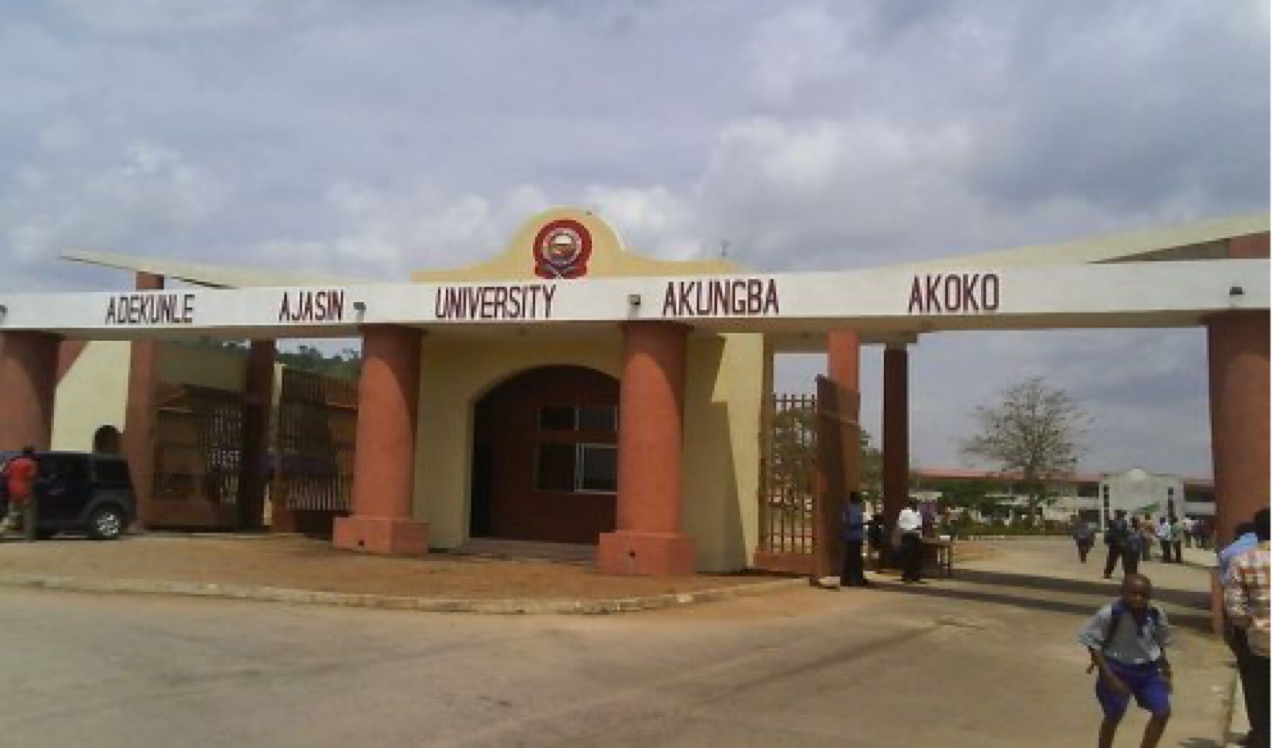
At Adekunle Ajasin University, Akungba-Akoko (AAUA), Ondo state, and two other universities owned by the state government, the ASUU chapters embarked on an indefinite strike on July 10 over the non-payment of May and June salaries.

The strike paralysed academic activities at the universities, stalling lectures and examinations.
Following a solidarity move by SSANU, NASU and other unions, the three Ondo universities were shut down for more than 68 days, sparking protests by students who blocked the federal highway running through Akungba, the AAUA community.
However, on September 21, the state government reached agreements with the universities’ unions on the implementation of the 2025 agreements and unpaid salaries.
In a statement, Ebenezer Adeniyan, chief press secretary to the governor, said the agreement followed a series of meetings between officials of the state government, led by Lucky Aiyedatiwa, the governor, and the leadership of labour unions in state-owned universities.
WHAT THE NEW AGREEMENT PROVIDES

At the centre of the disputes is a renegotiated agreement between the federal government and ASUU signed on January 14 after nearly 16 years of stalemate over the renegotiation of the 2009 pact.
The fresh agreement, which is to address the incessant strikes in Nigeria’s public universities, followed intensive negotiations between the government committee and the ASUU leadership, which concluded in December 2025.
The agreement provides for a 40 percent pay increase for all academic staff, to be paid through the Consolidated University Academic Staff Salary (CONUASS) and the Consolidated Academic Tools Allowance (CATA).
Tunji Alausa, minister of education, said the 40 percent increase, delivered through CATA, covers journal publications, conference participation, internet access, learned society membership and book allowances.
Under the new agreement, professors are now to receive N1.7 million annually as allowances to support research coordination, academic documentation, correspondence and administrative efficiency.
Professors are also expected to earn a pension equivalent to their annual salary at the retirement age of 70, while the proposed National Research Council (NRC) will fund research with at least one percent of Nigeria’s Gross Domestic Product (GDP).
Effective from January 1, 2026, the agreement is to be reviewed after three years.
Other key provisions include a better university funding model with dedicated allocations for research, libraries, laboratories, equipment and staff development; stronger university autonomy and academic freedom; and elected academic leadership (deans and provosts), with only professors eligible.
In September, the federal government announced the payment of CATA arrears covering eight months, from January, when the agreement took effect, to August, to lecturers across universities, polytechnics and colleges of education.
Announcing the release of funds, Alausa said the payment was in accordance with the provisions of the 2025 agreement reached with ASUU and reaffirmed the government’s commitment to its implementation.
IMPLEMENTATION DELAYS ACROSS STATES
Though the agreement was reached with the federal government, ASUU has insisted that, as owners of their universities, state governments are expected to separately domesticate and fund the agreement for their institutions.
Aside from the Ondo universities, 11 other state-owned universities were on the verge of a total shutdown in July as lecturers protested the failure of the affected state governments to implement the 2025 agreement between the federal government and ASUU.
Addressing journalists at a press conference, Monday Igbafen, ASUU Benin zonal coordinator, said the union had exhausted dialogue with the governors of Edo, Delta and Ondo states without making any meaningful progress.
At a separate press briefing that same month, Dani Mamman, ASUU Yola zonal coordinator, also accused the governments of Adamawa, Borno, Taraba and Yobe states of failing to honour agreements reached with the union despite months of engagement.
According to the unions, lecturers in the affected institutions were demanding the implementation of the Consolidated Academic Tools Allowance (CATA), payment of the Earned Academic Allowance (EAA) and professorial allowance, as well as all outstanding arrears dating back to January 2026.
The union gave the affected state governments until the end of July 2026 to implement the financial components of the agreement, warning that failure to do so would trigger total and indefinite industrial action at the affected universities.
At the time, reports indicated that only about 10 state universities had agreed to implement the agreement, leaving more than 57 others in limbo.
By mid-August, the disquiet had spread to more states, with ASUU’s national body directing about 20 state universities across the country to embark on indefinite strikes within two weeks over what it described as the “haphazard implementation” of the 2025 renegotiated agreement between the federal and state governments.
In a statement on August 11, Christopher Piwuna, ASUU president, said the decision was contained in the resolutions of the union’s national executive council (NEC) meeting held at the University of Abuja on August 8 and 9.
POST-SUBSIDY GAINS, VARSITY SHUTDOWNS

That same month, Taiwo Oyedele, minister of finance and coordinating minister of the economy, said the removal of the petrol subsidy had generated N15.8 trillion in savings for the federation between June 2023 and December 2025.
Speaking at a media conference on the scorecard of Nigeria’s reforms, Oyedele said the federal government received N5.4 trillion, representing 34 percent of the total.
According to the minister, state governments received N6.5 trillion, accounting for 41 percent of the savings and the largest share, while local governments received the remaining N3.9 trillion, representing 24 percent.
Also, in the first half of 2026, the Federation Account Allocation Committee (FAAC) distributed N10.96 trillion among the federal government, the 36 states, the Federal Capital Territory (FCT) and the 774 local government areas.
State governments received the largest share of the FAAC allocations, with N4.65 trillion, representing 42.41 percent of the total.
The amount represented a 25.77 percent increase over the N3.61 trillion shared during the corresponding period in 2025.
Meanwhile, state governors have, at different times, acknowledged the increase in FAAC receipts following the removal of the petrol subsidy.
On August 9, Abdullahi Sule, governor of Nasarawa, said that before the subsidy removal, the state received between N3.8 billion and N4.5 billion monthly from federal allocations, while its local governments received between N1.9 billion and N2.5 billion monthly.
Speaking in Lafia, the state capital, while hosting journalists and the presidential media team inspecting federal and state government projects in the state, Sule said the state’s monthly allocation had more than doubled following the removal of the petrol subsidy.
In July, Hope Uzodimma, governor of Imo and chairman of the Progressive Governors Forum (PGF), said reforms by the current administration had increased the state’s monthly FAAC allocation from about N100 million after salary payments in 2020 to more than N10.7 billion following the removal of the fuel subsidy.
However, lecturers at Imo State University (IMSU) have been on strike since August 10 over staff welfare concerns.
In a statement, Stephen Oguji, chairman of the university’s ASUU chapter, said the ongoing industrial action would continue until the 2025 agreement between the federal government and ASUU was fully implemented.
“ASUU-IMSU is on strike and will not suspend action until concrete, verifiable steps are taken,” he said, according to NAN.
Oguji said the union was opposed to dialogue without commitment, assurances without implementation, and promises without measurable results.
IMSU is not the only university facing similar challenges.
Lagos, which recorded the highest FAAC receipts among the states in the first half of 2026, with N365.78 billion, also witnessed strikes across its three state-owned universities.
On September 15, the ASUU joint campus union covering Lagos State University (LASU), Lagos State University of Education (LASUED) and Lagos State University of Science and Technology (LASUSTECH) declared an indefinite strike over unmet demands.
According to the union, the strike followed the expiration of a 14-day ultimatum issued to the state government on August 31, without a satisfactory resolution or a concrete plan to address its demands.
However, the three universities were shut down completely on October 2 after the Senior Staff Association of Nigerian Universities (SSANU), the Non-Academic Staff Union of Educational and Associated Institutions (NASU), and the National Association of Academic Technologists joined ASUU in the indefinite strike.
After about 25 days of industrial action, the unions suspended the strike following measures approved by Babajide Sanwo-Olu, the state governor, amid criticism of the government by several civil society organisations (CSOs) over the dispute.
The measures included the domestication and payment of 40 percent of the consolidated academic tools allowance (CATA), and 10 percent of the earned academic allowance (EAA) to university workers, effective January 1, 2026.
Similarly, despite Abia receiving total monthly FAAC allocations of N15.625 billion, according to Alex Otti, the state governor, the ASUU chapter at Abia State University embarked on an indefinite strike on August 11 over the non-implementation of the 2025 agreements, unpaid allowances and other outstanding welfare issues.
The strike was called off weeks later after Otti publicly apologised for the industrial action, describing it as “avoidable”.
Also, two universities owned by the Bayelsa state government — Niger Delta University (NDU) and Bayelsa Medical University (BMU), both in Yenagoa — experienced indefinite ASUU strikes before the industrial action was eventually called off weeks later, following the state government’s agreement to begin full implementation of the 2025 agreements.
Yet, Bayelsa was among the five states with the highest FAAC receipts in the first half of 2026, receiving N266.72 billion.
Beyond these cases, since August, state-owned universities in Taraba, Edo, Nasarawa, Plateau, Enugu, Kaduna and Gombe have also witnessed strikes by their academic staff unions, disrupting academic activities on their campuses at different times in recent months.
WHY DELAY IMPLEMENTATION?

The persistence of academic disputes across state-owned universities has raised questions about how state governments are deploying the increased allocations they have received in the post-subsidy era.
Governors have often pointed to infrastructure projects as major areas of expenditure funded by the billions of naira they have received.
However, the recurring strikes have raised serious questions about the priority given to university education in state spending.
Even where some of the strikes were eventually called off, observers have questioned why governors waited until after universities were shut down before taking steps towards implementing the 2025 FG-ASUU agreement reached in January.
Does this reflect a lack of strong commitment to public university education among the governors? Or is the agreement too costly for them to implement fully, despite the billions of naira spent on roads and bridges?
On October 2, the World Bank said Nigeria’s 36 states recorded a 93 percent increase in revenues between 2023 and 2025 but education received a declining share of the sector’s expenditure.
In its Nigeria Development Update, the global bank said states’ aggregate revenues rose by approximately 93 per cent in real terms, while expenditure increased by 92 per cent during the period.
The report attributed the improvement partly to exchange-rate reforms, petrol subsidy removal, stronger revenue administration and increased allocations from the federation account.
However, education’s share of total state expenditure declined from 14.9 percent in 2021 to 12.1 percent in 2025, according to the report.
Asked whether the agreement appeared too costly for the governors to implement, Emmanuel Osodeke, immediate past ASUU president, said: “No, it’s just about priority.
Speaking with TheCable, he argued that, “All over the world, including our neighbouring country, Ghana, no country in Africa gives less than 15 percent of their annual budget to education. But Nigeria gives less than seven. That tells you that the priority is not there.
“Let’s take a state like Imo. Imo refused to even talk about the agreement, let alone implement it. But Abia is implementing it. Is Abia getting more money than Imo?”
Osodeke claimed that lecturers at Imo State University had been on strike for weeks without a response from the state government.
In an interview with TheCable, Christopher Piwuna, ASUU president, blames the delay in implementation of the agreement on lack of commitment.
He said most state governments had agreed to implement the agreement, but Imo Taraba, and Niger are yet to do so.
“There is no reason. It’s just a lack of seriousness and the fact that education is not a priority to those states,” he said.
“If not, how can Imo, with one state university, being our member in ASUU, not be able to implement the agreement?
“Unfortunately, the governor is the one who leads other governors who have implemented it. That is the major challenge that we have.”
He said universities in other states had agreed, “there may be some hiccups here and there”.
He said even at the federal level, “there is hardly any month that a federal university does not embark on strike before the salaries are paid reflecting the new agreement.”
According to Piwuna, most of the states whose lecturers suspended strikes in the past month started paying the new salaries in October.
It took most of the state governments nearly 10 months after the agreement was signed in January to reach deals with their universities’ ASUU unions on implementing it.
How long it will take the remaining states, and how long full implementation will take across the country, remains to be seen. (TheCable)
-

 Politics20 hours ago
LG Chairman Confronts Teacher Over ‘Opposition’ Shirt
-
News5 hours ago
₦70,000 transport allowance: Federal pensioners decry exclusion, unpaid ₦25,000 palliative
-
Metro20 hours ago
Gunmen Abduct Teacher In Nasarawa, Demand N50m Ransom
-
Business22 hours ago
Binance freezes withdrawals after $6.3bn record crypto heist
-
Politics22 hours ago
2027: Onaiyekan backs opposition’s unity push against Tinubu
-
News14 hours ago
BREAKING: ‘Absolute Nonsense’ – Obasanjo Blasts Tinubu Over Borrowing
-
News20 hours ago
Gunmen Kill Police Inspector, 11 Others In Kebbi
-
Business22 hours ago
States get $4.8bn of Tinubu’s loan bid amid 288% rise in FAAC