Business
Kola Karim’s $10bn ambition: Building Nigeria’s answer to Tata

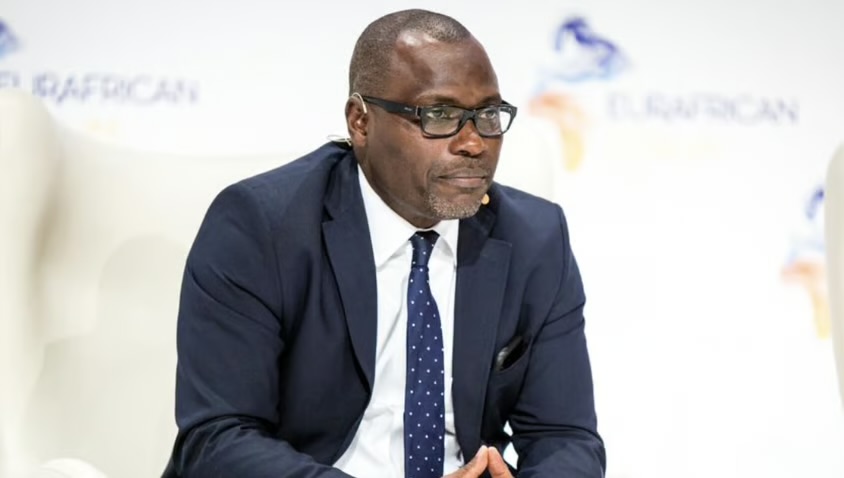
The headquarters of Kola Karim’s Shoreline Group in Lagos is part corporate office, part African art gallery. Paintings and sculptures fill the building, while a rooftop terrace, informal workspaces and table tennis help create an environment closer to a technology company than to a traditional Nigerian conglomerate.
Karim is particularly proud of the young employees working there. Ideas, he insists, should travel without being bogged down by corporate hierarchies. “They’re working differently. They’re chilling and thinking differently.”
It is a fitting setting for an entrepreneur who has spent two decades building businesses across oil, engineering and infrastructure and now has considerably bigger plans.
His target is to build a group generating $10bn in annual revenue within five years. But the more interesting ambition is not its size. Karim wants to reverse the relationship that has long defined African industrial capitalism: local businessmen provide capital, political connections and knowledge of the terrain, while foreign partners supply the technology and expertise.

India is a major inspiration. “All I’m doing is copying and pasting what the Indians have done,” he says, referring to industrial conglomerates such as Tata, which acquired established international businesses and leveraged their capabilities to expand into new markets.
“Our vision is [to] be a global business that happens to come from Nigeria.”
From buying oilfields to buying expertise
Karim’s own career illustrates the transition he hopes to accelerate.
In 2012, Shoreline joined forces with Heritage Oil to acquire a 45% interest in OML 30, a major onshore oil block in the Niger Delta, from Shell. The division of labour was familiar: Shoreline understood Nigeria’s political and commercial environment, while Heritage supplied much of the operating expertise.
Fourteen years later, Karim insists that Nigerian companies no longer need to rely on foreign technicians as they once did. He says 98% of Shoreline’s team are Nigerians, many of whom were trained by international oil companies. “Nigeria is at the fourth generation of oilmen,” he says. “The people are here.”
Production at OML 30 has risen substantially. Karim puts output at just under 70,000 barrels a day, compared with around 18,000 when Shoreline acquired its stake. Heritage, which remains the asset’s operator, reported reaching a peak of 67,000 barrels a day in 2025.
That distinction matters because Shoreline has helped finance and develop a much larger operation, yet it still shares responsibility with an established foreign partner.
Karim’s next move aims to shift the balance. In January 2024, Shoreline acquired control of Arkad, an Italian engineering company with roots dating back more than six decades. Rather than hiring foreign engineers to build African projects, Nigerian capital would now control an international engineering platform.
The results are beginning to materialise. Arkad has a 44% share in an engineering and construction contract valued at approximately $1bn for Algeria’s Hassi Bir Rekaiz oilfield. Egypt’s Petrojet leads the consortium, while Afreximbank has arranged a $200m financing facility to support Shoreline and Arkad’s participation.
For Karim, the transaction is a template. Experienced European engineering firms possess technical expertise, established reputations and skilled staff. However, many lack access to the expanding African market.
He believes Nigerian industrial groups can provide that access, acquire the businesses and direct their expertise towards projects that might otherwise never be built.
Guillaume Niarfeix, managing director of SPIE Nigeria and a long-standing observer of the country’s energy sector, sees a broader change underway.
“I would not necessarily have bet on Kola Karim 10 years ago to be where he is today,” he says.
Niarfeix argues that an earlier generation of local-content policies often encouraged businesses to collect fees without significantly developing productive capacity. Increasingly, he sees Nigerian entrepreneurs investing in the skills and assets required to compete internationally.
Tony Elumelu, chairman of Heirs Holdings, sees the same evolution. An earlier generation of Nigerian businessmen often made their money by acting as intermediaries for international companies. “The type of private sector we have today is different from the commissioned agents […] we had in the past,” he says. Those intermediaries “didn’t have their own skin in the game”.
Karim’s ambition is to go one step further: not merely putting Nigerian capital at risk, but also acquiring the engineering expertise that international companies once brought to the partnership. The test is whether Shoreline can convert that expertise into profitable contracts across Africa.
Yet there is a substantial difference between acquiring an engineering company and building a profitable global contractor. Arkad must deliver its Algerian contract safely and on time, while maintaining a margin and retaining the engineers whose expertise made the acquisition attractive.
Hotels, railways and an industrial empire
Karim’s expansion into hospitality follows a similar logic. In May, Shoreline signed a letter of intent with France’s Accor for a $300m hotel development programme across Nigeria. The plan announced covers 10 hotels in eight cities, providing more than 1,200 rooms by 2030.
Karim’s ambitions extend further: he talks of eventually building 15 hotels and managing 2,500 rooms. The arrangement is deliberately distinct from an equity joint venture. Shoreline intends to own the properties, drawing on its construction expertise and land-acquisition capabilities. Accor would provide the international brands, management systems and hospitality skills.
“The assets are all ours,” Karim says. “They’re just going to come and manage for us.”
Accor chief executive Sébastien Bazin describes the combination of Shoreline’s local knowledge and his company’s global expertise as ‘central’ to the proposed partnership.
Karim sees an enormous underserved market. He compares Nigeria’s hotels with its mobile-phone industry, where investors once doubted that ordinary Africans could afford a service that later became ubiquitous.
Connecting Nigeria to the world
Infrastructure offers an even larger prize. Through his partnership with Portugal’s Mota-Engil, Karim is involved in the Kano-Maradi railway, which aims to connect northern Nigeria to neighbouring Niger. He is also pursuing urban railway projects in Kano and Kaduna.
The Kano light rail scheme received federal approval this year. In November, government officials reported that the Kano-Maradi railway was approximately 70% complete.
Karim envisages something bigger than individual contracts: a continuous railway linking landlocked Sahelian markets to Lagos’s ports, thereby transforming the economics of regional trade.
He also views infrastructure as a solution to insecurity. Shoreline’s railway project, he says, employs thousands of workers, with community leaders helping to recruit labour along the route.
“The only way to decrease the tension is economics,” he argues. “If the man has got a job, trust me, he won’t be a bandit.”
It is an appealing thesis, although employment alone cannot resolve the political grievances and organised criminal networks that underpin insecurity in northern Nigeria.
Karim’s industrial ambitions extend into petrochemicals. Shoreline, he says, controls access to some 3.5 trillion cubic feet of gas. He is considering investments in fertilisers, ammonia and smaller-scale liquefied natural gas, with Brazil’s enormous agricultural industry as a potential export market.
He is already thinking about a world in which demand for crude oil will eventually decline. “The future is petrochemicals,” he says.
The problem of scale
There are considerable obstacles to building such a sprawling industrial group.
The first is capital. Nigeria’s borrowing costs remain high, while domestic investors lack the depth to provide the patient funding available to their international competitors.
Aigboje Aig-Imoukhuede, chairman of Coronation Group and a leading figure in Nigeria’s banking industry, argues that the country’s financial system remains incomplete. Its banks have grown into substantial institutions, but pensions, insurers and capital markets have not developed comparable capacity.
Next, management. As Shoreline moves from buying businesses to integrating them across different continents and industries, management will matter as much as dealmaking.
Karim’s answer is to keep the group structure relatively simple and rely on established international partners to operate individual businesses. His daughter and nieces are also taking roles across hospitality, engineering and construction.
He believes this combination of professional expertise, family continuity and decentralised management can support the next stage of growth.
Nigeria’s Old Boys’ club?
Karim complains that Nigerian capitalism remains concentrated in a handful of dominant companies. He argues that the country needs thousands of substantial industrialists rather than seven or eight.
“It can’t be the five, six, seven, eight people,” he says. “It’s best when it’s 2,000.”
Yet he also dismisses suggestions that an old boys’ network prevents newcomers from advancing. For him, the obstacle is as much psychological as institutional. “Who dares wins,” he says. “No one’s ever stopped you from building something.”
As a businessman, his success has depended on assembling international partnerships, access to finance and the relationships required to execute large projects in Nigeria. The next test is whether Shoreline can turn its expanding portfolio into a coherent, enduring industrial institution.
Beyond his own empire lies a larger question: can Nigeria create the conditions for the other 1,999 industrialists he believes the country needs?
(The Africa Report)
-

 African News24 hours ago
Why I chose South Africa posting over Europe — Fani-Kayode
-
News19 hours ago
BREAKING: Court restrains Jimmy Odukoya from parading himself as senior pastor of Fountain of Life Church
-
African News19 hours ago
South Africans Demand Total Ban On Nigerians In Fresh Protest
-
Metro24 hours ago
I wrote UTME eight times before gaining admission – Kwara education commissioner
-
Metro18 hours ago
Man accused of AI cheating in South Korean exam found dead
-
Business17 hours ago
Inside Nigeria’s trillion-naira pipeline security system where oil theft persists
-
Business13 hours ago
Fidelity Bank appoints Stanley Amuchie as new CEO
-
Metro24 hours ago
Police locate family of Nigerian-Canadian killed in Lagos crash