Business
Consumers face higher prices as biggest shipper raises import fees

…Importers threaten to ditch shipping giant
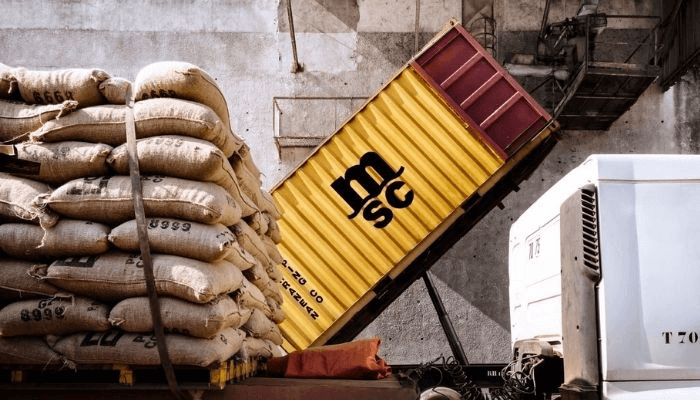
Nigerian consumers could face rising prices as Mediterranean Shipping Company (MSC), the world’s largest shipping firm, increases its local import fees, adding further strain on already cash-strapped households.
Experts warn that this could spark a fresh wave of price increases, potentially reversing the country’s recent disinflation trend.
Documents seen by importers indicate that, starting January 1, 2026, the import documentation fee for 20-foot containers increased from N45,000 to N58,500, while the fee for 40-foot containers rose from N72,000 to N93,600.

Port additional charges also jumped up to 60 percent, from N50,000 to N80,000 for 20-foot containers, and from N100,000 to N160,000 for 40-foot containers.
Sulaiman Ayokunle, senior special adviser on media to the president of the Association of Nigerian Licensed Customs Agents (ANCLA), warned that the timing of the announcement could have serious financial implications.
According to him, importers had already calculated shipment costs using the old rates, relying on those figures to price goods, plan cash flow and secure bank financing.
The sudden increase could disrupt these plans, delaying the clearance of goods and causing storage, demurrage and other port charges to accumulate, he noted.
“The little difference might make it stay longer, and the more it stays, the more you pay for rent and demurrage,” Ayokunle said. In extreme cases, consignments may be abandoned or auctioned.
He said consumers ultimately bear the cost of these increases. “Once you have an increase in total cost, you factor it into your consignment and the final consumer bears the brunt.”
How it happened
MSC called a meeting of stakeholders, including importers and freight forwarders on December 29, just days before the end of the year, to inform them of the planned increment three days later.
BusinessDay was made to understand by clearing agents that the shipping company had earlier met with the Nigeria Shippers Council, the port sector regulator, for approval, which was given without ‘direct engagement’ with stakeholders, which they call a ‘breach of policy guidelines.’
Shippers Council and MSC did not respond to BusinessDay’s request for clarification and explanation, but the Council informed the paper that it would meet with stakeholders for discussions in the coming week, recognising the development as a ‘very sensitive issue.’
Why MSC is raising fees
At the meeting with stakeholders in December, MSC cited operational costs, including factors like high inflation rates as a rationale for the hike. But experts and industry players do not seem to agree.
Muda Yusuf, an economist and founder of the Centre for the Promotion of Private Enterprise (CPPE), described the timing as ‘difficult to justify.’
“For the whole of 2025, there were no major macroeconomic shocks. Typically, such increases coincide with currency depreciation or major policy changes, which are not the case here,” he told BusinessDay.
The naira had one of its best years of stability in 2025. The country successfully shed 10 percent off its inflation rate, after starting the year with 24.5 percent and ending it with a rate of 14.45, according to data from the National Bureau of Statistics (NBS).
High inflation rate
However, BusinessDay found that among Africa’s major trading hubs, Nigeria’s inflation rate is one of the highest.
Countries like Morocco, where the Casablanca and Tanger Med ports are located and South Africa with Durban and Cape Town ports, recorded rates below four percent.
Meanwhile, in Kenya, where the Mombasa port is located, maintained a moderate three to 4.5 percent. Only Angola among the continent’s top port economies reported comparable levels.
Part of the operational costs for MSC, as told to stakeholders, includes the cost of maintaining a consistent energy supply. Yet, those like Ayokunle question it, claiming the cost “is coming down.”
“There was a time when diesel was around N1,200 per litre, but it is not more than N950 now. Even if there’s going to be a change, it should be put on the table for people to agree on. They shouldn’t push it down our throats,” he said.
According to information from GlobalPetrolPrices, as of Jan 5, 2026, the price of diesel in Nigeria stood at $0.648 (roughly N972) per litre.
How important is MSC in Nigerian shipping?
MSC is currently the largest container shipping company. Alphaliner’s latest top 100 rankings recorded it as the first carrier to exceed seven million TEU of total capacity.
As of 2026, MSC remains one of the largest carriers operating in Nigeria, primarily serving the ports of Lagos (Apapa and Tin Can) and Onne (Port Harcourt). According to its website, MSC Nigeria officially moves “more than 200,000 Twenty-foot Equivalent Units (TEUs) per year.”
Most of the shipments are daily and industrial goods, including electronics like smartphones and laptops, home appliances, vehicles and spare parts, medicines and vaccines, as well as clothing and fashion items.
Products that enter Nigeria on MSC ships also include food and perishable items, such as frozen fish, meat and poultry, processed foods like canned goods and beverages, and farming inputs like fertilisers and machinery.
Large and specialised cargo for infrastructure projects are not left out, including oil and gas equipment, construction machinery, and energy components for power plants and renewable energy projects.
In late 2025, MSC launched the ‘Iroko Service,’ which provides direct connections from China and Singapore to Lagos and Onne.
Importers threaten to ditch shipper
Yet, importers threaten to ditch MSC for competitors unsure of a reversal. “We have no choice but to pay. However, we are looking at stopping MSC. When they make these unilateral decisions, they usually don’t come back from it,” Oyejide said.
Yusuf of the CPPE said changes to charges by such carriers should come with sufficient notice to allow importers to “choose whether to use MSC or competitors.” “Competition is the best way to prevent arbitrary increases,” he said.
Notably, the price hikes coincide with the introduction of the Nigeria Tax Act that overhauls an old tax regime. But Yusuf said there is no connection.
BusinessDay’s findings show that Nigeria was not the only country hit with increased charges.
What is sauce for the gander
According to notices on its website, MSC raised freight rates for 20-foot and 40 foot containers from Far East ports, including Japan, Korea and Southeast Asia, to Northern European, Mediterranean and Black Sea ports. Trade from Sri Lanka and Bangladesh to Europe were also met with revised charges effective from January.(BusinessDay)
-

 Politics11 hours ago
2027: ADC campaign accuses Kwankwaso of working for Tinubu
-
News23 hours ago
Tragedy Averted As Private Jet Loses Door Mid-Air
-
Metro22 hours ago
Anglican Church suspends Archbishop ‘with immediate effect’ over alleged misappropriation of N2 billion
-
News11 hours ago
DSS arrests fleeing Maina’s son in Abuja
-
Business23 hours ago
Importation, Insecurity Threaten Nigeria’s Food Sufficiency
-
Politics11 hours ago
2027: Tinubu afraid to face Nigerians – ADC
-
Politics10 hours ago
Buhari considered it distasteful for Osinbajo to contest against Tinubu – Babachir Lawal
-
Politics7 hours ago
‘Tinubu Must Go’ Vs ‘Tinubu Must Stay’: Forces Behind Campaigns