Business
Senegal revokes offshore exploration license held by Nigerian billionaire Arthur Eze

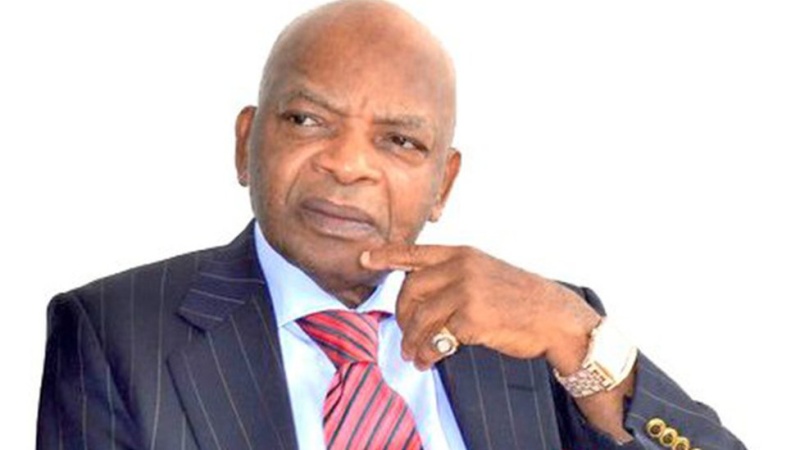
The Senegalese government revoked the Cayar Offshore Shallow exploration licence after determining that Atlas Oranto Petroleum, the holder, had failed to provide the required bank guarantees and carried out only minimal exploration work since the block was awarded in 2008, despite multiple extensions.
The block, covering approximately 3,600 square kilometres north of the Dakar peninsula, is considered oil-prone but underexplored, with several leads identified through seismic surveys but no wells drilled to date.
Under the supervision of Minister Birame Souleye Diop, the Ministry of Energy and Petroleum formally withdrew the licence in September 2025, citing the company’s repeated failure to meet financial and contractual obligations.
Industry accounts referenced in early 2026 confirm that the block saw little meaningful seismic or drilling activity during the licence period.

Senegal’s government has reclaimed control of the acreage, framing the decision as part of a broader effort to enforce compliance and implement stricter screening of petroleum rights holders under President Bassirou Diomaye Faye’s administration.
By reclaiming the block, Senegal joins a growing number of African producers reassessing legacy oil and gas contracts signed during earlier exploration cycles.
Governments across the continent are under increasing pressure to ensure that petroleum rights translate into investment, drilling and production rather than being held for speculative or financial optionality.
Regional developments put execution under scrutiny
The Senegal decision has drawn renewed attention to Atlas Oranto’s wider regional footprint, where its execution record has faced scrutiny in several jurisdictions.
In Liberia, developments in 2025 illustrate a contrasting regulatory posture. In September, Business Insider Africa reported that the Liberia Petroleum Regulatory Authority signed four production-sharing contracts with Atlas Oranto Petroleum International Ltd. covering offshore Blocks LB-15, LB-16, LB-22 and LB-24 in the Liberian Basin.
The agreements included a signature bonus reported at between $12 million and $15 million, alongside proposed investments exceeding $200 million per block.
Liberian authorities presented the deals as a bid to revive a petroleum sector that has seen little activity for more than a decade.
Civil society raises concerns in Liberia
The Liberian agreements quickly attracted criticism from lawmakers and civil society groups. The Economic Empowerment of Citizens Advocacy Forum called on the government to suspend the contracts, citing concerns over transparency, financial capacity and environmental risk.
Critics also questioned the structuring of signature bonuses into instalment-based payments, arguing that such arrangements weaken enforcement and reduce incentives for early-stage exploration, particularly in deep-water and high-risk offshore environments. (Business Insider Africa)
-

 Metro24 hours ago
TRENDING: Angry students avenge colleague, strip lecturer over attempted sexual assault
-
News11 hours ago
FG unveils loan for Nigerians to build or buy houses – How to apply
-
Politics11 hours ago
Osun Election: Bamidele urges Oyebamiji to congratulate Adeleke, offer policy ideas
-
News23 hours ago
$25bn Nigeria-Morocco Gas Pipeline Dream Drags
-
Business21 hours ago
IMTO inflows hit record $1.29 billion in Q1, jump 45% – CBN
-
African News19 hours ago
Anti-migrant group sets Sept 30 deadline for foreign nationals to leave South Africa
-
News23 hours ago
BREAKING: Edo Assembly Speaker resigns
-
Politics17 hours ago
‘I don’t want to be part of Nigerian politics; it’s evil’ — Davido