Business
Nigeria’s power math flips as solar becomes cheaper than grid

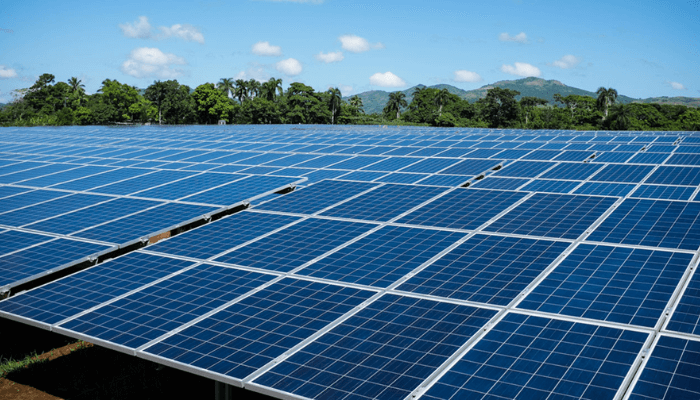
Solar power has become cheaper than electricity from Nigeria’s national grid for the first time, marking a turning point in the nation’s efforts to deliver reliable energy to its 200 million citizens as the traditional power infrastructure continues to falter.
Electricity costs from the national grid have surged to between N220 and N270 ($0.14-$0.17) per kilowatt-hour, more than double previous consumer rates, according to data from Financial Derivatives Company Ltd.
Meanwhile, solar and wind installations are generating power at N85 to 140 per kilowatt-hour, making renewable sources both cheaper and more dependable than gas-fired generation.
The cost advantage extends beyond initial pricing. Annual fuel costs for gas-fired power plants have climbed to N120 billion to N150 billion, while a 100-megawatt solar installation incurs just N1.7 billion to N2.5 billion in operation and maintenance expenses, the analysis shows.

“Back then, when you looked at the cost of grid power and diesel, solar was still more expensive,” said Adewale Odugbesan, chief executive officer of Royal Power & Energy Limited. “But if I’m comparing A and B now, the cost of solar is now cheaper.”
The price reversal comes as Nigeria grapples with persistent power shortages that have hampered economic growth and forced businesses and households to rely on expensive diesel generators.
“We’ve displaced tens of thousands of diesel generators,” said William Brent, chief marketing officer at Husk Power Systems, which has installed about 400 ‘mini-grids’ of solar and batteries across Nigeria and India. These are helping pharmacies store medicines and shopkeepers keep drinks cool at around half the cost of power from the grid.
The construction of vast solar arrays in deserts and small installations on rooftops have largely been driven by the same underlying trend: falling costs
China’s vast production of solar panels and batteries has also pushed down the prices of renewables hardware for everyone else, meaning it has “become very difficult to make any other choice in some places,” according to Heymi Bahar, senior analyst at the International Energy Agency (IEA).
In 2010, the IEA estimated that there would be 410 gigawatts (GW) of solar panels installed around the world by 2035. There is already more than four times that capacity, with about half of it in China.
Many countries in Africa, the Middle East, and even in petrostates such as Saudi Arabia, are rapidly developing solar power. “It’s a very cheap way to harness the sun,” said Kingsmill Bond, an energy strategist at think-tank, Ember.
With no fuel costs and minimal maintenance requirements, solar systems deliver predictable, inflation-resistant pricing – a critical advantage in an economy where the naira has lost significant value against the dollar.
The shift is accelerating Nigeria’s pivot toward decentralised renewable energy systems, particularly solar-powered mini-grids that bypass the dysfunctional national transmission infrastructure entirely.
About 170 existing mini-grid networks, predominantly solar-powered with battery storage, already demonstrate superior reliability compared with the perpetually unstable national grid.
These localised systems combine photovoltaic panels, battery storage, distribution lines, and smart prepaid meters to deliver consistent electricity independent of grid availability. Twenty-eight new mini-grids are scheduled for completion in the first quarter (Q1) of 2026, reflecting government confidence in distributed generation as grid supply continues deteriorating in both rural and urban areas.
“Mini-grid is the key technology option because we continue to witness the real-life impact of the technology across sectors,” said Abba Aliyu, chief executive officer of the Rural Electrification Agency.
“This solution is not only an electrification tool but a development catalyst, powering communities, schools, health centers, security, markets and accelerating inclusive economic growth.”
For individual consumers and businesses, solar adoption is increasingly viable across different price points.
Cost of solar power
Entry-level systems start at N400,000, offering basic power for fans, televisions, and mobile devices during short outages. Mid-range installations, priced between N 1 million and N5 million, provide more substantial backup with lithium-iron-phosphate batteries that deliver higher energy density and faster charging compared with traditional lead-acid alternatives.
Agboola Sodiq, social media strategist, said he invested N4 million in 2024 for a five-kilovolt-ampere system with six 400-watt solar panels. The setup powers two televisions, two deep freezers, 15 lighting points, multiple laptops, four fans, and a washing machine.
Before installing solar panels, Sodiq spent up to N300,000 monthly on fuel and electricity bills. Since switching to solar, his fuel expenses have dropped to N30,000 to N50,000 every six months, with annual electricity bills of just N40,000.
“I haven’t used my generator since the solar setup,” he said. “I’ve saved N1.72 million in just six months.”
High-end systems ranging from N10 million naira to N20 million offer near-complete energy independence. A top-tier 15-kilovolt-ampere hybrid solar system, featuring a 12-kilowatt inverter, 33-kilowatt-hour lithium-ion-phosphate batteries, and 11-kilowatt-peak solar panels, can power multiple air conditioners and refrigerators simultaneously while providing 15 hours of backup after sundown.
Nigeria’s energy crisis vs low income
The technology’s maturation coincides with Nigeria’s broader energy crisis. The national grid has suffered repeated collapses in recent years, leaving millions without power for extended periods. Industrial users have long relied on self-generation, but the falling cost of solar makes it increasingly attractive for residential and small business consumers who previously had few alternatives to unreliable grid supply.
Lithium-iron-phosphate batteries, now standard in quality solar installations, offer significant advantages over older lead-acid technology. They provide three times the power at high discharge rates while maintaining superior energy capacity, require minimal maintenance, and handle deeper discharges without degradation. Their higher energy density means more power in a lighter, more compact package.
Despite the compelling economics, upfront costs remain a barrier for many Nigerians in a country where median incomes are low. However, the rapid payback periods demonstrated by early adopters like Sodiq suggest that solar investment can deliver substantial savings within months, potentially opening pathways for financing models that make the technology more accessible.
As grid electricity becomes increasingly expensive and unreliable, Nigeria’s energy landscape appears poised for fundamental transformation, with solar power emerging not as an alternative but as the primary choice for consumers seeking affordable, dependable electricity. (BusinessDay)
-

 News18 hours ago
BREAKING: INEC declares Accord Party’s Adeleke winner of Osun governorship election
-
Politics17 hours ago
‘Bulldozer’: How Adeleke defeated APC, others to secure second term in Osun
-
News17 hours ago
Borno parents beg FG to rescue 52 children, others 90 days after abduction
-
Business17 hours ago
SEC orders Nigerian capital market firms to cut North Korea, Iran ties
-
Business17 hours ago
Tinubu’s tax reforms promised relief, evidence shows multiple levies are killing businesses
-
Opinion17 hours ago
ABACHA: 28 years on, still no evidence
-
 Sports19 hours ago
Osimhen gives Arsenal transfer green light
-
Metro17 hours ago
In Ekiti, students abandon school for online scam as mums form ‘Iya Omo Ologo Association’