News
Big money, small impact: Govs face fire over N9tn FAAC windfall

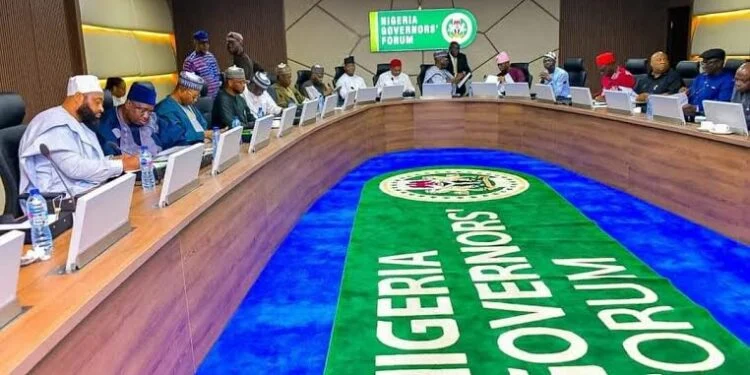
Despite receiving an estimated N9tn in Federation Account Allocation Committee inflows in 2025, state governors are facing mounting criticism from labour unions, civil society groups and opposition parties over what many describe as a widening gap between soaring revenues and limited improvements in citizens’ welfare.
FAAC allocations to states surged by over N2tn in one year, according to an analysis of Federation Account disbursement data published by the National Bureau of Statistics and collated by The PUNCH, highlighting the scale of the revenue windfall that flowed to subnational governments in 2025 amid higher federation inflows.
The sharp rise has triggered criticism from organised labour and opposition political parties, with the Nigeria Labour Congress warning that higher allocations have failed to deliver meaningful improvements in citizens’ welfare due to weak governance, misplaced priorities, and corruption at the state level.
Civil society organisations have also faulted state governments, accusing them of mismanaging the inflows and failing to translate increased revenues into visible development outcomes, while calling for stronger accountability and oversight.

Economists, meanwhile, say the surge has expanded states’ fiscal space but caution that heavy dependence on federally shared revenue and poor revenue management continue to undermine sustainable development at the subnational level.
The Federation Account disbursement data show that state governments received a total of N7.315tn from the Federation Account Allocation Committee in 2025, compared with N5.186tn in 2024. The year-on-year increase of roughly N2.13tn represents a jump of about 41 per cent in direct FAAC allocations to states.
When the constitutionally mandated 13 per cent derivation revenue is added, total inflows attributable to states climbed to N8.934tn (about N9tn) in 2025, up from N6.533tn in 2024, a rise of N2.4tn or 36.74 per cent.
This surge came against the backdrop of a sharp expansion in total FAAC distributions. Aggregate allocations to the three tiers of government, including derivation, rose from N15.259tn in 2024 to N21.897tn in 2025.
States therefore captured a substantial share of the overall increase, both in absolute terms and as a proportion of total federation revenues. Without the 13 per cent derivation component, states’ N7.315tn allocation in 2025 accounted for about 33.4 per cent of the N21.897tn total FAAC disbursement for the year, compared with roughly 34.0 per cent in 2024.
When derivation revenue is included, total state-linked receipts of N8.934tn represented about 40.8 per cent of total FAAC disbursements in 2025, down from around 42.8 per cent in 2024, indicating that while inflows grew in nominal terms, their relative share declined as allocations to all tiers expanded.
A closer look at monthly disbursements shows that state allocations improved steadily throughout 2025. States received N498.50bn in January, well above the N396.69bn recorded in January 2024.
Monthly allocations continued to trend higher, peaking at N727.17bn in October before easing to N601.73bn in December. By contrast, only two months in 2024 recorded allocations above N500bn, with the highest monthly figure being N549.79bn in December.
By the end of June 2025, states had already received over N3.32tn, compared with about N2.33tn in the first half of 2024, easing short-term liquidity pressures, particularly for states with heavy wage bills and debt service obligations.
Derivation revenue also played a critical role. In 2025, derivation payments rose to N1.619tn from N1.347tn in 2024, an increase of about N272bn or just over 20 per cent. Monthly derivation inflows were especially strong in September 2025, when oil-producing states shared N183.01bn, compared with N99.47bn in September 2024.
Despite the surge, states did not disproportionately outpace other tiers. Federal Government allocations rose from N4.951tn in 2024 to N7.613tn in 2025, while local government allocations increased from N3.774tn to N5.351tn.
Nevertheless, the impact on states is particularly significant given their responsibility for delivering education, healthcare, and infrastructure. The additional N2.4tn received in 2025 alone is equivalent to nearly half of what states received from FAAC in total in 2024.
The 10th edition of the BudgIT State of States Report, titled ‘A Decade of Subnational Fiscal Analysis: Growth, Decline and Middling Performance’, revealed that over 30 states rely heavily on FAAC allocations.
An executive of BudgIT said on Channels Television’s Politics Today programme, “At least thirty states, excluding Lagos, Ogun, and Enugu, relied on FAAC for more than sixty per cent of their recurrent revenue. Lagos remains an outlier, but Ogun and Enugu also seem to be performing quite well.
“In total, 31 states depended on FAAC for at least 80 per cent of their current revenue, which shows just how challenging the fiscal situation has become for many of them.
“For example, Lagos’s FAAC allocation rose from N4.24bn to N11.38bn, a massive increase that highlights how significant federation account transfers have become within a single fiscal year. Still, credit should go to the states that recorded strong year-on-year growth, as well as those that grew consistently over the ten-year period we reviewed.”
The report added that 29 states relied on FAAC receipts for at least half of their total revenue, 28 relied on it for at least 55 per cent, and 21 relied on it for over 70 per cent.
The BudgIT executives expressed concern that rising FAAC inflows were discouraging states from expanding internally generated revenue. This is “concerning because the more FAAC money states receive, the less incentive some of them have to develop their own internal revenue sources”.
They noted that “the proportion of IGR within total recurrent revenue declined slightly from 25.27 per cent in 2023 to 20.27 per cent in 2024, indicating continued dependence on federal transfers”.
The Managing Director of Optimus by Afrinvest, Dr Ayodeji Ebo, said, “These revenues are volatile and largely outside state control, making budgets vulnerable to oil price shocks. Over time, this approach also discourages ingenuity, as states become dependent on external inflows rather than building durable local revenue sources.”
A development economist and Chief Executive Officer of CSA Advisory, Dr Aliyu Ilias, said subnational governments are creating challenges for the federation through how they manage FAAC allocations.
He suggested “counterpart funding,” where states that increase their IGR receive proportional benefits, warning that without incentives, states would continue to rely heavily on Abuja. Ilias said, “While FAAC allocations are at unprecedented levels, they are not necessarily translating into improved living standards.”
NLC speaks
The country’s biggest labour union said rising FAAC allocations have failed to deliver meaningful benefits to citizens, blaming weak governance, misplaced priorities, and persistent corruption at the state level.
“Very few states are doing well in terms of how they deploy what they receive,” Assistant Secretary-General of the NLC, Onyeka Christopher, told The PUNCH. “The idea behind federal allocations is to bring the government closer to the grassroots, but unfortunately, in many states, this has not translated into the desired results for well-known reasons.”
The NLC added that, “Once people know there are no consequences, they will continue to steal public funds,” warning that kleptocracy continues to undermine development. “For FAAC to truly benefit the people, the issue of kleptocracy must be addressed. What are the EFCC and ICPC doing?” it asked.
CSOs react
Chairman of the Centre for Accountability and Open Leadership, Debo Adeniran, described subnational governments as “meddlesome interlopers”.
“Because we have been so complacent, we in the civil society, and maybe the media, have not been following the money from the point of release to the point of expenditure,” he said.
“The increase in allocations to states has just increased the financial opportunity for the state governors, not percolating to the level of the people that are supposed to be the final recipients of government charities,” Adeniran added.
The Executive Director of CISLAC, Auwal Musa Rafsanjani, said, “There’s no physical, verifiable, tangible evidence to show that the monies the governments are receiving are touching lives in terms of healthcare, electricity, physical infrastructure, or even agriculture.”
“What you see in the states is that these monies are collected, but it is about decamping, defections, and strategising for 2027,” he said.
Opposition parties lament
As federal allocations to states continue to rise, opposition parties, civil society actors and government officials across several states have expressed sharply differing views on whether the increased revenue has translated into tangible development and improved living conditions for citizens.
In Lagos State, the Chairman of the opposition African Democratic Congress, George Ashiru, said rising federal allocations and internally generated revenue had failed to ease hardship among residents.
According to him, inflationary pressures triggered by federal policies have outweighed gains from increased funding.
“Rents have gone up between 200 and 400 per cent in many areas. Social services have not matched inflationary trends, while infrastructure development still focuses on legacy projects instead of overcrowded inner-city areas,” Ashiru said.
He added that ongoing demolitions appeared to favour high-end housing projects, while public schools, healthcare facilities, intra-city roads and the overall cost of governance continued to suffer neglect.
The Peoples Democratic Party in Sokoto State rated the current development in the state as zero when compared to the huge allocations received from the federal government.
The spokesman of the party in the state, Hassan Sahabi Sanyinnawal, while speaking with our correspondent on the telephone, said the state government, led by Governor Ahmad Aliyu of the All Progressives Congress, only concentrates on two out of the 23 local government areas in the state.
“There is nothing on the ground to show for the huge allocation. We have 23 LGs in the state, but there is absolutely nothing going on in 21 LGs. In the two LGs within the metropolis, they are busy doing roundabouts, street fencing, and beautification.
“They did not do anything that the people of the state needed. Water is no longer running in the metropolis, the health sector is not getting attention, our education is not getting the necessary attention, among many others, but they are beautifying the metropolis.
“The beautification has no economic impact on the people of the state. They need to do better when you compare it with the money being received now,” he added.
On his part, the Kano State Chairman of the Social Democratic Party, Ali Shettima, said the absence of clear information on state allocations made it difficult to carry out a fair assessment of the government’s performance.
“I don’t even know how much is allocated to the state. I can’t give an accurate assessment based on something I don’t know,” he said.
In Plateau State, the Chairman of the Alternative Democratic Party (ADP), Bitrus Boyi, questioned the visibility of development projects despite claims of increased federal allocation.
“If truly there has been an increment in federal allocations, it has not translated to development. Most of the projects we see are funded by development partners,” he said, urging the state government to ensure that increased revenue benefits residents.
Similarly, the Peoples Redemption Party (PRP) in Bauchi State accused the state government of prioritising “luxury and white elephant projects” over education and healthcare.
The party’s chairman, Abbas Abba, described the condition of schools and hospitals as “poor and alarming,” alleging that government spending focused more on propaganda than sustainable impact.
However, the ruling Peoples Democratic Party in Bauchi rejected the claims, insisting that development was evident in regular salary payments, road projects, healthcare revitalisation and school renovations across the state.
In Zamfara State, politicians Alhaji Musa Yankuzo and Mohammed Sani said the state had little to show despite higher federal allocations, accusing governors of mismanaging funds for selfish interests rather than development.
The ADC in Kebbi State also dismissed the achievements of Governor Nasir Idris, with the party’s chairman, Sufiyanu Bala, citing unemployment, dilapidated schools, out-of-school children and weak healthcare services as evidence that increased allocations had failed to improve living standards.
In Gombe State, the PDP said development remained “one-sided,” alleging that the ruling APC focused mainly on capital projects with little direct impact on citizens’ welfare.
“The essence of democracy is to improve education, health, water supply and security. That is not what we are seeing,” PDP spokesman Abdulkadir Ahmad said.
Contrasting views
In contrast, the Labour Party in Nasarawa State commended the Governor Abdullahi Sule-led APC government for infrastructure development, particularly the completion of the over N16bn Lafia flyover and ongoing projects in Akwanga, Keffi and Karu.
LP chairman Alexander Ombugu praised the administration’s prudence and commitment, urging the governor to do more. President Bola Tinubu had commissioned the Lafia flyover in June 2025 alongside other projects, including roads, a new secretariat complex and a solar mini-grid.
In Kwara State, the PDP and APC traded blame over the impact of rising federal revenue.
The PDP accused the state government of concentrating spending in limited areas of Ilorin, the capital city, and neglecting insecurity, workers’ welfare and rural communities.
“We have had huge allocations since 2019, yet the people have benefited close to nothing,” PDP spokesman Olusegun Adewara said, calling for improved security, better wages and investment in the informal sector.
The APC dismissed the claims, insisting that the AbdulRahman AbdulRazaq administration had deployed resources across infrastructure, education, healthcare and social investment programmes in all senatorial districts. (Punch)
-

 Business22 hours ago
No Plan To Increase Electricity Tariff – FG
-
Entertainment22 hours ago
Why I linked Isbae U with Obasanjo for his show interview — Charly Boy
-
World News22 hours ago
White House Launches ‘Trump TV’ As US Media Protests Ban On CNN, Others
-
 News22 hours ago
FG Inaugurates Panel Probing Miners’ Deaths
-
Business22 hours ago
BREAKING: CBN Cuts Interest Rate to 23%
-
Metro22 hours ago
Couple, Three Children Killed as Overhead Water Tank Collapses on Home in Enugu
-
World News22 hours ago
Memoir by Diana’s brother goes on sale after rocking UK monarchy
-
Politics22 hours ago
Makinde challenges Tinubu to account for election promise to fix Nigeria’s electricity