News
How coup-proof is President Bola Tinubu?

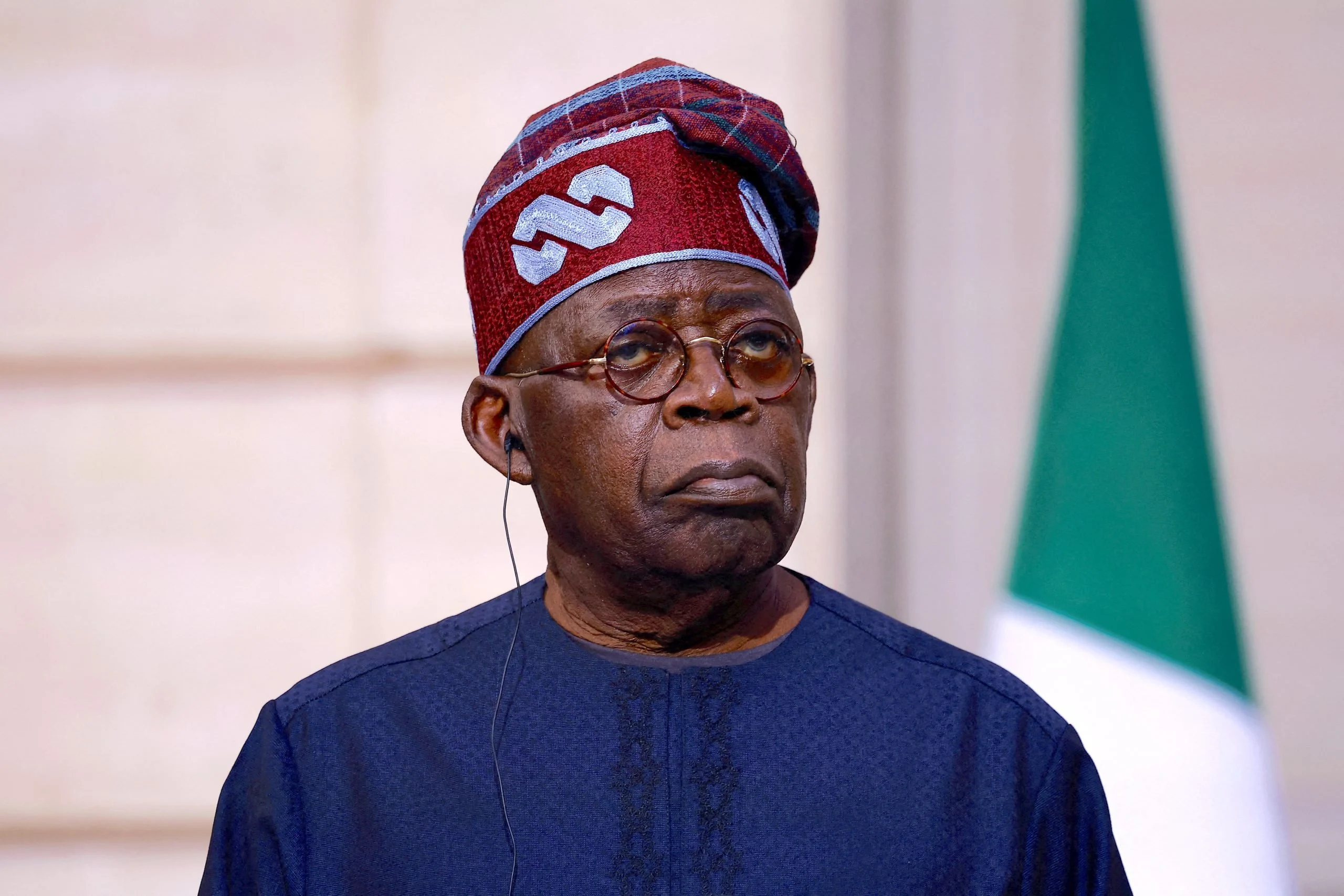
In late January 2026, Nigeria’s defence headquarters said it had completed an investigation into allegations of a coup plot. It said the probe grew out of the October 2025 arrest of 16 officers accused of involvement.
The plot was reportedly uncovered in late September through joint intelligence work. Yet, as rumours swirled, officials denied any coup attempt, saying the detained soldiers were held for unspecified misconduct. The shift from denial to a coup-related case has revived a question Nigeria has not had to face for more than two decades: how exposed is Africa’s largest democracy to the pressures reshaping West Africa?
A retired senior military officer who served in both administrative and operational roles during military rule and the early years of the 1999 transition says that the threat should not be romanticised – nor should it be dismissed.
“If you mean assassinate, yes – any president could be assassinated by any determined intruder,” he says, speaking on condition of anonymity. “But a military takeover of the Nigerian government is nearly impossible in the present era. A successful coup would require the 36 state governors, their aides and officials to be eliminated or forced to surrender, and the broader population would also have to side with the coup plotters.”

Nigeria’s history explains the anxiety. Coups in 1966 dismantled the First Republic and ushered in long stretches of military rule. In 1993, President Bola Tinubu was forced out of elected office, and later went into exile, after General Sani Abacha seized power.
Since the return to civilian rule in 1999, Nigeria has avoided a takeover, even as neighbours in the Sahel (Niger, Chad, Burkina Faso and Mali) fell to juntas – one reason last year’s rumours, and the October arrests, jarred.
Coup friction
Modern coups in West Africa have often relied on speed and surprise: neutralise the head of state, control communications and then force political submission. Nigeria’s post-1999 settlement was designed to make that harder.
“[Olusegun] Obasanjo knew that regardless of how fortified Aso Rock was, a coup could still be staged from within or outside,” the retired officer says, referring to Obasanjo’s first months in office in 1999. “He hit the ground running with unapologetic military reforms and preemptive moves to discourage and disable the military from interfering in government, let alone seizing power.”
The reforms were an approach rather than a single fix: professionalise senior command, tighten intelligence monitoring and harden the norm that the military’s role is to fight and stabilise – not to govern. Over time, overlapping security institutions and reporting lines helped raise the cost of coordination.
Nigeria’s federation amplifies that “coup friction”. Even if putschists controlled key sites in Abuja, they would still face 36 governors with their own political machines and local legitimacy. A takeover would have to compel, coopt or crush multiple centres of authority, quickly enough to prevent a counter-mobilisation.
“It was reported that Nigeria’s defence intelligence architecture was largely responsible for foiling the coup attempt,” says retired Air Vice-Marshal Olatokunbo Adesanya, a defence expert and former spokesperson for the Nigerian Air Force. “To that extent, I believe President Tinubu is well protected by a loyal military, and I do not foresee a successful military coup in Nigeria today.”
The caveat is cohesion at the top. A coup that holds would almost certainly require acquiescence among senior commanders, not merely anger among lower ranks. Nigeria’s armed forces are large and deployed across multiple internal security theatres, creating stresses that can fuel grievances – but also making a clean seizure of the state harder.
The Sahel’s shadow
Even if Nigeria is structurally harder to seize, the regional climate has changed what officers and civilians think is possible. Since 2020, coups in the Sahel have been framed by their leaders as corrective acts – a reset against insecurity, corruption and foreign dependence. Social media has amplified the story, often stripping out the costs.
The risk is higher than at any point in the past 20-plus years
In Nigeria, where frustration with governance is deep and the military is stretched, the immediate risk may be less a successful takeover than more frequent attempts. Career grievances inside the ranks can harden quickly: promotions delayed, benefits withheld, deployments extended and the sense that politicians prosper while soldiers absorb the danger.
Kabir Adamu, a security expert and head of the risk management firm Beacon Security and Intelligence Limited, says the way neighbouring juntas are being portrayed may raise the risk of intervention, even if success remains unlikely.
“A successful coup currently appears low to moderate in realism in the very short term,” he says, “but the risk is higher than at any point in the past 20-plus years due to recent events.”
Unlikely, but not impossible
So how coup-proof is Tinubu? Nigeria’s post-1999 order offers real protection: a federation that disperses authority, security agencies designed to watch each other and a political culture that – for all its dysfunction – has normalised civilian succession. Those factors make Nigeria a harder prize to win than the Sahel’s coup belt.
But coup-proof is not a binary concept. It is a probability shaped by intent, capability and opportunity – and by whether institutions keep raising the cost of conspiracy faster than discontent lowers it.
For now, the strongest conclusion is this: a coup attempt is plausible, but a coup that holds is still a long shot. The military’s move from denial to a coup-related investigation suggests it detected something serious and wants deterrence through exposure.
Three near-term indicators will matter most:
- What the defence headquarters discloses – if anything – about the alleged plot and the path to court martial.
- Whether further reshuffles or quiet disciplinary actions suggest deeper concern inside the chain of command.
- Whether the romance of soldiers as savioursremains fringe talk or begins to surface in mainstream political discourse.
Nigeria has gone more than two decades without a coup. The latest episode suggests it is not beyond challenge. But the country’s size, structure and security habits make it a harder target than its neighbours. That remains Tinubu’s best protection.
(The Africa Report)
-

 Politics24 hours ago
Why was I sold N50m Ogun guber nomination form if I was suspended? – Abayomi Hunye asks APC
-
Business15 hours ago
Moniepoint exits UK remittance market after $2.5m investment
-
Business24 hours ago
Atiku’s proposed petrol subsidy plan to cost Nigeria N19trn yearly – Presidency
-
News24 hours ago
Hausa People Are Pillars Of Nigeria’s Progress – Tinubu
-
Business15 hours ago
AI models could begin to act against human interests – Bill Gates warns
-
Opinion24 hours ago
Unclaimed Dividends And The Student Loan Fund: A Noble Cause, A Legal Question
-
Politics20 hours ago
FCT council chair backtracks on ‘support APC or leave’ remark, says he respects residents’ rights
-
Politics15 hours ago
ADC demands arrest of Kuje council chair over ‘support APC or leave’ remark