Business
Dangote refutes petrol import claim, says economic saboteurs behind propaganda

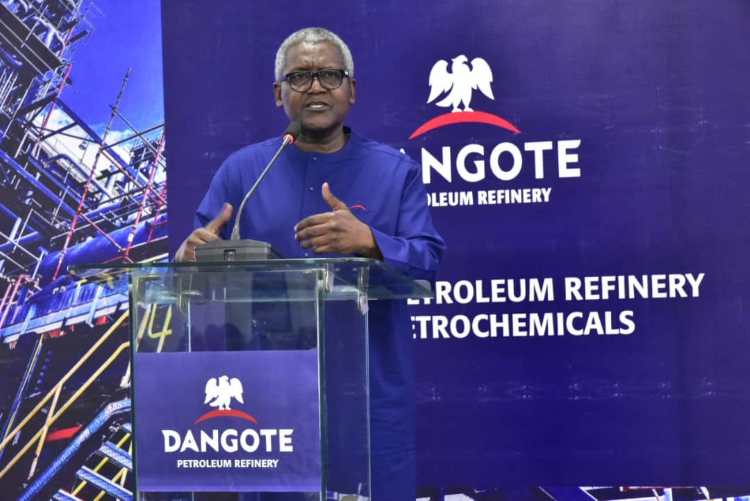
The Dangote refinery says it has identified individuals responsible for spreading what it described as a misleading narrative that the facility imports petrol into Nigeria.
On February 4, David Bird, chief executive officer (CEO) of the Dangote refinery, clarified that the company only imports intermediate feedstocks and not finished petroleum products.
In a statement issued on Monday, the refinery said it would disclose the identities and motives of those behind the claims at the appropriate time.
“This propaganda is being promoted by unpatriotic and unscrupulous individuals who cannot afford to see Nigeria stop imports, individuals who helped to milk the NNPC refineries through fraudulent financing transactions for refinery repairs, which ended up being squandered. These individuals will soon have their day in court,” the statement read.

The refinery said the clarification followed recent publications attributed to an international intelligence firm, noting that the reports misrepresented its operations and painted a misleading picture of Nigeria’s refining landscape.
Dangote refinery said it “categorically refutes claims, amplified through certain newspaper adverts on Monday, February 9, 2026, suggesting that it imports finished Premium Motor Spirit (PMS) into the country”.
According to the company, the misinformation was “appropriately addressed during an S&P Global forum held today in the United Kingdom”, where participants acknowledged the refinery’s “pivotal role” in reshaping the global refining landscape.
The statement stressed that the refinery does not import petrol into Nigeria, adding that it is “only pursuing alternative feedstocks to improve its secondary-unit utilisation”.
Dangote refinery described the claims as inaccurate and deceptive, explaining that as a merchant refinery operating in line with global best practices, it imports only feedstocks and blending components — not petrol.
“These materials, including high sulphur reformates, low-RON condensates, and high sulphur cracked gasoline, must undergo further processing before they meet regulated market specifications,” the refinery said.
It added that this approach is standard global practice, particularly “among advanced refining hubs in Europe and Asia, where facilities routinely optimise their crude slates and blending strategies to enhance operational flexibility and margins”.
The refinery said misrepresenting intermediate streams as “fuel” or “gasoline” distorts public understanding and undermines confidence in Nigeria’s domestic refining progress.
Dangote refinery noted that the only petrol it supplies to the Nigerian market is its Euro 5–compliant product, adding that each batch undergoes strict quality checks to ensure Nigerians receive fuel that “ranks among the highest quality available globally”.
Since commencing operations, the company said it has significantly improved fuel quality in the Nigerian market and ended the country’s dependence on low-grade, high-sulphur petrol historically imported into West Africa.
The refinery also called on industry stakeholders to uphold higher standards of technical accuracy, balance, and responsibility in public reporting.
-
Politics17 hours ago
2027: Opposition to name single presidential candidate before polls – Lukman
-

 Politics5 hours ago
2027: Northern govs pledge total support for Tinubu
-
Business8 hours ago
Petrol: Transporters raise fares, commuters groan
-
Opinion19 hours ago
The president, the errand man and the frequent flyer miles
-
Opinion5 hours ago
Nigeria’s jobless growth: The 800m job deficit warning
-
Metro9 hours ago
Man Drowned Trying To Rescue Suspect On Suicide Mission
-
Politics5 hours ago
APC’s internal contradictions scare me more than Atiku, Obi – Shettima
-
News17 hours ago
Ambassador Patrick Dele Cole dies at 86