News
US Push To Scrap Sharia Sparks Outrage

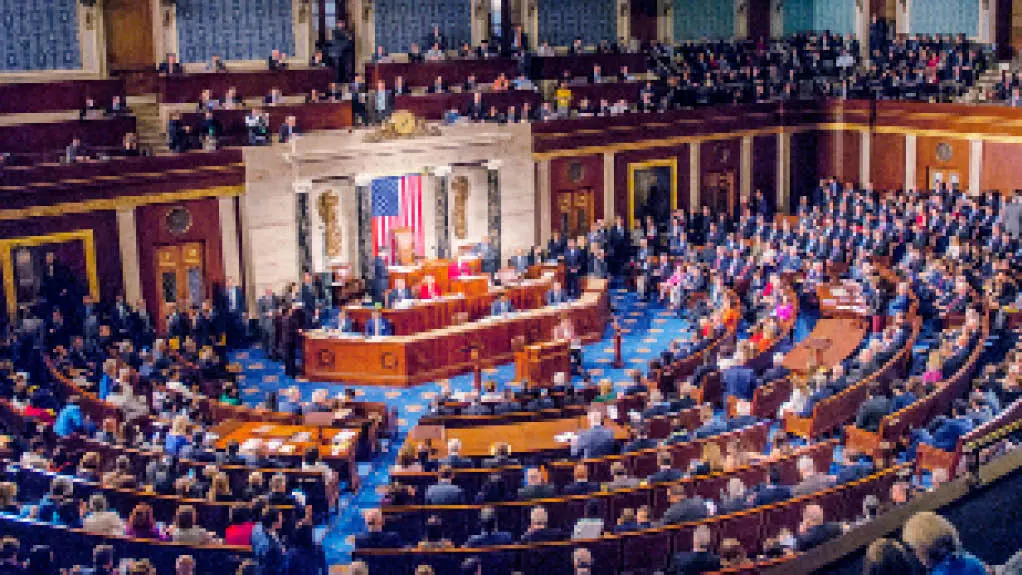
Islamic clerics and leaders of thought have kicked against the recommendation by a committee of the United States Congress, which, among others, demanded the repeal of Sharia codes and anti-blasphemy laws in Nigeria.
Recommendations emerging from engagements within the United States Congress, contained in a joint report on “Christian persecution in Nigeria” submitted to the White House on Monday by the House Foreign Affairs Committee and the House Appropriations Committee, concerning security developments in Nigeria, included the disarmament of the Fulani herdsmen, and blocking export of beef and other cattle-related products to countries like Ivory Coast, Ghana, South Africa, and Senegal.
The committee had claimed in its report that, after decades of persecution, Nigeria is the deadliest place in the world to be a Christian, stressing that, “Christians are subject to ongoing violent attacks from well-armed Fulani militias and terrorist groups, resulting in the death and murder of tens of thousands of Christians, including pastors and priests, the destruction of thousands of churches and schools, as well as kidnappings.
“Blasphemy laws in Nigeria’s northern states are used to silence speech and dissent, target Christians and minorities, and justify so-called ‘convictions’ without due process.”

This is coming despite persistent rejection of a Christian genocide claim by Nigerians across the country.
Responding to the development yesterday, Kaduna-based Islamic cleric, Ahmad Gumi, defended the application of Shariah law in Nigeria. In a post shared on his verified social media page, the cleric argued that Muslims have the right to be governed by their religious injunctions.
“Shariah Law is the Muslims’ prerogative just as the US found it only necessary to protect the Christians,” he said.
He further stated that Muslims are victims of what he described as “occult terror” imported into the country by hidden forces.
“At the same time, Muslims are more victims of this occult terror imported into the country by hidden forces they very well know,” Gumi stated.
In another post, the cleric questioned what he termed a double standard in the global discourse on religion and governance.
“It’s ok for US evangelical Christians administration for Israel to live by biblical stories yet Haram for Muslims to live by the Quranic injunctions.
“Shariah law operates alongside conventional legal systems in several northern states, mainly in matters concerning personal and family law for Muslims”, he said.
Similarly, another Kaduna-based Islamic cleric, Sheikh Halliru Maraya, told our reporter by phone last night that the issue is “sensitive and double-edged,” warning that it could either foster peace or deepen divisions in Nigeria.
He cautioned the US Congress against portraying the violence as targeting only one faith group. “Both Muslims and Christians are at the receiving end,” he said. “The perpetrators are not sparing one religion against the other—they kill everyone.”
Sheikh Maraya stressed that any US intervention must respect Nigeria’s sovereignty and align with its laws.
He cited Kaduna State as an example, noting that between 2015 and 2023, more than 4,000 people were killed by gunmen, most of them from Muslim-dominated local communities such as Giwa and Igabi.
“If Congress had carried out a thorough and unbiased inquiry, they would have found that the carnage affects all faiths, including non-believers,” he argued.
He further pointed to Zamfara and Plateau states, where Muslims have also been victims of mass killings.
“In essence, I don’t believe a certain faith group is the only target, as the US is portraying it,” he said.
Instead of framing the crisis narrowly, Sheikh Maraya urged Washington to support Nigeria with intelligence sharing, equipment, training, and technical assistance to combat violence.
“That is the kind of help we need—help that is in line with our laws as a sovereign nation,” he added.

US directives on Sharia laws provocative – Dr Baba-Ahmed
A former spokesman of the Northern Elders Forum (NEF), Dr Hakeem Baba-Ahmed, described the US Congress recommendation on Sharia in Nigeria as provocative.
Speaking with Daily Trust on the issue, Dr Hakeem said, “If reports that US Congressman Riley Moore has led his colleagues to present recommendations to the White House on escalation of punitive action against non-Christian Nigerians over alleged increasing incidents of genocide against Christians in our country are true, then it is time to take the nature of our current relationship with the US more seriously.
“Some of the additional measures being recommended include abolishing the Sharia legal system and abolishing criminal blasphemy laws, limiting Nigeria’s relations with Russia and China, identifying the Fulani as a hostile group and recommendations against them, which border on ethnic cleansing, and a host of other measures that will secure for the US a much stronger foothold in Nigeria and the Sahel.
“We already have agreements that allow US troops and equipment to operate in a number of locations in Nigeria. We have no idea how many more will come, and how long they will stay. Our leaders tell us this collaboration represents an agreed strategy to help Nigeria fight insecurity, but the US has insisted this is its response to an ongoing genocide against Nigerian Christians. Dozens of Nigerian Muslims and Christians die daily, right under the nose of US troops, its Mission in Nigeria and representatives of the global community.”
He said these proposals represent a dangerous escalation of the US’s opportunism in Nigeria and West Africa, lamenting that the manner in which they are framed is intended to weaken the government’s capacity to protect the country’s sovereignty and ability to fight insecurity.
“Recommendations on scrapping Sharia and criminal blasphemy laws are deliberately provocative, intended to reopen settled constitutional issues that are part of the fabric of our nation. There is no evidence that Christians exclusively are victims of killers and kidnappers.
“Proposals to bestow advantages exclusively on Nigerian Christians are crude attempts to dampen inter-faith relations. Only unforgivable ignorance or dangerous mischief will support any argument that Nigerian Christians can be isolated and protected at the expense of non-Christian Nigerians. We are a country designed to co-exist and share in fortunes and setbacks”, Dr Hakeem said.
He called on President Bola Ahmed Tinubu to stand up to the Americans in defence of Nigeria.
“This is the time for President Tinubu to stand up to his responsibility as our leader. His government should tell the US in very clear terms that its involvement in our country’s affairs does not suggest that it is our friend.
“Some would see very clear attempts to balkanise the most populous African country, an attempt which will fail, but hurt Nigeria and Africa very badly.
“We demand greater clarity over the details of all agreements with the US government. We want to hear our leaders say to President Trump that Nigeria welcomes support on our terms, but will not submit our country and its future to more intense, prolonged crises which, as we speak, are being designed in Washington,” he said.
Recommendations
Also included in its recommendations to the White House, the committee said the United States and Nigeria should redefine a new strategic partnership to make America – and Nigeria – safer, stronger, and more prosperous.
…Strike a bilateral agreement between the United States and the Government of Nigeria to protect vulnerable Christian communities from violent persecution, eliminate jihadist terror activity in the region, further economic cooperation, and counter adversaries in the region, including the Chinese Communist Party and the Russian Federation. Such an agreement should include:
Co-fund donor-supported humanitarian assistance – including through faith-based organisations – and to prioritise underserved communities of Internally Displaced Persons (IDPs) and their host communities, especially in the predominantly Christian Middle Belt region;
Support and respond to early-warning mechanisms to prevent attacks and kidnappings, including by deploying sufficient and capable security forces to the Middle Belt to enable rapid and effective response, and hold those who ignore the warnings accountable.
Remove Fulani militias from confiscated, productive farmland and enable the voluntary return of displaced communities to their homes, including by ensuring security and infrastructure, thereby reducing the need for humanitarian aid and generating economic development and increased agricultural productivity.
Continue and expand security cooperation with the United States, including by divestment of Russian military equipment for American military equipment through sales and financing.
Technical support to the Government of Nigeria to reduce and then eliminate violence from armed Fulani militias, including by: Developing a demobilisation, disarmament, and reintegration program to address illicit weapons and support safer communities while allowing farmers to engage in legitimate self-defence;
Supporting the new Ministry of Livestock, ranching plans, and meaningful land reform efforts; and
Enhancing the recruitment, technical capabilities, and willingness of the security forces and military to prevent and respond to violent attacks.
Comprehensive counter-terrorism cooperation to rid the region of Foreign Terrorist Organizations that pose a direct threat to the American homeland, including through the provision of excess defence and use of relevant drawdown authorities.
Counteract the hostile foreign exploitation of Chinese illegal mining operations and their destabilising practice of paying protection money to Fulani militias.
Implement the National Security, Department of State, and Related Programs Appropriations Act, 2026, to support the preceding recommendations and the following priorities:
* Increased accountability by requiring proof of progress before obligating additional funds.
* Programs to address religious freedom, atrocity response, legal reforms, expand and improve policing, strengthen the criminal justice sector, improve anti-money laundering methods, and enhance capabilities to disrupt terrorist financing networks as well as capture illicit monies from Fulani militia members.
* Treasury Department programs and activities to strengthen the integrity of Nigeria’s financial system which will safeguard U.S. national security and enhance the favorable balance of trade for the United States.
* U.S. Development Finance Corporation investments in Nigeria, especially in the Middle Belt.
* GAO audit report on the effectiveness of aid to Nigeria and recommendations for strengthened oversight.
* Invoke and publicly announce the CPC Presidential Directives to name and shame perpetrators of violence.
* Implement sanctions on groups and individuals who participate in, or tolerate violence against, Christians.
* Continue visa restrictions for perpetrators involved in Christian violence and violations of religious freedom.
* Demand the repeal of sharia codes and criminal anti-blasphemy laws.
* Review and use points of leverage to compel Fulani herdsmen to disarm, including by blocking export of beef and other cattle-related products to countries like Ivory Coast, Ghana, South Africa, and Senegal.
* Require a National Intelligence Estimate (NIE) on Nigeria’s sectarian and communal violence, and review classifying Fulani militia groups with links to terror groups, as well as other groups conducting campaigns of violence that threaten the United States, as a Foreign Terrorist Organisation.
* Enlist the support of international partners, including France, Hungary, and the United Kingdom.

US has no right to dictate Nigeria’s security policy – Prof Ibrahim
Also speaking to the issue, a prominent political scientist, Prof Jibrin Ibrahim, criticised the United States for what he described as a simplistic interpretation of Nigeria’s security crisis, warning that the country’s sovereignty must not be compromised under the guise of foreign concern.
In a chat with Daily Trust, Prof Jibrin acknowledged that Washington has the right to express concerns about certain people being killed in Nigeria.
However, he stressed that it is not the place of the US to determine Nigeria’s security policies.
He noted that much of the violence in Nigeria is not targeted at any specific religious group, but driven by rampant banditry and competition over resources.
He added that armed groups often attack anyone who stands in their way, regardless of faith or ethnicity.
Prof Jibrin said, “Well, the US has a right to express its concerns about certain people being killed in Nigeria. But it is not for the US to determine Nigeria’s policy on security matters. I feel the security situation in Nigeria is a very complex issue.
“And they have a very simplistic approach. It’s much wider and much more complex than that. Definitely, Christians are being killed, but Muslims are also being killed. And in addition to that, a lot of the violence is not targeted at any community.
“It is just banditry that has gone out of hand. And they are killing anybody they see who blocks their access to resources. So, it’s a resource war that has been ongoing for some time.
“So, it’s very complex, and there are many dimensions. And I don’t see that complexity in the reports by the Americans.”
He also said the Tinubu administration appears reluctant to firmly assert Nigeria’s independence in the face of foreign commentary.
“I argued previously that the Tinubu administration has basically sold out our sovereignty to the Americans. They feel the Americans are the ones who have understanding, who have a voice, and who have the right to do what they want,” he said.
He warned that Nigeria’s sovereignty could be under threat if its leaders fail to assert national interests decisively.
He urged Nigerians to defend the country’s autonomy while addressing the deep-rooted and complex drivers of insecurity at home.
On his part, Ambassador Ibrahim Kawu, a former Nigerian ambassador to the United Nations, decried what he described as the United States’ disregard for Nigeria’s sovereignty.
He also faulted what he called Abuja’s approach to the situation.
“The US doesn’t respect Nigeria as a sovereign state, and it’s our fault because we have never challenged them at the United Nations,” he said, adding that Abuja’s silence in multilateral fora has only reinforced Washington’s perception that Nigeria will not assert its independence on the global stage.
“We have already allowed the US army to come into Nigeria, but we can threaten to abrogate the agreement under which they are in Nigeria.
“If Niger Republic could ask the US to close its military base in its country, why can’t Nigeria ask the 200 or 400 US soldiers to leave Nigeria?”
Congress report is catalyst for broader cooperation – FG
Meanwhile, the federal government has reacted to the report of the US Congress, saying it is a catalyst for broader cooperation between the two countries.
A statement by Mohammed Idris, Minister of Information and National Orientation, on Tuesday, said Nigeria values its longstanding and strategic partnership with the United States.
“Our two countries share common interests in promoting security, economic development, and regional stability. We remain open to constructive dialogue and cooperation rooted in mutual respect, shared responsibility, and recognition of Nigeria’s constitutional framework and sovereignty.
“The federal government will continue to engage international partners through appropriate diplomatic channels while remaining focused on its primary duty; the protection of all Nigerians,” he said.
While acknowledging that parts of the country are facing serious security challenges, including terrorism, banditry, and communal conflicts that have tragically affected many communities, he said the federal government remains deeply concerned about the loss of lives and destruction of property resulting from these criminal acts.
Idris reiterated that Nigeria does not have a state policy of religious persecution, adding that the violence being confronted by the security agencies is not driven by government policy or religious bias, but by complex security threats, including terrorism, organised criminality, and longstanding communal tensions.
“The Constitution of the Federal Republic of Nigeria guarantees freedom of religion and freedom of worship for all citizens. The federal government remains firmly committed to upholding these constitutional protections and to ensuring equal protection under the law,” the minister said.
In response to evolving security threats, he said the federal government has significantly strengthened coordinated military and law enforcement operations across affected regions.
“Ongoing counter-terrorism offensives have degraded the capacity of armed groups, disrupted kidnapping networks, and led to the arrest and neutralisation of key criminal elements.
“Intelligence sharing and inter-agency collaboration have been enhanced to improve early warning and rapid response mechanisms, particularly in vulnerable rural communities.
“In addition, the government has intensified surveillance and clearance operations in forested areas long exploited by criminal groups.
“The establishment and deployment of specially trained forest guards is to deny terrorists and bandits safe havens, improve territorial control, and strengthen community-level security presence. These efforts are complemented by increased investment in equipment, mobility assets, and technology to support the Armed Forces and other security agencies,” he said.
(Daily trust)
-

 Politics19 hours ago
Tinubu using foreign reserves to create misleading impression of economic growth – Makinde
-
Politics19 hours ago
ADC mocks APC over ‘rented crowds, empty seats’ at Kaduna rally
-
Politics19 hours ago
2027: It’s Our Turn To Repay Tinubu – Shettima Tells Northerners
-
Politics19 hours ago
2027: Forget About Social Media News, Nigerians Love Tinubu – Information Minister
-
Metro18 hours ago
How AI-generated photo cost kidnap victim N4m ransom – Freed Benue graduate
-
Politics18 hours ago
Ebola: Parties reject campaign suspension
-
Politics18 hours ago
2027: Pantami, Adebutu, Gwarzo’s fates uncertain
-
Metro18 hours ago
Self-driving car hits, kills man on US freeway