Opinion
Tinubu’s Executive Order: Test of fiscal transparency

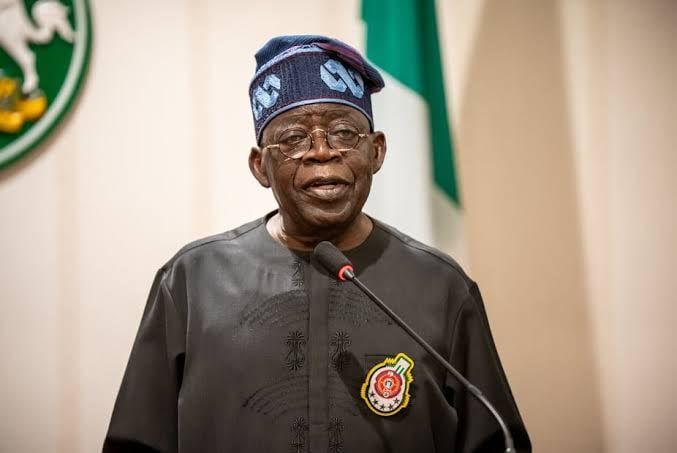
PRESIDENT Bola Tinubu’s Executive Order mandating the direct remittance of oil and gas revenues to the Federation Account is a frontal challenge to the fiscal architecture that has governed Nigeria’s oil economy since the enactment of the Petroleum Industry Act.
Indeed, it serves as a litmus test of whether transparency can finally prevail against discretion in the country’s most opaque sector.
At its core, the order seeks to restore constitutional primacy over petroleum revenues by insisting that royalties, taxes, profit oil and profit gas be paid into the Federation Account before any deductions.
This will dismantle the murky regime of pre-remittance retentions, most notably the 30 per cent “management fee” and the 30 per cent Frontier Exploration Fund, that had effectively turned NNPC Limited into both a commercial enterprise and a quasi-fiscal authority.

It has been a case of the tail wagging the dog as NNPC managers decide what to remit to the national treasury despite years of protest by the Revenue Mobilisation, Allocation and Fiscal Commission.
The NNPC has retained more than N2 trillion over four years through these mechanisms, according to this newspaper’s calculations.
In 2023 alone, the NNPC retained N695.9 billion, representing an increase of N675.16 billion or an astonishing 3,255.4 per cent rise over the previous year. These are resources that have eluded the common FAAC pool shared by the federal, state and local governments.
Tinubu, who doubles as Petroleum Resources Minister, rightly pointed out that since the NNPC retains 20 per cent of its profits to cover working capital and future investments, the additional 30 per cent management fee is unjustified.
Indeed, how can the NNPC justify additional “management fees” with its woeful performance in managing the operations and subsidiaries, especially the refineries, and the N17 trillion hole in its accounts?
Concerns over the accumulation of “idle cash” under the 30 per cent Frontier Exploration Fund are also valid. Such activities should be driven by commercial viability, privately funded, not by policies designed to “balance the equation” in oil production that have yielded little result despite trillions pumped into exploration ventures in inland basins.
The country cannot continue to embark on a wild goose chase while critical needs in education, health, infrastructure, and security remain unmet.
Overlapping functions of the Midstream and Downstream Gas Infrastructure Fund and the PIA-created Environmental Remediation Fund, administered by the Nigerian Upstream Petroleum Regulatory Commission, in the collection of gas flaring penalties appear resolved with direct payment to the federation account.
However, the controversy exposes a fundamental contradiction embedded in the PIA. On one hand, the law sought to commercialise NNPC, transforming it into a profit-driven company insulated from political interference.
On the other hand, it preserved channels through which the same company could retain large portions of federation revenue upfront, exercising discretion over costs and cash flows under production sharing contracts, and funding speculative oil prospecting.
This duality has proved corrosive. A company that is both referee and player, commercial operator and gatekeeper of public revenue, inevitably evades accountability.
The executive order is therefore an admission that the PIA, in its current form, left critical anomalies unresolved. Tinubu’s promise of a comprehensive review of the Act is thus not optional if Nigeria is to reconcile commercial autonomy with fiscal discipline.
The RMAFC, a long-time advocate for these changes, says it would not just improve revenue flows but also restore the revenue rights of all three tiers of government.
For states and local governments, the attraction of the order is straightforward. More gross revenue flowing into the Federation Account means higher and more predictable allocations through the FAAC.
State finance commissioners have rightly argued that the reform is less about a windfall than about custody and transparency. It is about ensuring that what belongs to the federation is first pooled, then shared, rather than filtered through opaque deductions.
Yet expectations must be managed. Even sympathetic state officials concede that the immediate gain, estimated at around N1.5 trillion annually, will not transform public finances overnight.
The deeper value lies in discipline: forcing all actors to justify spending through budgets and oversight rather than automatic charges.
In essence, more money should not translate into more looting and more white elephants, while ordinary citizens remain mired in misery.
The Federal Government and the Central Bank of Nigeria have framed the order as part of a broader macroeconomic stabilisation effort aimed at shoring up revenues, improving debt sustainability and strengthening confidence in public finance management. That argument has merit in a country where oil is tied to fiscal solvency.
Labour unions, particularly PENGASSAN, are not as optimistic. Their fears about job losses, operational disruptions, and weakened oversight of deepwater assets cannot be dismissed.
Production sharing contracts are complex commercial arrangements where costs are monitored, barrels, not cash, are shared, and crude-backed loans worth over $3 billion complicate revenue flows.
Abrupt changes, not properly communicated, risk unsettling investors and lenders alike.
But labour’s argument also underscores why reform must be systemic rather than ad hoc. If frontier exploration, joint venture funding and PSC oversight are strategic priorities, they should be transparently funded through appropriations, ring-fenced investment vehicles or clearly defined cost-recovery mechanisms, not through muddy, automatic deductions that escape scrutiny.
Perhaps the most delicate question is investment. Nigeria’s oil sector has suffered from policy volatility for decades. The PIA took almost two decades before it was passed in 2021, as investors held back on fresh commitments. Still, it has failed to address certain issues that necessitated its passage.
The remedy, however, is not in hasty nullification of its provisions. Investors remain wary of signals that contracts can be overridden by executive fiat. The executive order, therefore, carries risk if it is perceived as substituting discretion for law.
The antidote is the speedy and clarified issuance of implementation guidelines, explicit protection of existing contractual obligations, and, crucially, legislative amendment of the PIA to align it with constitutional revenue rules.
Firm assurances must be given concerning the sanctity of PSCs and other arrangements and funding options for such, cast in stone.
Without this, the order could be challenged in court, prolonging uncertainty and undermining the very confidence it seeks to build.
Ultimately, the debate is not about whether the NNPC should be funded or whether exploration should continue.
It is about value. Nigeria has extracted oil for six decades, yet the returns to citizens remain paltry because of poor governance, giving rise to leakages and widespread corruption.
For years, the NNPC sustained its notoriety as a cesspool, functioning as a source of slush funds for sundry, murky undertakings ranging from election campaigns to “donations” to foreign governments at presidential discretion. Its managers, many of them now billionaires, also “helped” themselves.
By forcing revenues into the open and subjecting spending to democratic oversight, Tinubu’s order points in the right direction. But executive action alone cannot substitute for durable institutional reform.
The promised review of the PIA must resolve its contradictions. The NNPC’s commercial role must be clearly delineated ahead of its privatisation, while transparency must be entrenched as a non-negotiable principle of governance.
In the end, Tinubu should deepen fiscal federalism by returning Nigeria to the First Republic revenue sharing formula in which the regions retained 50 per cent of their income.
•Punch Editorial Board
-

 Politics22 hours ago
‘Adeleke isn’t Fubara’ — Dele Momodu faults Wike’s claim he could have helped Tinubu win Osun
-
News22 hours ago
Troops repel terrorists attack, rescue 14 kidnapped victims in Katsina
-
Opinion22 hours ago
Tinubu, terminate the dodgy £746m ports deal
-
Sports22 hours ago
Bayern’s Musiala suffers another collapse in three days
-
News22 hours ago
FAAC: FG, states, LGs share N3 trn
-
Politics22 hours ago
2027: SDP’s Adebayo faults Tinubu’s absence at National Peace Accord
-
Business19 hours ago
Africa’s biggest bank targets stake in OPay ahead of IPO – Report
-
Politics22 hours ago
2027: Registered voters will exceed 100m – INEC