Business
Middle East war sends crude higher, fuels fresh inflation risk in Nigeria

• Dangote raises ex-depot price to N874; pump prices set to climb
• Brent jumps 13 per cent as Hormuz disruption chokes supply
• Analysts warn crude could hit $120 if tanker traffic stalls
• Depot owners suspend sales over replacement cost fears
• Higher oil revenue may be offset by rising food, transport costs
• Qatar halts LNG output; Saudi refinery shuts after strikes
• Wealthy executives exit region as airspace closures widen crisis
• U.S. issues security alert to citizens in Nigeria over Iran conflict
Escalating conflict in the Middle East has pushed global crude prices higher, triggering fresh fuel price adjustments in Nigeria and raising concerns over renewed inflationary pressure on households and businesses.
As supply risks intensified around the Strait of Hormuz, energy costs surged, compelling refiners and depot operators to recalibrate pricing. The development underscores the fragility of pump price stability under deregulation, where international volatility feeds directly into domestic inflation trends.

Dangote Petroleum Refinery has increased its Premium Motor Spirit gantry price by N100, raising the ex-depot rate to N874 per litre from N774, a move likely to prompt fresh adjustments in pump prices nationwide.
The Guardian learnt yesterday that the revised price has taken effect, according to checks on petroleumprice.ng.
Industry sources indicated that the upward review followed renewed volatility in the global crude oil market, with international prices rising above $80 per barrel overnight.
Data from the downstream sector showed that the refinery suspended petrol loading operations effective at midnight on March 2, 2026, following a surge in crude prices. The suspension affected the issuance of proforma invoices and PMS loading, while Automotive Gas Oil (diesel) continued to load without disruption.
Market checks further revealed that the new N874 per litre ex-depot rate signals a shift in downstream pricing benchmarks, with retail pump prices expected to adjust accordingly.
The development triggered uncertainty across the downstream petroleum sector, as several private depot owners reportedly halted petrol sales during the trading day over concerns about replacement costs and pricing direction.
Analysts said the latest increase highlights the sensitivity of domestic fuel prices to fluctuations in international crude markets, raising concerns about the sustainability of price stability under the deregulated regime.
Oil surges as Strait of Hormuz disruption rattles global markets
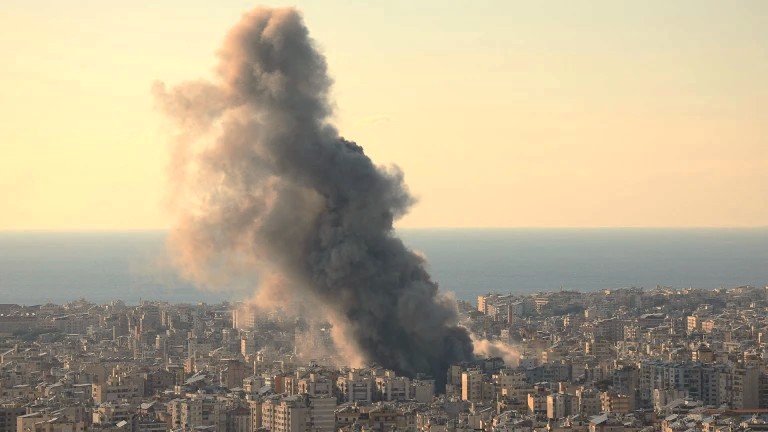
Global energy markets were thrown into turmoil yesterday after fighting involving the United States, Israel and Iran disrupted oil and gas flows through the Strait of Hormuz, sending crude prices sharply higher and triggering refinery and LNG shutdowns across the Gulf.
Brent crude on the Intercontinental Exchange rose by as much as 13 per cent in early trading to above $82 a barrel before easing to about 6 per cent higher later in the day.
Major analysts, including JPMorgan, warned that prices could climb above $100 and reach as high as $120 per barrel if tanker traffic is not restored quickly.
The Strait of Hormuz, which accounts for about 15 per cent of global oil supply and roughly 20 per cent of global LNG trade, is effectively closed following Iranian threats to shipping and the withdrawal of war-risk insurance coverage. Vessel traffic through the route has reportedly fallen by about 70 per cent, with several ships attacked in recent days. Insurance premiums for large crude tankers have risen to more than $400,000 from about $250,000.
Qatar yesterday halted LNG production after Iranian drone strikes on energy facilities, putting nearly one-fifth of global LNG supply at risk. Natural gas prices also rose by about 4 per cent.
In Saudi Arabia, state oil firm Saudi Aramco confirmed the shutdown of the Ras Tanura refinery near Dammam after missiles were fired at the export terminal. The refinery, one of the kingdom’s largest, has a capacity of more than 500,000 barrels per day. No casualties were reported.
Analysts said the disruption has created a dual supply shock by curtailing current exports and limiting access to OPEC spare capacity. Much of that spare output would normally transit the Strait, reducing the group’s ability to stabilise markets if the closure persists.
Head of commodities strategy at ING, Warren Patterson, said supply risks were increasing as shippers avoid the Gulf. He noted that refined product markets were tightening, with the ICE gasoil crack spread rising above $30 a barrel amid concerns over middle distillate exports from the region, which ships about six million barrels per day of refined fuels.
Wood Mackenzie warned that oil prices could exceed $100 a barrel if flows are not restored promptly. The consultancy’s senior vice-president for refining and oil markets, Alan Gelder, said tanker rates and insurance premiums would continue to rise, but the main price impact would come from sustained physical shortages.
Gas markets are also under pressure. About 81 million tonnes of LNG transited the Strait last year, largely from Qatar. European storage levels are below seasonal norms, raising the prospect of intensified competition between Europe and Asia for alternative cargoes.
Gold prices also climbed as investors sought safe-haven assets. Analysts said higher oil prices could lift inflation expectations, while geopolitical uncertainty may suppress real yields, supporting bullion prices.
While higher crude prices could increase revenue for oil-dependent countries such as Nigeria, rising energy costs may worsen inflation and push up the prices of goods and services, including food, transport and pharmaceuticals.
Market participants said volatility is likely to remain elevated and driven by developments in the conflict, posing additional risks for import-dependent economies.
Poland backs dialogue as envoy calls for restraint in global conflicts
The Polish Ambassador to Nigeria, Michal Cygan, has reaffirmed his country’s commitment to peaceful negotiations as the most sustainable means of resolving global conflicts.
Speaking at a diplomatic engagement in Lagos, Cygan urged caution amid rising geopolitical tensions, advising nations to tread carefully in addressing complex international crises.
“War in general is not a good way for any sustainable, long-term resolution,” he said, stressing that dialogue remains central to Poland’s foreign policy.
Cygan added, “We believe in negotiations. This is the position of the Polish government. We support the United Nations Charter because we do not have anything better than that.”
He expressed hope for ceasefires in ongoing conflicts and called for a swift return to diplomacy.
However, the ambassador criticised Iran’s government, stating that there is little sympathy in Poland or across Europe for Tehran’s actions, particularly its alleged support for Russia in the war in Ukraine.
He condemned what he described as Iran’s supply of military equipment, including drones, to Russia, saying such actions amount to supporting “the aggressor against another country.”
Cygan clarified that Poland’s criticism is directed at government policies rather than the Iranian people, adding that the Iranian nation deserves peace and freedom like any other country.
Riyadh becomes exit hub as tensions drive evacuations from Middle East
Riyadh has emerged as a key transit point for wealthy individuals and senior executives seeking to leave the Middle East amid escalating regional tensions.
Sources indicated that private security firms have been arranging convoys of sport utility vehicles to move clients from Dubai to Riyadh, where chartered private jets are used to fly them out of the region.
Those evacuated reportedly include senior executives of global financial institutions and high-net-worth individuals who were in the region for business or leisure.
Chief Executive of Vimana Private, Ameerh Naran, said the cost of private jets from Riyadh to Europe has risen sharply.
“Saudi Arabia is the only real option for people who want to get out of the region right now. Private jets from Riyadh to Europe now cost up to $350,000,” he said.
Ian McCaul, operations and plans director at UK-based security firm Alma Risk, said the company has received requests from families, individuals and corporate organisations seeking assistance to leave.
“We’ve been approached by a mixture of clients, including families, individuals and corporations that want to get out of the region either because they fear for their safety or, for business reasons, need to travel,” he said.
Tensions escalated on Saturday when Iran launched reprisal attacks on United States military bases in the Middle East, with explosions reported in Abu Dhabi, Manama, Doha, Kuwait and Riyadh. The strikes followed a joint missile attack by the United States and Israel on Iran.
The conflict has disrupted economic activities across the region. The United Arab Emirates closed its airspace, Qatar Airways suspended all flights, and Dubai airports shut down operations indefinitely. Several international airlines also announced temporary suspensions of services to and from the Middle East.
U.S. issues security alert to citizens in Nigeria over Iran crisis
The United States government has issued a security alert to its citizens in Nigeria following escalating hostilities between the U.S. and Iran.
In a statement yesterday, U.S. authorities urged Americans abroad to remain vigilant amid ongoing military operations involving Iran.
“Following the launch of U.S. combat operations in Iran, Americans worldwide and especially in the Middle East should follow the guidance in the latest security alerts issued by the nearest U.S. embassy or consulate,” the advisory stated.
The alert warned that Americans could face travel disruptions due to periodic airspace closures linked to the crisis.
The U.S. Department of State advised citizens globally to exercise increased caution. It also encouraged them to enrol in the Smart Traveller Enrollment Programme to receive timely updates and to follow the ‘U.S. Department of State Security Updates for U.S. Citizens’ WhatsApp channel for additional information.
The advisory followed reports by Iranian state and local media confirming the death of Iran’s Supreme Leader, Ayatollah Ali Khamenei, after airstrikes reportedly carried out by the U.S. and Israel. Several other senior Iranian officials were also said to have been killed.
In response, Iran reportedly launched multiple missiles targeting U.S. bases in Gulf countries, including Saudi Arabia, pledging to avenge the deaths of its leader and other officials.
U.S. President Donald Trump, speaking during a live broadcast on Saturday as the attacks unfolded, said he was determined to eliminate members of the Iranian regime and called on Iranian citizens to take control of their government after the military operations. (Guardian)
-

 News15 hours ago
Military brass ignored Abacha’s burial plans, lobbied for succession – Abdulsalami
-
Sports15 hours ago
FIFA must never compromise football’s universality – Sepp Blatter
-
News15 hours ago
Nigerian youths condemn Major Gen Rabe Abubakar’s killing
-
Metro15 hours ago
Appeal Court’s President under fire over special Saturday sitting in hometown
-
News19 hours ago
Rtd General Rabe Laid To Rest In Katsina
-
 News22 hours ago
Kidnappers Still Holding Widow Of Abducted General
-
News19 hours ago
‘Houses, grants could be yours’ — Dikko Radda woos bandits with reintegration offer
-
Sports15 hours ago
From Bauchi to Brighton: The making of Nigeria’s new wonderkid Yohanna