The 2025 Operational Performance Report released by the Nigerian Ports Authority (NPA) said total cargo throughput surged by 24.8 per cent, rising from approximately 103.6 million metric tonnes in 2024 to 129.3 million metric tonnes in 2025.
While imports continued to dominate overall cargo traffic, the report highlighted a steady rise in outward trade, with exports accounting for 39 per cent of total cargo throughput. Inward traffic represented 59.2 per cent, and transshipment contributed 1.8 per cent.
Analysts view the growth in export volumes as a direct validation of the Federal Government’s economic diversification initiatives, aimed at reducing dependence on crude oil and promoting non-oil sector exports.
Containerised cargo, a key indicator of export trade activity, grew significantly with a total container traffic increased by 25.7 per cent, surpassing 2.1 million twenty-foot equivalent units (TEUs).

Of this, export containers grew by 3.1 per cent, while import-laden containers surged by 32.8 per cent.
The report also noted a remarkable 205.8 per cent increase in transshipment containers, signalling Nigeria’s emergence as an important regional logistics and trade hub.
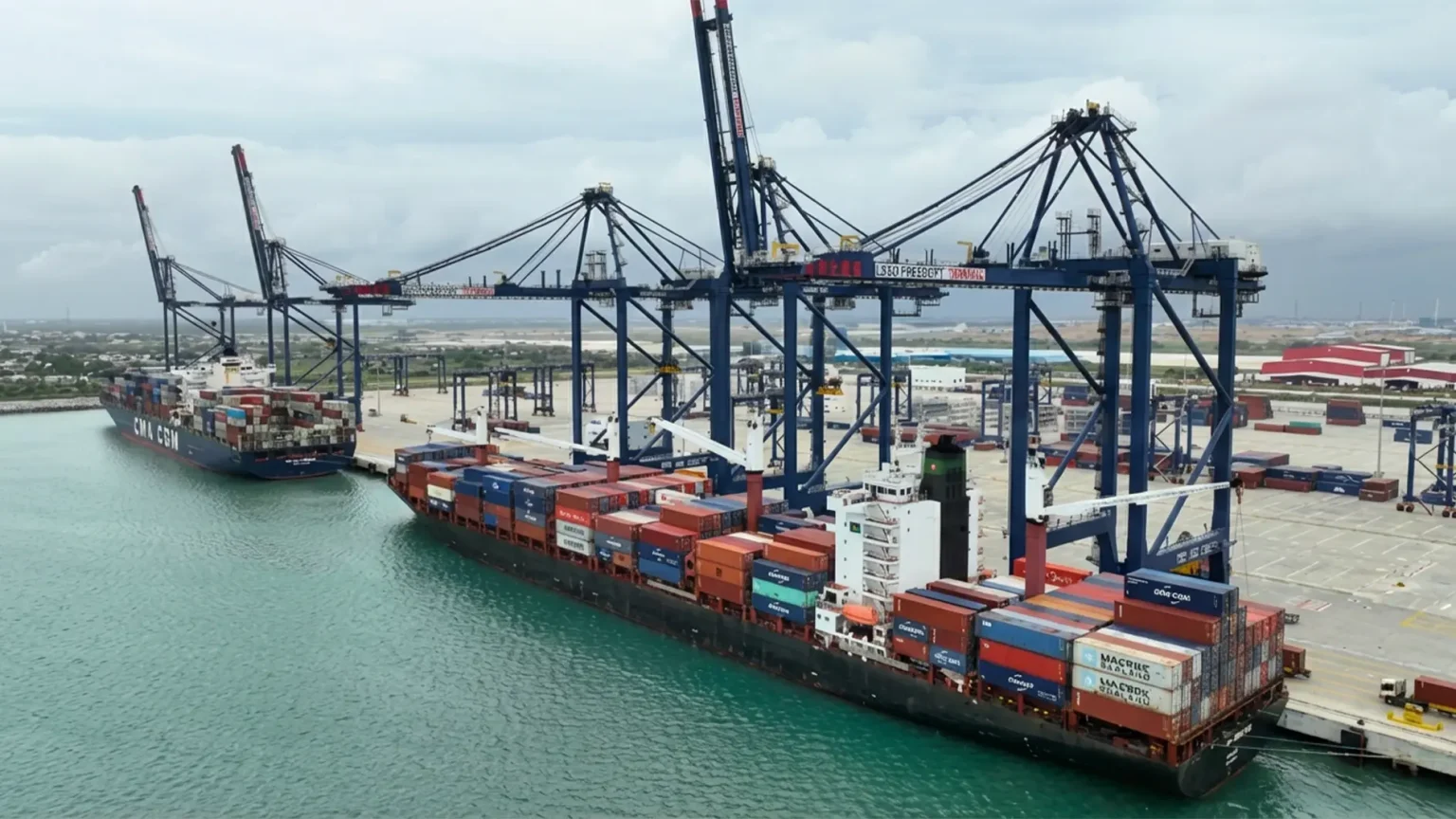
The report identified Lekki Port as the leading port in Nigeria, handling 40.6 per cent of the country’s total cargo throughput. Onne Port followed with 19.1 per cent and Apapa Port handled 16.7 per cent.
In addition to volume, Lekki Port attracted the largest vessels, with an average gross registered tonnage (GRT) of 55,712, slightly higher than Onne Port at 53,022 GRT.
Apapa and Tin Can Island Port received ships averaging 33,251 GRT and 36,909 GRT, respectively, while Delta Ports handled vessels averaging 17,414 GRT.
The report underscored a structural shift in vessel traffic. Although Tin Can Island Port recorded the highest frequency of ship arrivals, accounting for 22.7 per cent of total ship calls, Lekki and Onne are increasingly receiving the industry’s “heavyweight” vessels, enhancing Nigeria’s capacity to handle larger, more valuable cargoes.
Overall, total ship calls rose by nearly 12 per cent to 4,477 vessels, reflecting broad-based growth across all operational metrics.
Liquid bulk cargo, including fuel and chemicals, remained the dominant commodity at 54.7 per cent, while containerised cargo accounted for 24 per cent.
Analysts note that the increasing size and sophistication of vessel traffic, coupled with container growth, point to a maritime sector gradually aligning with global shipping standards.
The report also highlighted the rising importance of transshipment cargo, particularly for containerised goods destined for other West and Central African ports.
According to the report, the 205.8 per cent surge in transshipment containers positions Nigeria as a strategic regional hub, attracting international shipping lines and increasing revenue for the Nigerian Ports Authority.
The Managing Director, NPA, Dr Abubakar Dantsoho, described the growth as one of the most significant yearly increases in Nigeria’s maritime history, noting that the milestone strengthens the country’s position as a more competitive and strategic player in regional and global trade.
“The 2025 NPA Operational Performance Report signals a transformative phase in Nigeria’s maritime industry. Export-led growth, rising container traffic, and the strategic role of Lekki Port illustrate that the nation is not only handling more cargo but is also diversifying the type of goods moving through its ports,” he stated.
Maritime analysts said the growth in exports and transshipment is a pivotal moment for Nigeria’s trade ecosystem and reflects the success of policy reforms aimed at reducing reliance on oil revenues, while enhancing the competitiveness of Nigerian ports in regional trade.
Dantsoho said with the nation’s ports showing resilience and dynamism, the report reinforces the Federal Government’s efforts to expand non-oil exports, attract investment into port infrastructure, and integrate Nigeria more fully into global supply chains.
He said as Nigeria continues to welcome larger vessels and diversify its cargo base, the 2025 NPA report positions Lekki Port and the broader port network as central to the country’s economic diversification strategy, regional trade prominence, and global maritime ambitions.
Looking ahead, Dantsoho expressed confidence that the next phase of growth will be driven by the Federal Government–approved bold port modernisation programme and the implementation of the National Single Window system.
He further stated that the comprehensive port modernisation project is designed to overhaul ageing infrastructure, deepen berths, rehabilitate quays, expand cargo-handling capacity, and deploy advanced digital solutions across Nigeria’s port network.
According to him, the initiative is expected to improve vessel turnaround time, reduce cargo dwell time, enhance safety standards, and significantly boost operational efficiency across all terminals.(guardian)