Business
How Dangote refinery redrew global fuel trade flows in two years

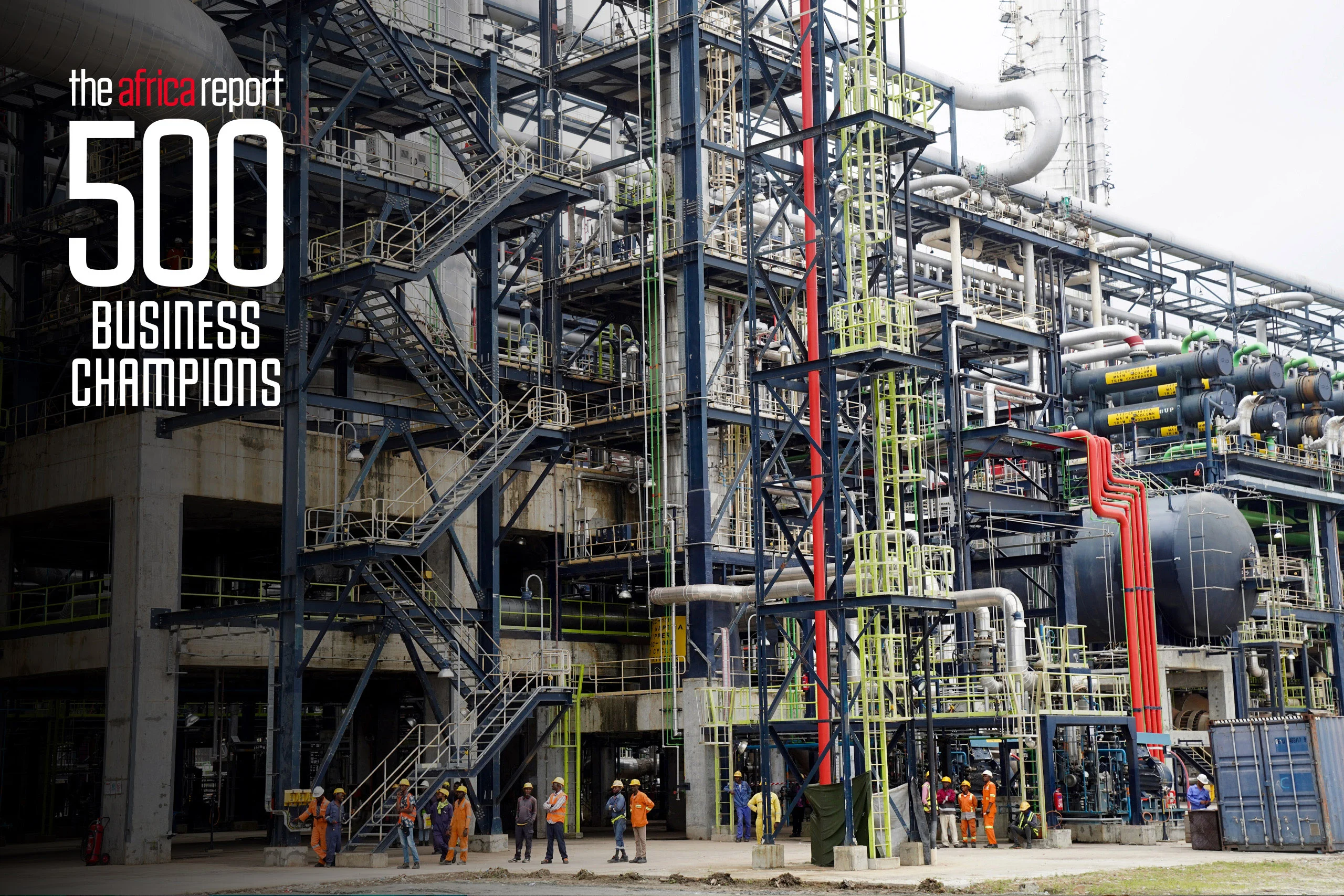
The $20bn Dangote refinery in Nigeria’s commercial capital has redrawn fuel trade flows across Africa and the wider Atlantic Basin in two years of operations, unsettling downstream players and refiners from Lagos to Rotterdam.
On 12 February, the Dangote Petroleum Refinery announced that its crude distillation unit and motor spirit production block had reached the full nameplate capacity of 650,000 barrels per day (bpd).
“Over the past two years, Dangote Refinery has steadily ramped up operations,” Victoria Grabenwöger, crude research analyst at commodity analytics firm Kpler, says in response to questions from The Africa Report. “According to our estimates, refinery runs increased from approximately 100,000 bpd in March 2024 to 300,000 bpd by December 2024, and to 400,000–500,000 bpd for most of 2025.”
She says the ramp-up has been mirrored by rising seaborne crude imports into the refinery, which averaged around 250,000 bpd in 2024 and 430,000 bpd in 2025.

The refinery has exported diesel, petrol, fuel oil, jet fuel and naphtha to markets as far apart as South America, the Caribbean, Europe and Asia, even as it ramped up to supply Nigeria and its neighbours.
Data from S&P Global Commodity Insights data show that 38.3 million barrels of Dangote’s oil products reached global markets between January and October 2024, with West Africa and the Far East accounting for 14.5 million barrels and 11.8 million barrels respectively.
Nigerian downstream sector faces disruption
Before Dangote came on stream, Africa’s biggest oil producer relied wholly on imported refined products mostly from the Amsterdam-Rotterdam-Antwerp (ARA) in Europe.
Four state-owned refineries in disrepair were shut down in 2019, and the Nigerian National Petroleum Company (NNPC) served as the sole importer of petrol. Its trading arm brought in products and resold them at below-market prices to other marketers, keeping pump prices artificially low through a costly subsidy regime.
That model has unravelled since the Dangote plant started production in January 2024 and progressively expanded its slate. Subsidies have been removed, the market deregulated and imports have sharply declined as the refinery output ramps up.
“The importation of refined products into Nigeria has declined massively,” Lagos‑based oil and gas analyst Jeremiah Olatide says. “If you look at the market in Lome, it is not as bustling as it used to be… Dangote has disrupted the petroleum industry.”
Ship‑to‑ship transfers off Lomé in Togo — long a barometer of Nigeria’s import appetite — have thinned, with Olatide noting “so many jetties are empty” in Africa’s most populous nation.
“I know that, by and large, in a short period of time, Nigeria is going to become a net exporter of refined products,” he says. “As soon as he conquers the West African markets, he’s [Dangote] going to conquer the whole African market.”
The refinery has upended Nigeria’s downstream petroleum sector, eroding the dominance of long-established fuel importers and reshaping margins across the value chain.
Winners and losers of the new order
The impact on traditional fuel marketers has been brutal.
While the new refinery’s private nature makes comparisons difficult – Dangote Industries Ltd does not appear in our 2026 500 Business Champions ranking for lack of reliable data – public data on rival fuel suppliers paint a stark picture. It is now on course to list on the Nigerian Stock Exchange by July at the latest, according to billionaire tycoon Aliko Dangote, who is also pushing ahead to more than double his refining capacity to 1.4 million bpd by 2028.
“Unfortunately, we do not have visibility into Dangote’s specific revenue figures,” says Kpler’s Grabenwöger.
TotalEnergies Marketing Nigeria, the downstream subsidiary of the French major, swung to a loss of N17.18bn ($12.5m) in 2025, from a profit of N27.49bn a year earlier. Conoil, the country’s oldest oil marketer, saw profit plunge 77% to N2bn. Both are among the six major marketers that have for years relied on imports and extensive depot and retail networks to dominate the market.
Oando, which exited the retail business in 2019 to focus on upstream and trading, has also been hit. In October 2025, the listed independent disclosed that it had paused trading of refined products, with no petrol cargo sold in the first nine months of the year, as the economics of bringing fuel into a Dangote-supplied market turned sour.
Even NNPC’s own downstream arm, NNPC Retail, has been losing ground. With Dangote increasingly supplying the domestic market and selling directly to distributors, the state giant’s long-time centrality in fuel supply has diminished.
To deepen market penetration, Dangote began distributing fuel directly to service stations and large end-users in September 2025 using compressed natural gas-powered trucks – a move that cuts logistics costs and further squeezes independent importers and middlemen.
One company riding the wave rather than being crushed by it is MRS Oil Nigeria. Controlled by Sayyu Dantata, a half-brother of Dangote, MRS was the first marketer to seal a fuel-supply partnership with the new refinery. Its retail network has surged, making it one of the biggest winners of the new order.
Dangote fuel penetrates African markets
In African markets, the Dangote refinery is challenging long-standing suppliers from Europe, the Middle East and Asia.
“If the ramp-up continues without major disruptions and high utilisation rates can be sustained, Dangote stands to be the primary beneficiary in terms of market share across Nigeria and the broader West African region,” Grabenwöger says.
Dangote’s stated ambition is to meet all of Nigeria’s petroleum product demand and supply surplus volumes across West, Central and Southern Africa from Senegal down to South Africa.
In 2023, the year before the refinery’s launch, West Africa’s demand for refined products exceeded regional supply by nearly 800,000 bpd, according to S&P Global Energy. Most of that shortfall was met via ARA, Russia, India and Spain.
Of the 16 countries in the region, only Côte d’Ivoire, Ghana, Niger, Nigeria and Senegal had refineries, with a combined nameplate of about 620,000 bpd but actual output was far lower.
“The West Africa refined products market is now changing with increasing local supply and trading amid rising demand in the region – conditions which allow for the formation of a reference market akin to ARA or the Mediterranean,” S&P Global Energy says in a December report.
S&P Global Energy Platts has responded by launching new assessments for waterborne trades in the Gulf of Guinea, tracking material traded in West Africa. Offshore Lomé, once largely a staging post for Europe‑origin imports, is emerging as a proper regional market, while the Dangote Lekki terminal is becoming a reference location.
“This market has put the region on a pathway to establishing a regional reference market that reflects market fundamentals in West Africa,” S&P says.
Ghana, which still depends heavily on European fuels, is seeking to join other West African countries buying Dangote fuel.
“We’ve been having all kinds of engagements with Alhaji Aliko Dangote, to position Ghana firmly to take refined products from Nigeria,” Godwin Tameklo, CEO of Ghana’s National Petroleum Authority, said at an industry event in Abuja in February.
He argued that shorter voyage times and freight savings make Nigeria an obvious supplier: “If you look at the distance between Ghana and Nigeria, a firm reliance on Nigeria’s refined petroleum products will really help us in cutting the cost of products that eventually come to Ghana.”
But Tameklo warned that currency misalignment and regulatory divergence could blunt the benefits: “If the Ghana cedi is doing well and the naira is underperforming, it will not bring the needed economic gain to our people. Our focus is to ensure that we get cheaper, affordable and quality products for our people.”
Pressure on European refiners
The Dangote refinery is giving European plants a run for their money.
“European refiners that historically supplied gasoline to Nigeria and other West African countries are likely to lose market share as competition intensifies,” says Grabenwöger.
She adds that refining hubs such as the Netherlands and Belgium, in particular, face reduced export opportunities into the region.
As Grabenwöger points out, Nigerian petrol imports from Europe fell from approximately 320,000 bpd in 2023 to an average of 230,000 bpd in 2025.
“I think the scale of the refinery is so big; it’s going to produce so much gasoline that it’s going to fundamentally shift the balances in the Atlantic Basin,” Daniel Evans, vice president and global head of fuels and refining at S&P Global Commodity Insights, tells The Africa Report in a recent interview in Lagos.
As Nigerian and regional imports from Europe fall, Evans expects pressure on European gasoline cracks. “Ultimately, our view is that this refinery is going to contribute to a period of overcapacity in the Atlantic Basin refining system, which will drive closures predominantly in Europe.” (The Africa Report)
-

 Politics11 hours ago
2027: ADC campaign accuses Kwankwaso of working for Tinubu
-
News23 hours ago
Tragedy Averted As Private Jet Loses Door Mid-Air
-
Metro22 hours ago
Anglican Church suspends Archbishop ‘with immediate effect’ over alleged misappropriation of N2 billion
-
Politics11 hours ago
2027: Tinubu afraid to face Nigerians – ADC
-
News11 hours ago
DSS arrests fleeing Maina’s son in Abuja
-
Business23 hours ago
Importation, Insecurity Threaten Nigeria’s Food Sufficiency
-
Politics10 hours ago
Buhari considered it distasteful for Osinbajo to contest against Tinubu – Babachir Lawal
-
Business22 hours ago
Households lament as sachet water hits N500 per bag in Lagos