News
BREAKING: US Embassy cancels visa appointments in Abuja

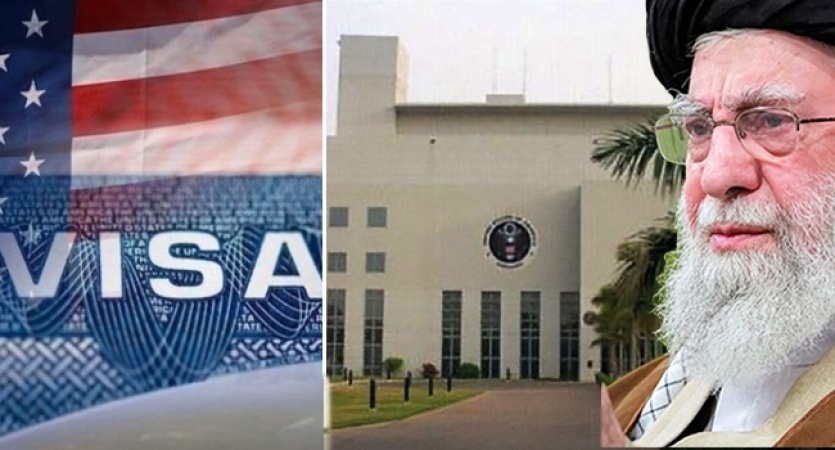
The United States Embassy in Nigeria has cancelled all visa appointments scheduled for Wednesday, March 4, 2026, citing a high potential for protests in Abuja amid escalating hostilities between the United States and Iran.
Disclosing this in a statement via its website on Wednesday, the embassy warned of “potential demonstrations” in the Federal Capital Territory, calling on American citizens to remain indoors.
“The U.S. Embassy in Abuja informs U.S. citizens that there is a high potential for protests in Abuja tomorrow, March 4, 2026, due to the current conflict with Iran,” the statement read.
“Previous protests by some groups have resulted in violent clashes between the groups and Nigerian security forces. The Embassy strongly recommends that all U.S. citizens in Abuja remain in their residences on Wednesday, March 4.”

The warning comes four days after US-Israel airstrikes targeted and killed Iran’s Supreme Leader, Ayatollah Ali Khamenei.
Several other high-ranking Iranian officials were also said to have been killed in the strikes, triggering swift retaliation from Tehran.
Angered by the development, Iran launched multiple missiles targeting U.S. bases in Gulf countries, including Saudi Arabia, vowing to avenge the death of its Supreme Leader and other regime officials.
The conflict, which began with coordinated U.S. and Israeli strikes over the weekend, has shown no sign of abating as it entered its fifth day.
On Tuesday, US President Donald Trump said it is too late for Iran to pursue negotiations, despite signals from Tehran indicating interest in talks.
In a post on Truth Social, Trump wrote: “Their air defense, Air Force, Navy, and Leadership is gone. They want to talk. I said ‘Too Late!’”
His remarks came two days after he had indicated openness to discussions, amid ongoing joint US-Israeli military operations against Iran.
Speaking to reporters at the White House during a meeting with Friedrich Merz, Trump asserted that the attacks had caused extensive damage.
“Just about everything’s been knocked out,” he said.
Trump also claimed that Iran had been preparing to launch an attack before the US and Israeli action, contradicting earlier comments by Secretary of State Marco Rubio suggesting Israel initiated the conflict.
“I think they were going to attack first, and I didn’t want that to happen. So, if anything, I might have forced Israel’s hand,” Trump said.
Addressing concerns about the aftermath of the operation, Trump said the worst-case scenario would be the emergence of a new leader similar to Iran’s late Supreme Leader, Ali Khamenei.
“I guess the worst case would be, we do this, and then somebody takes over who’s as bad as the previous person,” he said. “That could happen. We don’t want that to happen.”
Trump further stated that two waves of strikes had killed individuals previously considered as potential successors.
But Iran ruled out any possibility of engaging the United States in any dialogue, saying the Americans cannot be trusted.
According to Mohammad Mokhber, a senior aide to the late supreme leader Ayatollah Ali Khamenei, Iran had “no basis for any negotiations with them”, adding that: “We can continue the war as long as we want.”
Earlier, Iran said it would hold a three-day state funeral for supreme leader Ayatollah Ali Khamenei, who was killed in US-Israeli strikes, official news agency Irna said.
“Starting at 10:00 pm (1830 GMT), the faithful will be able to pay a final homage to the body of the martyred guide of the nation, by visiting the Imam Khomenei grand mosque” in Tehran, Irna said, citing a statement from the Islamic Development Coordination Council.
Khamenei was 86 years old when he was killed, and will be buried in his home city of Mashhad in northeastern Iran. (Channels)
-

 News22 hours ago
Outcry as fake products flood markets
-
Celebrity Gist22 hours ago
Okoye really sweet, Cardi B says after third sighting
-
Business22 hours ago
Airport policies didn’t drive Uber out of Nigeria, says FAAN
-
News23 hours ago
N33.75bn Cash Transfer Mystery: FG Failed to Prove Millions of Vulnerable Nigerians Received Funds — Auditor-General
-
Metro22 hours ago
Trafficker lures, sells 15 Nasarawa children
-
Politics3 minutes ago
Atiku’s Lobbyist Deletes Post On Purported Trump Commission Appointment