Business
Inside Nigeria’s $6bn freight market where local investors are missing

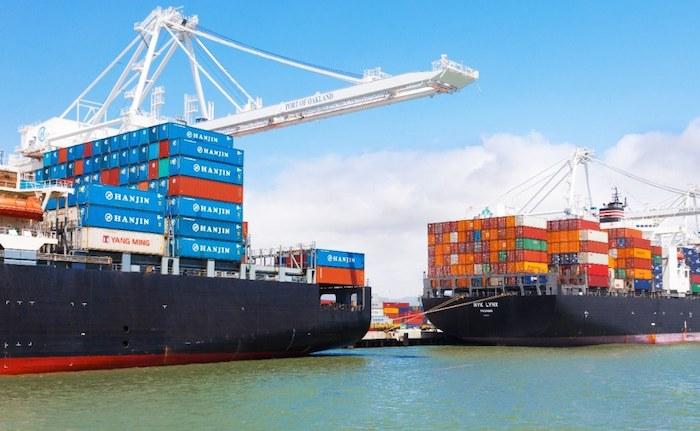
With a market of over 200 million people and a 900-kilometre coastline, Nigeria should be a natural destination for indigenous shipping investors.
But after the profits from over 40 million tonnes of cargo are accounted for, Nigeria claws for scraps as it haemorrhages over 80 percent of its freight earnings to foreign players.
The system, squeezes them thin as policies lock them out of profits, players already in the industry say.
Go to Marina, Apapa, Tincan Island, or even Lekki deep Seaport; those ships you see are without exception all owned by foreign companies, says Greg Ogbeifun, a shipowner with four decades in the industry and 11 vessels of his own.

Ogbeifun was trained by Shell in the 1970s and has watched the playing ground shift against his favour.
Since the collapse of Nigeria’s National Shipping Line, boasting 30 ships in the 1990s due to mismanagement, foreign earnings of about $6 billion annually have sailed with foreign liners.
Nigerian law, specifically the Cabotage Act and the concept of “national carrier status,” explicitly reserves the right to carry Nigerian cargo for Nigerian shipping lines.
But Ogbeifun said no bank will finance a ship without guaranteed cargo. Yet the government would not guarantee cargo without existing ships.
“If the government can provide a cargo guarantee, shipping lines will spring up right, left, and centre,” Ogbeifun argues.
“Because we have the cargo across board.” He points to his own experience.
“I started my shipping company with little money. I won a contract from an IOC, and from that contract, any bank could see the cash flow over five years and finance me.”
That model does not work today, as the government has never activated the cargo guarantees embedded in law.
“If they say, I’m allocating two percent of the 32 million tonnes to you, go and get a ship. You should be able to and show the bank I have this cargo to carry over this period. They will give you the money,” he said.
But the odds of securing financing to acquire the ships are stacked against ambitious investors, sources said.
In April 2025, Temile Development Company signed a $250 million contract in April 2025 with Hyundai Heavy Industries for the construction of an 88,000 cubic meter Very Large Gas Carrier (VLGC).
The vessel was designated for LPG/LNG transport, with construction supervision managed by NLNG Shipping and Marine Services Limited (NSML).
“How many Nigerian banks can give 250 million dollars to buy a vessel and without 25 percent interest?” asked Temisan Omatseye, former Director-General of NIMASA. “I can go to a bank in Europe, Singapore, or China and buy that same vessel at three percent.”
Regulatory structure further worsens access. When a Nigerian investor registers a vessel locally, the government classifies it as “home-use” and applies import duties of 15 to 18 percent of vessel value, Omatseye said.
Foreign operators importing the same vessel post a bond instead and operate under temporary importation status with no duty payment.
Nigeria took a step toward addressing the financing gap last month when it opened a portal for the disbursement of a $700 million shipbuilding and financing fund that had been inactive for 20 years.
However, the fund’s structure limits its impact. The fund caps disbursement at $25 million per company, which covers only a fraction of vessel costs.
A feeder ship, a small vessel suitable for regional routes, costs between $17.5 million and $45 million for new vessels in the 1,000 to 3,300 TEU (container) capacity range, according to BusinessDay’s estimates.
Larger container ships operate in the $100 million to $295 million range. New ultra-large container ships in the 24,000 TEU class costs million and $295 million.
Even acquiring a feeder ship at the lower end would exhaust a company’s entire $25 million allocation, leaving no capital for operational expenses.
The purchase price is only the beginning of the financial burden. Annual operating costs for a medium-sized container ship can exceed $8 million before debt servicing.
Daily operating rates typically run between $25,000 and $85,000. Fuel costs for a large cargo ship can exceed $130,000 per day, depending on route and engine efficiency.
Ships must also be maintained. Large vessels require special surveys every five years, which can cost millions.
Experts said Nigeria lacks high-capacity local shipyards for major repairs, forcing operators to use facilities in other West African countries or further afield, incurring additional costs and time away from revenue-generating operations.
“A vessel only makes money when it’s trading. Just like an aircraft. Aircraft don’t make money when they are parked at the terminal,” Omatseye said. “That’s why they load passengers because the only time an aircraft is making money is when it’s flying.”
Sources were quick to fault institutional factors for the unwillingness to invest in the market. Multiple sources describe regulatory agencies, including the Nigerian Maritime Administration and Safety Agency (NIMASA), the Port Authority, and Customs, as operating with inconsistent application of rules.
“Once it is an institution for you to get registered or to get some kind of benefits that will enhance your business, politics come in,” Michael Johnson, a retired 2-star admiral of the Nigerian Navy said.
Customs operations have been cited as particularly problematic, with reports of goods being selectively retained and released at the discretion of officials.
For investors evaluating commitments of hundreds of millions of dollars, these institutional factors influence decisions.
“Those who would have invested in it, they see that the problems are too many. They cannot invest in such a business,” Johnson added. “They are in business to make money. They don’t have time for these things.”
Akin Omole, managing director of Greenview Development, in charge of Dangote Ports Operations, said that the current legal and regulatory framework needs to be reviewed to make shipping investment attractive to indigenous private sector.
The company has invested hundreds of millions in dollars in port infrastructure with a jetty at Dangote Quays Lekki, where the export of bulk urea fertiliser currently takes place.
Dangote had made his intentions known to develop the biggest deep seaport, an investment of over two billion dollars, which Omole said is at the preliminary stage.
“Once the necessary approvals by the relevant government authorities are in place, the Olokola deep sea port development will also come on stream.”
But there is no known record of the company owning vessels. It has however, invested in acquisition of thousands of trucks delivered on foreign ships. Sources told BusinessDay that the puzzle is not hard to crack as the financial and operational risk involved in owning vessels discourages such investment.
“Ships are expensive to buy, so when you look at an average investor, the question he asks himself is, what is going to be his return on investment?” Johnson asked
The Merchant Shipping Act, which requires a certificate of licence from all ships trading in Nigeria, sources say, needs to be reviewed to more flexible to attract investment.
“At the moment, to register a Nigerian flag vessel, the vessel must be 100 percent crewed by Nigeria.” Johnson said Nigeria must consider a hybrid registry, which “allows easy access and exit, but also protects.”
“The most important part for a person who wants to finance a vessel is a registry,” he said.
“The financier needs to be sure that when he finances the vessel, the flag is strong enough to protect him as a mortgagor. In the event of non-payment of a loan, the flag should be ready to get the asset back and return it back to the financier,” he explained.
Ogbeifun insists that Nigeria’s vaccine for shipping capital flight is the revival of its shipping line under the control of the ministry of marine and blue economy. He told BusinessDay he had spent thousands in dollars to propagate the ambition.
According to Aminu Umar, president of the Nigerian Chamber of Shipping, he advised the country to endeavour to grow and develop their own shipping companies.
“When there is a crisis like the US- Iran war, other nations of the world will prioritise themselves first. They will then look at orders and support them at a premium.” (BusinessDay)
-

 World News22 hours ago
UK PM calls for ‘reflection’ after death of ex-Cambridge professor
-
Politics22 hours ago
There Are Plans To Declare Osun Election Inconclusive – Adeleke Campaign
-
News12 hours ago
BREAKING: INEC declares Accord Party’s Adeleke winner of Osun governorship election
-
Sports22 hours ago
Chelsea fans boo Enzo Fernandez in friendly win over Sociedad
-
Politics12 hours ago
‘Bulldozer’: How Adeleke defeated APC, others to secure second term in Osun
-
News12 hours ago
Borno parents beg FG to rescue 52 children, others 90 days after abduction
-
Business12 hours ago
SEC orders Nigerian capital market firms to cut North Korea, Iran ties
-
Politics22 hours ago
Don’t Allow Rejected Politicians Hijack Osun Mandate – Adeleke Tells Tinubu