Business
Middle East Crisis: Cooking gas surges 40% to N1400 per kg

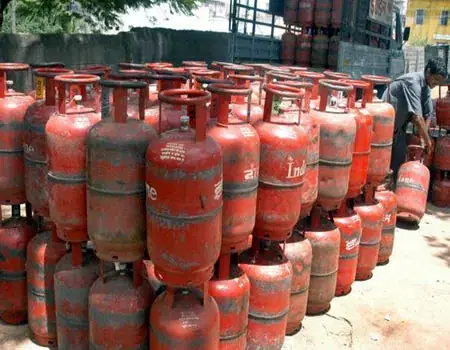
At the backdrop of the on-going crises in the Middle-east, the ex-depot price of Liquefied Petroleum Gas (LPG), also known as cooking gas, has increased by 13 per cent week-on-week to N18 million per 20 metric tones (MT), up from N15.95 million recorded last week.
This translates to N1,400 per KG, indicating a 40 percent increase from N1,000 last week.
The regional crisis has disrupted oil production and supply in the international market, taking a toll on petroleum product prices globally.
A visit to some gas stations in Lagos showed that cooking gas now sells for up to N1,400 per kilogramme in many locations.

Speaking with Vanguard, the National President of the Nigerian Association of Liquefied Petroleum Gas Marketers, Mr. Inyang Edu, confirmed that the depot price rose to N18 million per 20 metric tonnes, while some depots sold as high as N19 million.
He stated: “We are faced with limited supply in the international market due to the Iraq-Israel-American crisis, which has now triggered the price increase. Even though we produce locally, including supplies from the Dangote Refinery, once prices rise in the international market, it affects domestic prices in naira.”
He added, “As of last week, the price dropped to N15.95 million per 20 mt from N16 million, but with this crisis, it has increased to N18 million. Some depots are selling at N19 million, but I heard today that one outlet sold at N17.5 million.”
According to him, the increase has affected prices at gas plants nationwide, as marketers who previously bought at N15.95 million or N16 million per 20mt must now adjust prices to retailers and consumers to remain in business.
Edu appealed to consumers and retailers not to direct their anger at gas plant owners, noting that the hike is driven by international market trends and prevailing realities in Nigeria.
“We are hopeful that the crisis will be resolved soon, but even when it is, it will take time for prices to drop. For now, the effect of the crisis is impacting the entire oil and gas industry.”
On supply, Edu stated that availability remains relatively stable, though some depots are temporarily out of stock while awaiting incoming vessels.
“Since the beginning of the year, supply has been stable. It was this Middle-east crisis that affected prices. Crude oil is an international commodity priced in dollars,” he explained.
Commenting on the broader economic implications, he noted that the recent rise in global oil prices to $84 per barrel has prompted the Dangote Refinery to adjust prices of petrol, diesel and cooking gas. He added that the ex-depot price of Premium Motor Spirit (PMS) rose to N875 per litre from N774.
“This is likely to have a ripple effect on the domestic economy, including transportation costs, food prices and overall economic activity. Given the removal of fuel subsidy, returning to subsidised pricing is not a feasible solution,” he said.
He advised that government should closely monitor global oil price movements and adjust monetary policies where necessary to mitigate the impact on the economy.
-

 World News24 hours ago
UK PM calls for ‘reflection’ after death of ex-Cambridge professor
-
Politics24 hours ago
There Are Plans To Declare Osun Election Inconclusive – Adeleke Campaign
-
News13 hours ago
BREAKING: INEC declares Accord Party’s Adeleke winner of Osun governorship election
-
Sports24 hours ago
Chelsea fans boo Enzo Fernandez in friendly win over Sociedad
-
Politics13 hours ago
‘Bulldozer’: How Adeleke defeated APC, others to secure second term in Osun
-
News13 hours ago
Borno parents beg FG to rescue 52 children, others 90 days after abduction
-
Business13 hours ago
SEC orders Nigerian capital market firms to cut North Korea, Iran ties
-
Politics23 hours ago
Don’t Allow Rejected Politicians Hijack Osun Mandate – Adeleke Tells Tinubu