Politics
Intra-party Squabbles Distracting INEC From Core Mandate – Amupitan

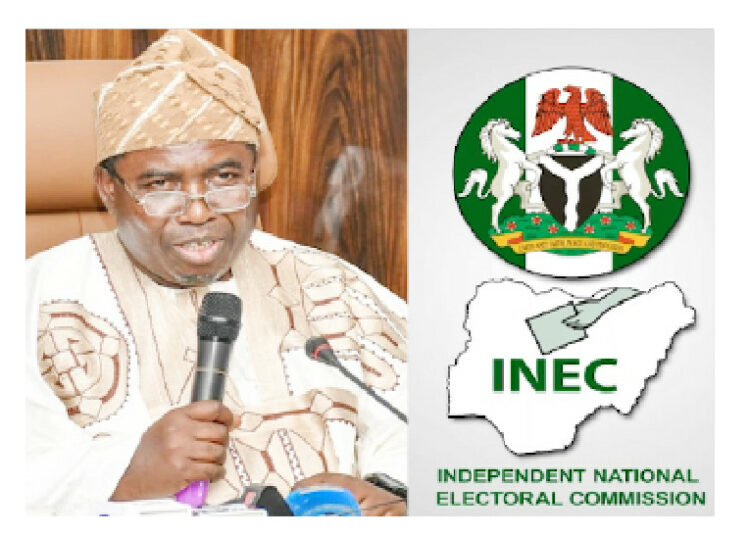
Ahead of the 2027 general elections, the Independent National Electoral Commission (INEC) has expressed concern that certain pitfalls, particularly internal wrangling within political parties and numerous litigations, may negatively affect the process.
The Chairman of the Commission, Prof. Joash Amupitan, SAN, raised the alarm over what he described as “unnecessary litigations, with billions of naira already expended, as well as internal leadership crises rocking political parties”, warning that the situation threatens the Commission’s commitment to democratic consolidation in the country.
Amupitan spoke at the Technical Workshop on the Revision of INEC Regulations and Guidelines for Political Parties, organised by the Commission in partnership with the Westminster Foundation for Democracy.
At the event, held in Ikot Ekpene, Akwa Ibom State, on Wednesday, he lamented that rather than serving as vehicles for national transformation, political parties are currently witnessing a disturbing trend of leadership squabbles and infighting that threaten to turn them into arenas of permanent strife.

He noted that a day spent defending intra-party disputes in court is a day diverted from the Commission’s primary mandate of election planning.
He said: “Our collective commitment is being challenged by leadership squabbles and judicialised politics. In the last cycle alone, INEC was joined in scores of suits that could have been avoided by simple adherence to party constitutions. As an independent body, we remain neutral, but we are no longer passive observers.
“Political parties in Nigeria face a crisis of internal democracy. Of grave concern is the quality of party primaries. As we move towards the primary window of 23 April to 30 May 2026, we must enforce a level playing field. The quality of internal party democracy has a direct bearing on the subsequent elections conducted by INEC.
“These frequent leadership tussles do more than dilute party ideologies; they spill over into our courtrooms, resulting in a deluge of unnecessary litigations where INEC is routinely joined as a party.”
He expressed confidence that the workshop would systematically analyse the key provisions of the new Electoral Act and identify the necessary amendments to the existing regulations and guidelines for political parties.
In his goodwill message, the Country Director of the Westminster Foundation for Democracy, Mr Adebowale Olorunmola, explained the need to improve the guidelines and regulations in order to give full effect to the Electoral Act, noting that changes had been introduced following the passage and assent to the new law.
He said: “The 2022 edition of the INEC Regulations and Guidelines served us well in the conduct of the 2023 general elections and other subsequent elections.
“However, current realities are no longer what they were four years ago. Today, we are tasked with bridging the gap between the letter of the 2026 Act and the practical, day-to-day operations of our political parties.”
The Resident Electoral Commissioner in Akwa Ibom State, Barrister Obo Efanga, described the workshop as strategic and significant, noting that the review and updating of the Regulations and Guidelines for Political Parties 2022 could not have come at a better time.
He stated that the workshop was designed to consider the implications of the Electoral Act 2026 for its regulations and guidelines covering various electoral activities.
Efanga added that it was not a coincidence that the first document to be reviewed was the Regulations and Guidelines for Political Parties 2022 because, according to him, it regulates the registration, statutory compliance, administration, conduct, as well as the monitoring of political parties and all their activities.
-

 Politics19 minutes ago
Atiku’s Lobbyist Deletes Post On Purported Trump Commission Appointment
-
Politics7 minutes ago
World Igbo Congress warns politicians against threatening Igbos over support for Obi
-
News22 hours ago
Outcry as fake products flood markets
-
News17 minutes ago
Our struggles keeping children in school – Parents
-
Politics11 minutes ago
Fuel Subsidy: Nigerians Shouldn’t Pay For Govt’s Failures — Makinde
-
News23 hours ago
N33.75bn Cash Transfer Mystery: FG Failed to Prove Millions of Vulnerable Nigerians Received Funds — Auditor-General
-
Celebrity Gist22 hours ago
Okoye really sweet, Cardi B says after third sighting
-
Politics14 minutes ago
Can Kwankwasiyya Deliver Kano For NDC?