Business
Generator economy shaken by diesel price surge

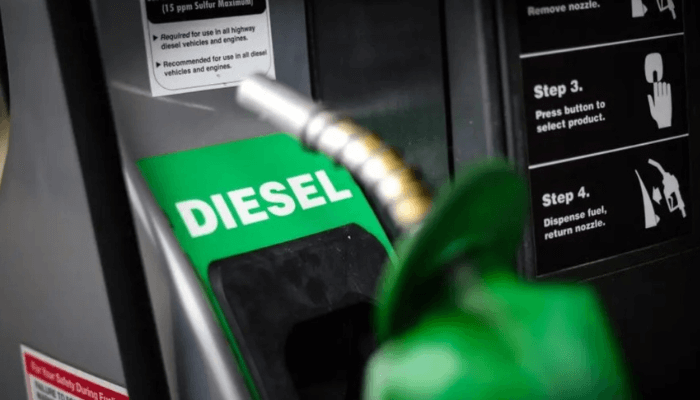
Surging diesel prices are threatening to choke Nigeria’s vast generator economy, as the conflict in the Middle East tightens supplies of both the industrial fuel and the grades of crude oil best suited to produce it, BusinessDay’s findings have revealed.
The price of diesel has climbed to as high as N1,650 per litre in parts of the country since hostilities between Israel and Iran intensified, a level that is inflicting fresh pain on businesses and households already accustomed to the grinding cost of self-generated power.
For a country where the national grid has long been an exercise in managed disappointment, diesel is not a luxury; it is the oxygen of commerce.
“This is not just a fuel story,” said Chidi Okonkwo, an energy analyst at Lagos-based Frontier Economics. “This is a story about the structural failure of the Nigerian state to deliver basic infrastructure, and what that failure costs in real money, every single day.”

Nigeria’s dependence on generators is without parallel among major economies. The country of more than 220 million people generates, on average, only a fraction of the electricity its population and industries require.
Businesses from multinational oil companies to roadside kiosks rely on diesel-powered generators to keep the lights on, the computers running, and the cold chains intact. The result is an informal energy sector of staggering scale and staggering cost.
Economists at BusinessDay have long argued that the failure to secure reliable grid electricity has exacted an incalculable socio-economic toll over more than three decades.
The cost, they contend, is not merely financial but structural, eroding Nigeria’s competitiveness, deterring foreign investment and projecting to the outside world an image of a country unable to guarantee its own most basic productive inputs.
The latest price surge has compounded pre-existing supply strains. Traders say diesel stocks have been tight for years, owing in large part to Ukrainian drone strikes on Russian refineries and the cascade of Western sanctions on Moscow’s energy exports.
Russia was a significant supplier of diesel to global markets; its partial exit has left a gap that Middle Eastern supplies were partly filling. With that region now under pressure, the squeeze is intensifying.
The type of crude oil most suited to producing diesel, lighter, low-sulphur grades, is also in shorter supply, traders said, further constraining refinery output at a moment when demand across developing markets remains robust.
For Nigerian businesses, the timing could scarcely be worse. The naira has depreciated sharply over the past two years following the removal of the currency’s longstanding peg, meaning that internationally priced commodities like diesel now arrive at a far more punishing exchange rate. What was already an expensive crutch has become more expensive still.
Small and medium-sized enterprises, which form the backbone of Nigeria’s non-oil economy, are among the hardest hit. Manufacturers report that energy costs already accounting for a disproportionate share of their operating expenses, are squeezing margins to the point where production cutbacks are becoming unavoidable.
“Every time diesel goes up, something has to give,” said the owner of a printing business in Lagos’s industrial suburb of Isolo. “Either we raise prices, we cut staff, or we shut a shift. There is no fourth option.”
Analysts say the episode should reinforce the urgency of long-delayed power sector reforms. Nigeria’s electricity grid, starved of investment and strained by transmission bottlenecks, has for decades delivered only intermittent supply despite the country sitting atop some of West Africa’s largest natural gas reserves, resources that could, in theory, power a modern grid many times over.
The president Bola Tinubu administration has pledged to prioritise energy reform, and there have been modest improvements in some urban distribution networks. But the structural gap between what the grid can deliver and what Africa’s largest economy requires remains vast.
Until that gap closes, Nigeria’s generators will keep running — and its businesses will keep paying whatever the diesel market demands. (BusinessDay)
-

 Politics21 hours ago
2027: Those Expecting Easy Polls Deceiving Themselves – Gov Radda
-
News7 hours ago
Tinubu to embark on three-nation trip
-
Business21 hours ago
Nigerian billionaire Arthur Eze loses another license as South Sudan strips Oranto Petroleum of Block B3 for failing to drill or pay
-
 Politics21 hours ago
Sitting Rep Loses Return Ticket As Mangal’s Son Emerges APC Consensus Candidate
-
Politics7 hours ago
2027: Yusuf Buhari Gets Automatic APC Ticket
-
Business6 hours ago
Dangote Refinery IPO to test depth of Africa’s $560bn capital markets
-
News7 hours ago
Several terrorists killed in Sambisa forest, Tumbuns airstrikes – NAF
-
Politics7 hours ago
APC ‘Consensus’ In Crisis