News
The Truth About “Abacha Loot” – Professor Munzali Jibril

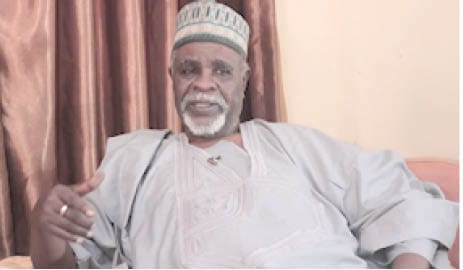
Professor Mohammed Munzali Jibril, 75, has been teaching for more than 55 years. He started as a Grade II teacher, but spent most of his working life in Bayero University Kano (BUK), – rising from the position of a graduate assistant in 1975, to professor of English in 1989. He served as the Head of the Department of English, Dean of two faculties and Deputy Vice Chancellor, before he left BUK to become Academic Provost of the Nigerian Defence Academy (NDA) Kaduna, between 1992 and 1996. He was the Executive Secretary of the National Universities Commission (NUC) from 1996 to 2001. Since he left the NUC, he has remained active as a consultant on education, in Nigeria and internationally. He was also the president of the Nigerian Institute of Management and Nigerian Academy of Letters.
Where are you from?
I am from Fagge in Kano State, where Sani Abacha hailed from. There are 12 houses between my father’s compound and his. And we were very close as families.
I had all my education up to the first degree level in Kano. Interestingly, my father, who was a traditional mallam, did not want me or any of his children to have western education. So, up to the age of 13, I never (attended) any western-styled school. I had Quranic education and was fluent in Arabic.

Was there enough Arabic for you to be fluent in the traditional system?
Yes. At Islamiyya school, Arabic was good and I could speak, write and read, but my knowledge of English was rudimentary until 1964. By chance, there was a Lebanese Jew who owned a private school in Syrian Quarters, where all the Lebanese children studied. At some stage, being a Jew, he wanted a government grant, in addition to the fees he was collecting. This was in 1964. The Kano Local Education Authority decided to visit the school. As a result of this, he wanted Nigerian children to be there so that he could get the grant.
That was how I got western education. After two years in that school, I got admission into the School for Arabic Studies, which used to be called Law School, because it was originally established to train judges.
You graduated and became a grade two teacher in the School of Arabic Studies?
Yes, the school had a higher Muslim section, which was for those who came through the traditional Islamic education system but had no formal education. They took an entrance exam and spent four years through the medium of Arabic. Ninety per cent of the lecturers were Arabs from Egypt, Sudan and other countries in the higher Muslim section. That was the section I was in and finished as a grade two teacher.
Destined to be a teacher in primary school?
After I finished the grade two teacher’s certificate course, simultaneously, I was preparing for GCE, advanced level because my school was a GCE centre. I got the syllabuses for Hausa and Arabic advanced level and studied on my own and took the exam in January. By April, the results were out. This was even before the grade two teacher’s examination result came out in July; and miraculously, I passed both subjects with grade A, and that was GCE London, Hausa and Arabic.
By the time the grade two certificate came, combining both, I was qualified for direct entry into part one of the three-year degree program. I never did prelim. Our set was the first admitted to the School of Basic Studies. I left from grade two directly into part one.
You read English in Bayero and eventually did PhD in Linguistics? Was this sponsored by Bayero?
Yes. First of all, while I was doing my national service, the Indian professor of English, who was the head of department, contacted me and made me fill the form and processed my appointment with the Ahmadu Bello University (ABU) because (Bayero) was it’s campus.
He also encouraged me to apply to the University of Leeds to do a master’s degree. By the time I finished my NYSC, my letter of appointment was ready. My letter of admission to read for master’s was also ready.
So, you didn’t even teach for a year, which is normal?
Not even for a month. I finished NYSC in August, and by September, I was out. At that time, the Kano State Government would give you a scholarship and the university would give you what they called top-up allowance, which was like one-third of your salary in Naira paid into your account.
So, I went for it. And if you registered for a master’s locally, it would take at least three years to do it. But if you went abroad, you would take courses. And then you would do a small project – maybe 60 pages – and in 9 months you are done.
And that’s what you did?
That’s what I did. I came back and taught for two or three years. When I wanted to do my PhD, my topic was Nigerian English accents. I wondered why I should go abroad for that. Data is here; and Ibadan had some distinguished professors who had written so much on that. So I decided to go to the University of Ibadan. This was 1978/1979.
If you remember the National Party of Nigeria (NPN) and the Unity Party of Nigeria (UPN), it was terrible because I was in the middle of the crisis. The way people were talking, you would swear that there would be a civil war if Awolowo didn’t win. So I really felt unsafe and decided to grab my things and come back.
Luckily for me, the previous year, I had applied to some British universities and one of them said the man who was to supervise me was away on sabbatical; could I wait until the following year?
It came in handy because by the time I was back from Ibadan, I got a letter of admission to Lancaster University. And I had collected my data. I had done a lot because there was a lot of source material.
I was ready to take off. It was the same topic, anyway, so I never had to come home for fieldwork. I spent three years just working on the PhD and never came back until I finished it.
Was it difficult to study English in England?
No.
Is it a challenge for a native speaker?
No. Well, the Nigerian education system is very sound. And remember that I had done a master’s, so there was no challenge.
Did you encounter any challenges living in England?
Not really. I was on campus throughout. And after the first year, my family joined me – my wife and my first daughter. The weather was a problem but we learned to live with it.
You had a very successful career in Bayero: head of department, dean of two faculties, deputy vice chancellor, but you didn’t become vice chancellor. Was that a disappointment for you?
Well, I was very young. I think I was 40 at the time I contested for the position of vice chancellor. And I was one of the first, if not the first, to become a professor by doing a long jump from the position of a senior lecturer.
When I contested for the vice chancellorship, it was terrible politics. I was contesting with somebody who was eight years my senior in graduation; 10 years my senior in age and all that.
But the university had its own criteria; it was not about longevity, so I beat him. I was number one and he was number two, then there was number three.
IBB was the president at the time; and of course, Sani Abacha was a powerful figure in that government. He went to IBB and said, ‘This man is my younger brother.’
It was like settled, but people put so much pressure on IBB. They also went to the Sultan of Sokoto, traditional rulers and other influential people, trying to get them to intervene on their behalf. IBB said he would appoint whoever became number one and was recommended by the council. They were in a dilemma because I was the number one.
There were people connected with the traditional institution in Kano at the time, who my opponent had lobbied. They were experts in the art of intrigue, so they devised various strategies to discredit me and deprive me of the support of even people like Gen Sani Abacha. In the end, IBB approved number two, contrary to what he said. But you know his word had never been his bond anyway. So I lost out.
Was the rectorship of the NDA a kind of compensation after that?
Yes. What happened was that immediately I lost out, I had some offers of sabbatical in Libya and Saudi Arabia. I chose Saudi Arabia. It was one of the best times of my life because I had a light teaching load. It was like secondary level language teaching, so it wasn’t really something demanding.
In terms of comfort, I would say that I was living like a minister, as far as the type of food and the kind of car I had. My family joined me and we really had a good time for one year. Every weekend, I went and performed the Umrah and the Hajj at Makkah etc.
After one year, I wanted to renew my contract and seek permission to extend my stay from Bayero. General Sani Abacha, may God rest his soul, was the Chief of Defense Staff and at the Nigerian Defence Academy (NDA), the provostship was becoming vacant. I think General Aliyu Gusau was the commandant. He told them that he had a candidate.
I was away and they didn’t even have my curriculum vitae. They just came to Bayero and collected something. By the time I came, I was told to go to Lagos and collect my letter of appointment as the provost of the NDA. So it was a kind of compensation.
But of course, in terms of executive power, the provost is an officer under the commandant. And you know the military command structure, the man at the top takes all the power.
So the position was just a little higher than that of a dean. I wasn’t even like a deputy vice chancellor because most of the time there was nothing to do. I chaired the equivalent of the Senate and coordinated academic activities.
Would you say it was a phase of your career you regret taking up?
I don’t regret it. There were a lot of things I also learned from the military. They are very well organised and very patriotic.
Later on I came to work with the police. You can’t even compare the two. So I learned. I left the NDA in 1996, so it is exactly 30 years now, but I still have a lot of respect in their eyes. I can still ask for favours for myself or others based on that network – we have become members of a family. But the real compensation came when I was appointed the executive secretary of the NUC.
How did that appointment come about?
After the 1995 national conference, precisely in March 1995, (Abacha) decided to do a reshuffle. He brought in Dr M.T. Liman, who was my senior colleague in Bayero. He brought him as minister of education. Of course he had a lot of confidence in me. And you know the Ministry of Education is very big. He wanted me to be appointed the executive secretary of the NUC so that I could take care of the universities for him. But I think General Abacha had something else in mind for me, so he resisted. In the end, he was able to convince him. I was not part of the conversation.
That was a huge responsibility for a young professor; how was the experience?
By the time I got to the NUC, I was 45 and the person who was handing over to me was 50. There was a lot of campaign of calumny in the press.
At that time the main newspaper in the North was the New Nigerian and they used it to discredit me, saying I was from Bayero University that was famous for Islamic studies. But my predecessor, Prof Idris Abdulkadir, was a veterinary doctor. They said I wouldn’t even understand the job.
It was a very challenging assignment; a very busy office with a heavy responsibility because all the universities – state, federal – were under me. I was the first to start registering private universities in 1999.
I gained a lot from the experience. And not just about Nigerian universities and the system but globally because I used to attend a lot of conferences and seminars and meetings of international bodies like UNESCO and so on.
In fact, after NUC, my academic writings shifted towards higher education, away from linguistics and English study.
What was your biggest challenge in the NUC?
For the five years I was there, I didn’t have a board for one minute. So, of course when you don’t have a board, the minister is your board, not even the ministry. And you know that for contracts, certain levels of appointments and so on, you had to go to the minister.
Was that M.T. Liman, your former colleague?
M.T. Liman I had known, the turnover was high. I think I had five ministers within my five years. I had M.T. Liman; and when Abacha reshuffled his government, he brought in Dauda Birma.
After his death, General Abdulsalami brought Chief Olaiya Oni. He was the secretary to the government of Ondo State when Mike Akhigbe, who was General Abdulsalami’s deputy, was the governor of Ondo State. I think he nominated him. That was the third minister.
When Obasanjo came, he brought in Tunde Adeniran who hailed from Ekiti State. But when he did his first reshuffling in the year 2000, he dropped him and brought in Professor Borishade.
I had Liman for two years and he wasn’t difficult to work with, but the others, well, some of them made inappropriate demands; that’s how I would put it.
If you were alone with them in a room, they would show you their real character, but when it came to public fora and official speeches, oh my God, they were the most principled people!
I would like us to explore a little bit of your relationship with Abacha. He was a complex man. What is your reading of him?
Well, if I want to be argumentative, I would say there’s no evidence of self-succession plan because he never uttered a speech saying he wanted to succeed himself.
At the time he died, there was no concrete arrangement. He died in June and the transition was supposed to be on October 1.
What I would tell you is that I helped to set up his Presidential Advisory Committee. I was a member but not the chairman. The secretary was a permanent secretary in the service. And we met regularly.
And essentially because there was no National Assembly, we did the budget, in the sense of highlighting areas of emphasis and what should be done, and all that. We held meetings with all ministries, major parastatals and distilled the outcomes of those meetings and presented to him.
Now, since you asked me to assess him, I would say he was a very intelligent person. Contrary to the popular view that he was stupid. He was a good listener. He said little. But he was very perceptive, very patriotic. He did a lot for this country.
Sometime in 1995, members of the Presidential Advisory Committee were summoned to meet with General Abacha, a few ministers and M.D. Yusuf, who was the chairman-designate of the LNG.
That was when the final investment decision to proceed with the LNG project was taken for Nigeria to have 49 per cent and concede 51 per cent to the consortium of oil companies – Shell, Eni, maybe Total – three of them. He was really very passionate about it, but also wanted some safeguards to make sure that Nigeria was not shortchanged.
Look at the creation of six states, one per geopolitical zone. It was probably the fairest because the others were just done on an ad hoc basis. And you would wonder why this, why not that?
What about the local governments? There were few mistakes, mainly where retired Generals, especially in the South, came and made special requests for their little villages to become the headquarters.
In terms of integrity, we are doing a book on him.
When you say ‘we’, who are you?
Well, there is a team. I think it was Dr Mariam Abacha that asked me to put a team together. Some of them were colleagues, but one of them is now in this administration, so he has opted out.
So you want to set the record straight on Abacha?
Yes. Let’s talk about the so-called Abacha loot, Abacha was not a thief. He didn’t loot anything. And if he wanted to loot, did others not loot before him? Have they been caught? Did they go and put the money in the name of some businessmen and companies abroad and so on? No.
What happened was that because of the rumoured self-succession plan and the sanctions, he made a lot of enemies. You know that Abiola died in his custody even though he died before Abiola. Yar’adua also died in custody. Obasanjo was incarcerated.
At a meeting, he told us that Ted Turner had actually called him to offer him a generous publicity on the CNN if he would release Obasanjo. He said it looked like everybody was on his own, but these people were acting together. What had Ted Turner got to do with Obasanjo?
Ted Turner the founder of CNN?
That’s right. At that time, he had made a lot of enemies, so when he died, everybody brought out his enmity and his sharpest knife and people were just attacking, left, right and centre.
What happened was that he anticipated the sanctions. They would cripple Nigeria if all the funds the country had in their custody was confiscated or frozen.
This was discussed with traditional rulers and some key stakeholders in Nigeria. So it was not a hidden thing. In a paper Chief Anthony Ani, who was his minister of finance presented last year or the year before, held in memory of General Sani Abacha, he stated it.
That the money was kept with businessmen?
Yes – trusted businessmen in company accounts, which would not easily be linked.
Do we know the names of these businessmen?
Yes. Bagudu, the present minister of national planning, was the main person. He was actually Ibrahim Abacha’s friend, so there was an agreement with him that the money was not to be touched. It was Nigeria’s money. But if we needed to make payments internationally, we would instruct you and you would pay.
And this worked?
Yes. Well, they hadn’t started touching that money because Nigerian reserves at the time of Abacha’s death were about 48 billion dollars. This government is still trying to reach 42 billion.
It was a lot of money and you couldn’t move it in one go, so they were moving it bit by bit, so that if we ever needed to, we would use it.
Do you know if Bagudu had returned the money to Nigeria?
Yes.
Is this the loot?
This is the loot. Bagudu returned it, but at a point he too was being harassed. He went to an international court. He went to court in London or somewhere to negotiate that he should be given a percentage for safekeeping. He got some millions of dollars.
For keeping the money?
Yes. And there was immunity from further prosecution. So, when people talk about Abacha loot, I just laugh, because he had some assets; just like anybody who has been through the Nigerian system and risen that high would have. You couldn’t call that loot.
We wait to see the book because that could be very revealing. You only served one term in the NUC?
Yes. When Obasanjo came, it was just like what is happening now with Tinubu. He forgot where his votes came from, and the South-West, which did not vote for him, was the main beneficiary of his appointments.
Now, if they were to go by my record of performance, I certainly would have gotten a second term, but that was not the point – they wanted their people in all the strategic places.
What have you been doing since you left the NUC?
I went into consultancy for some time, I was really making money – the kind of money I never saw before, except, of course from paper and signed documents. So, between 2007 and 2010, I was doing consultancy and was doing very well.
Then Alhaji Adamu Waziri, who was the Minister of Police Affairs, called me one day. It turned out that they wanted to transform the police academy in Wudil into a degree-awarding institution using the template of the Nigerian Defence Academy (NDA).
You set up the Police Academy in Wudil?
Yes. It was a difficult job, but I was glad I did it. This is because you were given a two-page letter, and four years later, when you were leaving, the students were already in their third year and you had 300 members of staff – academic and non-academic – and the system was functioning.
By 2015 my tenure expired, so I left. That was the time Buhari was elected as president. I was the pro-chancellor of the Federal University, Lafia for seven years under Buhari. In fact, it should have been for eight years because I was appointed for two terms, but when President Tinubu came in 2023, contrary to established tradition and the law, he insisted that university governing councils be dissolved.
Did Buhari appoint you because you were close to him politically?
Yes. I was the chairman of his Think Tank when he was a struggling politician. We guided and advised him. He was very humble. But upon becoming president he became inaccessible and decided to surround himself with close relatives who had been his benefactors. And they had a different agenda from his. I mean he stayed above board up to the time he left office. I can say that he had the best intention for this country. However, with the benefit of hindsight, I think his capacity was overrated.
Are you still active in the Academia or the Polity?
For polity, no; but I had contact close to the then president-elect, Tinubu and he nominated me to be the chairman of the education committee, when they were preparing the action plan or manifesto. All the meetings were virtual. We did a lot of work and submitted the program. We haven’t even gotten a letter of appreciation for the work we did.
Then of course, in his first three months, I realised that this was not the man I thought he was. His nepotism was scandalous and his lack (of following) due process.
Tell us a little bit about the private Munzali Jibril.
On family life, I have two wives and eight children. The children are all grown up; the oldest, a young woman, is 48 years old.
Then I have two engineers – a civil engineer working with NCC and an electrical engineer who has a PhD in software engineering and is actually working for a software company that is based in Russia.
Then there is a medical doctor who is undergoing consultancy in the UK and working as well; and married with a child. There is also an economist who made a first class in BUK and I sent her to my former university, Leeds, where she came out top of the class and the university gave her a PhD scholarship. She has finished that and now works at the University of Warwick as a senior research fellow and lives with her husband and two daughters in Cambridge.
Then there is a boy who also graduated from the American University, Yola and did a master’s in Nottingham. He works in PENCOM. My last two children are daughters from my second wife. They both made first class – one in Electrical Engineering and the other Law.
Right now, they are in the UK – one at the University of Leeds – which is becoming like a family university – the other at the University of Leicester. They started their master’s programs in September. So I don’t have any secondary or primary school-going kids.
But of course, like every Nigerian, I have a lot of extended family responsibilities. God provides.
As a retiree, what’s your typical day like?
Well, I don’t have sufficient time for all the things I want to do – reading, writing, looking at my messages.
(Daily trust)
-

 Politics24 hours ago
Osun election: 10 battleground LGs that may decide Adeleke, Oyebamiji race
-
Politics24 hours ago
BREAKING: Police summon APC senator over threat to ‘kill Accord members’
-
News24 hours ago
‘It’s a crime’ — NCAA to investigate blockage of Lagos airport airside by bus
-
News24 hours ago
Fubara, lawmakers battle stalls Rivers N1.85tn budget
-
Politics24 hours ago
‘Kill Accord’ Remark: Fadahunsi Backtracks, Says He Meant Votes
-
Sports24 hours ago
Mikel trolls Arsenal over Vinicius signing
-
Business24 hours ago
Tinubu unveils framework to unlock $50bn offshore investment
-
News24 hours ago
Nigeria’s reform success hinges on living standard