News
Nigeria’s education crisis is driven by systemic waste and inefficiency, not scarcity

Whenever debates arise over the education and skills development crisis in Nigeria, the explanation is almost always the same – poor infrastructure, inadequate funding, and a shortage of skilled workers. These claims are not entirely false, but they are deeply incomplete. What they conceal is a more uncomfortable truth. Nigeria’s problem is not simply one of scarcity; it is a problem of capacity underutilisation, talent mismanagement, and inefficient use of available resources. The evidence is hiding in plain sight, revealed through a series of contradictions that define the country’s education system.
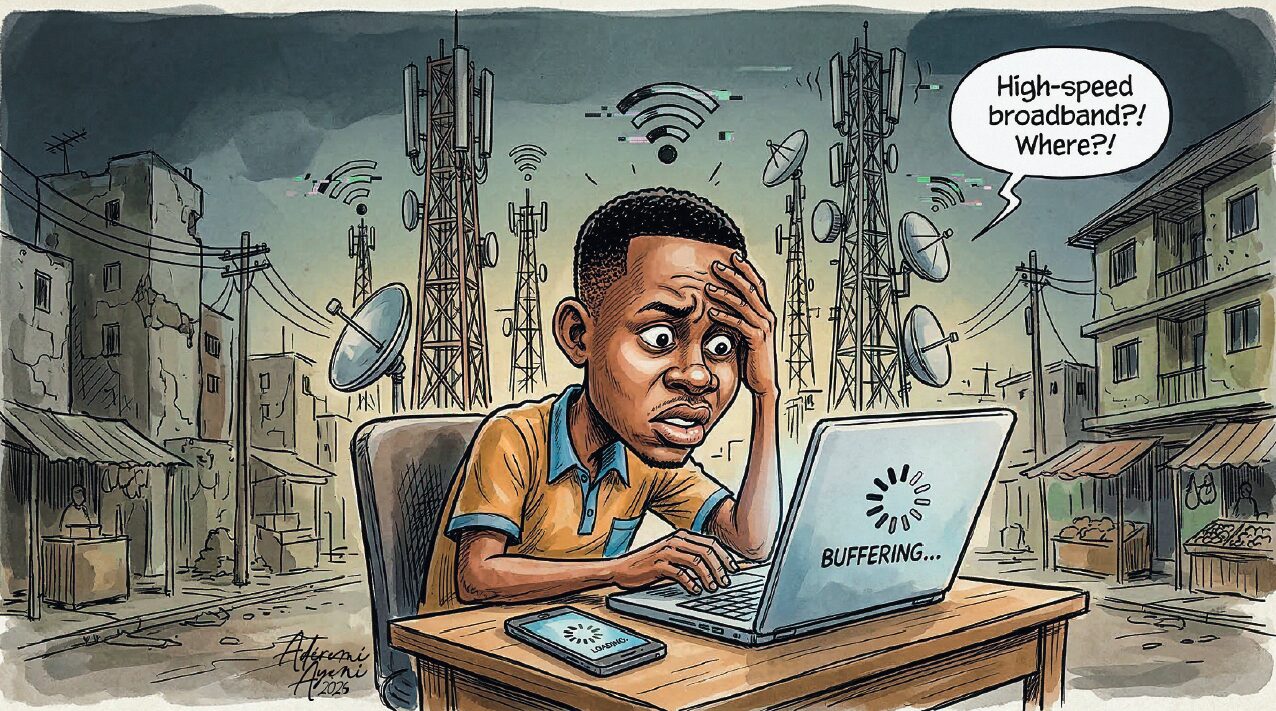
Nigeria is not devoid of infrastructure. Telecommunications facilities exist across the country, yet internet access remains unreliable, slow, and expensive. Radio stations are everywhere, but they are barely used for large-scale teaching or skills development. Universities continue to erect new buildings while classrooms, laboratories, and libraries already in existence sit idle or decay. New lecture halls are constructed even though many classrooms are empty after 2 p.m. This is not a story of absence; it is a story of assets without impact.
Technology is also widely available, yet governance frameworks remain stubbornly analogue. Institutions demand digital literacy from staff and students without making corresponding investments in digital infrastructure or capacity. Energy costs continue to rise, but new buildings are rarely designed with sustainability or efficiency in mind. The result is a system that owns modern tools but operates them using outdated rules, making scale, innovation, and cost-effectiveness nearly impossible.
Perhaps the most damaging misalignment lies in talent management. Nigeria has a deep reservoir of highly qualified professionals across the public and private sectors, including many retirees with decades of experience. However, these individuals are largely excluded from tertiary education, training, and skills development due to rigid regulations, narrow job categories, and insular academic cultures. Institutions complain of staff shortages while maintaining hiring freezes in the face of mass retirement and persistent brain drain. Recruitment practices often prioritise ethnicity, formality, or credentialism over competence. Talent exists, but it is systematically blocked from where it is needed most.

At the same time, the higher education system continues to expand at breakneck speed. New universities are established and new academic programmes approved even as funding crises deepen and staff morale declines. Disciplines are increasingly fragmented and overspecialised, despite a shrinking productive sector that requires adaptable, interdisciplinary skills. Lifelong learning is frequently invoked in policy speeches, yet credentialing rules prevent universities from offering flexible remediation, reskilling, and micro-credentials. Expansion proceeds without consolidation, coordination, or sustainability.
Isolation further compounds the problem. Educational institutions operate largely in silos, with minimal collaboration across institutions or education tiers. Resource sharing, joint programmes, and coordinated planning are the exception rather than the norm. Meanwhile, under-the-grid institutions and unregulated part-time programmes continue to proliferate despite extensive regulatory activity. The system is heavily regulated, yet poorly coordinated, a classic case of governance without effectiveness.
Quality assurance offers another revealing contradiction. Nigeria has elaborate oversight mechanisms, frequent accreditation exercises, and continuous curriculum reviews. Yet these processes have not translated into better outcomes. Employers continue to complain about graduate relevance, even as graduation standards appear to rise, with more first-class degrees awarded. Quality assurance has become an exercise in compliance rather than improvement, undermined by weak incentive structures and poor reward systems that fail to recognise or sustain excellence.
Perhaps the most telling contradiction of all is the performance of Nigerian graduates abroad. Graduates routinely described as “poorly trained” excel in foreign universities and workplaces. This success raises uncomfortable questions about local assessment systems rather than graduate capability. If Nigerian graduates can thrive elsewhere, then the problem lies not primarily with learners, but with how quality is defined, measured, and rewarded at home.
The private sector’s complaints also deserve scrutiny. Employers lament the quality of graduates at a time when hiring is stagnant, wages are suppressed, and many firms are downsizing or exiting productive activity altogether. It is difficult to reconcile claims of skills shortages with an economy that struggles to absorb available talent. Once again, the issue is less about education output and more about systemic dysfunction.
Adding to this dysfunction is an unhealthy dependence on external validation. Significant resources are spent on foreign accreditation, benchmarking exercises, and overseas travel, often with little to show in terms of domestic capacity building or systemic reform. These efforts drain scarce resources while reinforcing dependence, rather than strengthening local institutions.
Taken together, these contradictions point to a single conclusion: Nigeria’s education crisis is not primarily about insufficient resources, but about how existing resources are managed, allocated, and governed. Infrastructure exists but is underused. Talent exists but is excluded. Regulation exists but inhibits innovation. Quality assurance exists but fails to deliver quality.
The way forward requires a fundamental shift in thinking from expansion to optimisation, from exclusion to integration, and from formal compliance to functional performance. Until Nigeria confronts the inefficiencies embedded in its education and skills ecosystem, pouring more money into the system will only deepen the contradictions. Scarcity is not the core problem. Waste is. (BusinessDay)
-

 News24 hours ago
30 states’ debt outpaces half their annual revenue
-
Metro23 hours ago
Man Held Over Undeclared $265,000 At Kano Airport
-
Metro23 hours ago
Abuja motorists battle cattle on city roads
-
Metro18 hours ago
US death row inmate survives execution after two lethal injections
-
News24 hours ago
Reforms over, we’ve laid foundation for lasting prosperity — Tinubu
-
Social Media News18 hours ago
WhatsApp introduces parental controls for teens
-
Politics18 hours ago
‘How did you transfer N750bn to people without phones?’ — Atiku tackles APC chair
-
Business18 hours ago
Refining Battle: Dangote calls for ‘level playing field’ as court deals Lagos refinery a blow