News
Despite Housing Deficit, Unoccupied Gov’t Houses Flood Bauchi

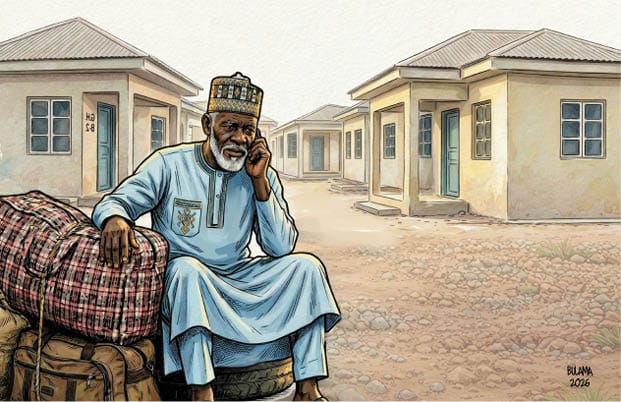
Hopes of many residents of Bauchi State to own houses and comfortably shelter their families at a relatively low cost may have been shattered due to the failure of the government to allocate thousands of completed housing units built for low and middle-income earners, including civil servants and other individuals in the state.
The government’s refusal to make public the procedure for acquiring those buildings has further dampened the hope of many prospective homeowners who watch helplessly as the properties — some of which have been completed for over a decade — rot away.
The strain on accommodation in Bauchi, especially in the state’s metropolis, fits into the broader context of Nigeria’s housing crisis, worsened by rapid urbanisation and population growth, with an estimated shortfall of around 15.2 million to 25 million and about N21 trillion financing gap.
And in a country like Nigeria, where mortgage penetration remains miserably poor at less than 1 per cent of the Gross Domestic Product, compared to over 30 per cent in South Africa and 80 per cent in most advanced economies, millions have been shut out of formal housing finance.

Findings by Weekend Trust revealed that at least four sets of about 6,000 housing units in Bauchi State are either completed but unoccupied or abandoned halfway through construction. Several of them have now been overgrown with weeds and taken over by reptiles.
The housing schemes include the 1,000 Unity Estate located along Jos Road, the 1,000 Isa Yuguda housing units at Hakan-Yafi village, the Federal Government 1,000 housing units along Ningi-Kano Road and the 2,500 Governor Bala Mohammed housing units across the six Bauchi emirates: Katagum, Jama’are, Dass, Bauchi, Misau and Ningi.
Weekend Trust gathered that the construction work for the Unity Estate started sometime in 2007, but the project was abandoned halfway. While a significant portion of the first phase was 100 percent completed over 15 years ago, other units were abandoned at various levels of completion.
Further investigation also indicated that some residents of Bauchi, suspected to have applied for the houses but got tired of waiting for formal allocation, sometimes in 2014, moved into some completed portions of the houses. The uncompleted structures in the estate have been left at the mercy of vandals, reptiles and criminals using them as hideouts.
It was also observed that while several walls of the abandoned structures have collapsed, others are replete with cracks.
The second 1,000 housing units project, located about 3 kilometers away from the Unity Estate, was initiated and completed by the former Governor Isa Yuguda-led administration. Although it was fully completed, not a single house has been officially allocated, years after completion. The structures have been taken over by hoodlums who converted them to criminal sanctuaries.
Multiple sources at the Bauchi State Ministry of Housing, who craved anonymity, confided in this paper that the houses have not been allocated to occupants due to the change of governments.
One of the sources said former Governor Yuguda completed the estate towards the end of his second tenure in May 2015, but had left the office by the time they were ready for allocation.
“His successor, the present administration, hasn’t paid much attention to the project. I later learnt that the terms for occupying the houses were also reviewed and the applicants found it difficult to own them. I don’t know if the present administration will review the terms again to simplify the processes to enable the applicants to own the houses,” the source said.
270 units allegedly sold to Nigerian Air Force
The third scheme of 1,000 housing units was initiated in 2016 by the late former President Muhammadu Buhari administration. The project is situated along Kano-Ningi Road in the Ningi Local Government Area of Bauchi State. Although it was designed for 1,000 housing units, only 270 blocks of flats were completed.
The project was part of the Federal Housing Scheme under the National Housing Program (NHP) of the Buhari administration, which targeted only low- and middle-income earners and civil servants.
However, this project is surrounded by controversy, as some residents have dragged the Federal Ministry of Housing to court over the alleged sale of the 270 units to the Nigerian Air Force (NAF).
Findings indicated that the houses were slated for commissioning about three times during the previous administration but failed, even though notices for interested persons, especially workers, were advertised. Some people suspected to be applicants have also occupied the houses.
Trouble started when the ministry, which denied selling the entire estate to the NAF, attempted to evict the occupants.
In August last year, the FMH through its State Controller in Bauchi, Mr. Nwamadu Herbert, confirmed discussions with the NAF about the houses, but claimed no transfer of ownership had been finalised, saying “the ministry waits for directives from its headquarters. The houses remain under the custody of the ministry.”
Herbert tagged the protesters as ‘illegal occupants’ and explained that provisional allocations were granted only to genuine allottees who fulfilled the stipulated requirements within 90 days.
Herbert added that the decision to revoke offers to defaulters on April 1, 2025 was widely publicised and challenged any protester to produce valid allocation documents.
When these reporters visited the office of the State Controller for further inquiries about the matter, they were told he was not “on seat”.
Meanwhile, some residents under the auspices of Bauchi State Concerned Citizens Group had organised a series of protests and press conferences against the alleged sale of the houses to the NAF, demanding justice for the applicants.
The Concerned Citizens group, led by one Alhaji Aliyu Ladan, insisted that the alleged sale of the housing units had undermined the welfare of Bauchi workers.
Ladan described the move as “unfortunate and illegitimate,” claiming the houses were part of a 1,000-unit project aimed at tackling workers’ accommodation challenges.
1,500 units completed under Gov Mohammed not occupied
The fourth and biggest housing estate in Bauchi was initiated by the present administration of Governor Bala Mohammed sometime in March 2020. The project was a collaboration between the Bauchi State government and Family Homes Funds (FHF). It comprises 2,500 housing units estimated to cost a sum of N12 billion. The houses targeted low-income earners in the state.
According to the details of the project, 1,500 housing units are to be constructed in Bauchi metropolis; 350 units in Azare, Katagum; 250 units in Misau; 200 units in Ningi and 100 houses each in Jama’are and Dass.
The project, which was planned to be completed within one year, was aimed at reducing housing deficit among the people of Bauchi, a problem which the government said was caused by the influx of Internally Displaced Persons (IDPs) from neigbouring north eastern states.
During the foundation laying of the project, Governor Mohammed said 30 per cent of the total sum of the contract had been paid to the contractors and the government would ensure prompt payment of the balance as the project progressed.
Although 1,500 housing units for the Bauchi metropolis had been completed, the houses have been abandoned to reptiles, rainstorms, and hoodlums. Weekend Trust gathered that six years after units were completed, the state government has yet to allocate them.
A visit to the site along Jos Road, revealed that a significant part of the buildings has been destroyed by the rainstorm, while the roofings, windows and doors of other units have been vandalised.
Further investigation revealed that apart from the Bauchi metropolis, where 1,500 housing units were completed, other units in the remaining five emirates did not see the light of day, as the structures were abandoned at various levels of completion.
Why affordable social housing
More than half of Nigeria’s population, estimated at over 200 million, are multi-dimensionally poor, lacking access to quality healthcare, education, and shelter, according to the National Bureau of Statistics (NBS).
A World Bank 2018 report put the country’s urban population living in slums at 54 per cent, compared to South Africa’s 26 per cent, Cameroon’s 34 per cent, The Gambia’s 27 per cent, Ghana’s 30 per cent, Senegal’s 30 per cent and Zimbabwe’s 34 per cent.
Nigeria’s troubling statistic was buttressed by the UN-Habitat, in its Habitat Country Programme document for 2017 to 2021, which put the proportion of urban residents who live in slums in Nigeria at 69 per cent.
These metrics signpost an uncomfortable reality that most Nigerians are unable to afford their own homes, highlighted in the report of a 2019 study sponsored by the Central Bank of Nigeria (CBN) and authored by Dr. Emmanuel Abole Moore.
Moore’s research indicated that only 10 per cent of Nigerians who desired to own a home could afford it, whether through purchase or personal construction.
Whereas in Singapore, 92 per cent of the population could afford it by either means; in the United Kingdom, 78 per cent; the United States, 72 per cent; China, 60 per cent, and Korea, 54 per cent. This further highlights Nigeria’s huge housing deficit and the need for affordable social housing.
Bauchi civil servants, residents lament
Multiple sources at the state Ministry of Housing, who preferred anonymity for fear of victimisation, told Weekend Trust that the incumbent government was not showing any interest in allocating the houses to interested applicants.
One of the sources said: “These houses were completed six years ago, interested applicants have applied and screening was conducted, but I don’t know what stops the government from allocating the houses to the applicants even though they have met the requirements.
“I don’t know, maybe the government wants to campaign with the houses during the forthcoming general elections and that is why it is delaying the allocation. Otherwise, the houses should have been allocated to the applicants since.”
Another source said: “In the entire ministry, only two persons: the Commissioner and Permanent Secretary can tell you the actual reasons why the government has not allocated these houses to the applicants. Only the two of them and a few directors are in the know of the actual situation.
“We, the lower cadre staff, were left in the dark. Unfortunately, the houses have been abandoned for years. The billions of naira invested in constructing the houses have been wasted. Go to the site and see that criminals have turned the houses into their hideouts, while portions of the houses were vandalised.
“I cannot understand why the government is delaying the allocation of the houses to the rightful applicants. Hundreds, if not thousands, of Bauchi State civil servants need these houses because with the growing population in the state, people need such kinds of shelters to accommodate their families.”
Also, some Bauchi residents, who spoke to Weekend Trust on the abandoned and unoccupied housing projects in the state, expressed their displeasure at what they described as the government’s nonchalant attitude in handling the projects, lamenting that both the federal and state governments should have expedited the processes for allocating the houses to interested individuals.
A resident and businessman, Alhaji Muhammad Bello, said he is interested in the house, especially one of those in the Wuntin-Dada area.
“My house is too small to accommodate my family. So, I want to buy an additional house so that I can decongest my house by taking my second wife to the new house. You know, constructing a new house now is not easy; building materials are very expensive.
“It is better and cheaper for me to buy a ready-made house from the government than to build a new house. So, I’m appealing to the Bauchi State government to hasten the allocation processes of these houses. It’s quite unfortunate that even though the houses have been completed, the government is delaying the allocation,” he stated.
Malam Isa Ibrahim, a mechanic in Bauchi metropolis, urged the government to allocate the completed buildings to reduce the burden of shelters, adding that the houses would greatly help in reducing housing deficit among the people of the state.
“For me, it’s wrong for the government to continue delaying the allocation of the house after investing huge sums in the projects. If the houses will not be allocated to the interested applicants, then why did the government spend taxpayers’ money to construct them,” he queried.
For Alhaji Isma’ila of Railway Quarters in Bauchi metropolis, allocating the completed houses and completing the abandoned ones would help significantly in decongesting the city.
He said, “We are talking about 6,000 housing units, so let’s say each family that is getting a house there has 10 members; if you multiply 6,000 by 10, you will have 60,000. So, if you remove 60,000 people from Bauchi city, you have surely decongested the city to a certain level.
“And this will give other people an opportunity to expand their houses within the city. Decongestion always helps in reducing the spread of communicable diseases among people, especially in this hot season.
“So, I am appealing to the government to revisit this issue with a view to finalising it and allocating the houses to the rightful applicants. It is unfortunate that the government has spent our money on the project and abandoned the houses just like that.”
Bauchi gov’t speaks, silent on acquisition process, cost
When contacted, the state Commissioner of Housing and Environment, Hon Danlami Ahmed Kawule, said the projects are in three different components, including building of houses, providing infrastructure like roads, water, electricity and drainage channels, while the third component is fencing the estates.
“The first component of building the houses has been completed almost 100 percent with the exception of the Bauchi Emirate in Dungal where some of the houses were not completed,” he added.
According to Kawule, the second component, which is the provision of infrastructure, is ongoing while the third component, fencing of all six estates, has been completed.
Commenting on the allocation of the completed houses, Kawule said, “We cannot allocate what was not completed because there are certain levels, especially the provision of infrastructures, that are not completed across all the estates. I cannot give assurance that we can do the allocation as it is.”
On procedures to acquire the houses, the commissioner said, “The procedures are normal procedures to acquire a house and His Excellency has boldly said it that these houses are built for civil servants, artisans, traders, youth groups, journalists and other low-income earners. The governor has constituted a committee to come up with a template to guide a successful allocation of these houses without fear or favour. He wants to make sure that justice has been done in terms of the allocation.
“As I am talking to you, the committee has completed their assignments and submitted the report to the Secretary to the State Government and are now waiting for further instructions from His Excellency.”
Reacting on the prices of the houses Kawule explained, “I cannot tell you the exact amount of the houses but I know His Excellency, the Governor of Bauchi State, is willing to help the people and all these categories of people I mentioned, I believe the governor would reduce the prices to an affordable rate so that all the beneficiaries can afford to pay when they receive their allocation.”
The commissioner said Governor Mohammed was not happy with the report of vandalism of the houses. He also acknowledged that rainstorms damaged some of the houses last year in Misau, Katagum and Bauchi, adding, “The ministry wrote a memo and funds were approved for reconstruction of the damaged structures.”
Kawule further disclosed that the ministry would likely revoke some contracts due to a breach of agreement by some contractors.
“Some contractors handling the house projects are foot-dragging and we have been following up with them to keep up with all the terms of the agreement but unfortunately, there was no positive response. We cannot revoke until we exhaust all the procedures and the contract agreement, because up till now, there has been no handover of the projects by the contractors to the government.
“But the time has come for the government to act and we have concluded plans and sent them letters to either complete their work within a stipulated period or we revoke and terminate their contracts so that the ministry can go into the houses and repair them before the allocations,” he added.
‘Why unoccupied estates are on the rise’
Speaking on the issue, the Executive Director of Housing Development Advocacy Network (HDAN), Barr. Festus Adebayo noted that as long as decent homes are not provided for low- and middle-income Nigerians by the government and real estate operators, owning properties will be difficult, leaving buildings unoccupied.
“The NHF was launched in 1992 to empower workers through affordable housing finance. Over the years, some workers have complained about its poor management and accountability issues. These funds belong to workers. It is important that, as they are deducted monthly, there should be access to housing benefits,” Adebayo noted.
He identified taxation as one of the best ways to curb the rising number of unoccupied estates in the country.
“Taxation is a good way of reducing these empty properties. I think in Nigeria, those who own properties and have left them for so long have been indulged. They don’t pay taxes on them.
“Unfortunately, in most of our cities, the tenement rate system has been completely abandoned. And what we have is just arbitrarily, you know, some people call it a land use charge and so on, which again is not even in the hands of the government. In the UK, for instance, we have an agency called the Valuation Office Agency. What they do is they carry out a valuation of all those assets.
“They determine the value of properties and also determine what the rental value should be. It is on the rental value that they charge owners. Subsequently, the tax on unoccupied properties is actually higher than those that are occupied. And let’s look at the incidence of those taxes. If a property is occupied, the tenement rate or business rate, if it’s commercial, the incidence is on the occupier, but when it is empty, the incidence is on the owner,” he said.
He noted that government policies on housing development should be reviewed.
“I’m not sure we have a national housing policy yet. We used to have one many, many years ago, but I haven’t seen one recently. If we have that, we will be able to use the instrumentality of that policy to address inequality in housing and location distribution,” he added.
Similarly, the immediate past president of the Real Estate Developers Association of Nigeria (REDAN), Aliyu Wamakko, stated that the inability to enact a law regulating real estate development has made the sector porous, with many individuals laundering money to erect structures and leaving them unoccupied for years.
“Before my tenure ended at REDAN last year, we crafted the ‘Real Estate Regulatory Council of Nigeria, 2023’, which is targeted at fully regulating the sector and also curtailing money laundering in the country.
“It had inputs from all the regulatory institutions, all the state commissioners, all the professionals in the built industry were part of the drafting and was eventually passed by the 9th National Assembly and later transmitted to President Tinubu for assent, but he declined assent.
“So, all these houses that you are seeing are a product of money laundering from the people who stole money from the government and they don’t even want to put a sign to indicate any name of an estate developer, because they are proceeds of crime; they are just building as the money is there,” Wamakko said.
He warned that the case of unoccupied estates would continue without an efficient mortgage system and a law governing real estate in the country. (Daily trust)
-

 World News23 hours ago
UK PM calls for ‘reflection’ after death of ex-Cambridge professor
-
Politics23 hours ago
There Are Plans To Declare Osun Election Inconclusive – Adeleke Campaign
-
News13 hours ago
BREAKING: INEC declares Accord Party’s Adeleke winner of Osun governorship election
-
Sports23 hours ago
Chelsea fans boo Enzo Fernandez in friendly win over Sociedad
-
Politics13 hours ago
‘Bulldozer’: How Adeleke defeated APC, others to secure second term in Osun
-
Business13 hours ago
SEC orders Nigerian capital market firms to cut North Korea, Iran ties
-
Politics23 hours ago
Don’t Allow Rejected Politicians Hijack Osun Mandate – Adeleke Tells Tinubu
-
News13 hours ago
Borno parents beg FG to rescue 52 children, others 90 days after abduction