Politics
2027: Tinubu faces electoral backlash over insecurity, mounting hardship

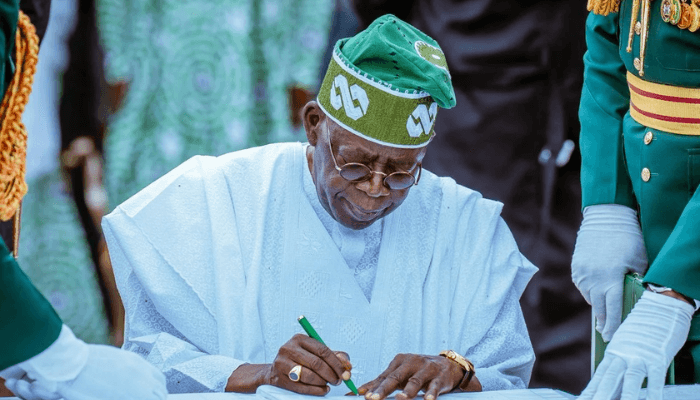
As 2027 presidential election draws nearer, opposition forces in Nigeria and international arena are maneuvering to unseat President Bola Tinubu by capitalising on widespread public discontent over severe economic hardship and worsening insecurity. The opposition strategy, which is still in its formative stages, focuses on creating a “granite alliance” designed to challenge the incumbent APC government.
Insecurity, coupled with economic hardship, is widely identified as the primary challenges facing President Bola Ahmed Tinubu’s administration and the central narrative of the opposition ahead of the 2027 general election.
Critics argue that the persistence of insecurity, particularly in the North, has led to a loss of confidence in the government, with some observers predicting a reduction in the voting margins that secured Tinubu’s victory in 2023.
Opposition leaders, including former Vice President Atiku Abubakar, Peter Obi, and Chibuike Amechi, are actively working to build a united front to avoid the fragmentation that occurred in 2023.

Capitalising on insecurity and economy, the opposition figures are leveraging rising banditry, kidnapping, and inflation to paint the administration as incompetent and insensitive to the suffering of Nigerians.
There is a significant focus on mobilising the northern voting bloc, with opposition actors arguing that the region is experiencing increased insecurity and feeling neglected under the current administration.
Opposition figures argue that insecurity—an issue Tinubu used against his predecessors—has become his main vulnerability, overshadowing claims of economic progress.
Continued insecurity is seen as a unifying issue that could fuel a unified opposition movements, a potential ADC coalition.
However, there seems to be challenges and counter-strategies and incumbency advantage of President Tinubu considered as master strategist who is actively expanding his support base, tightening the APC’s grip through strategic alliances, and exploiting the benefits of incumbency.
The 2027 race is widely seen as a tough contest, with observers noting that for the opposition to succeed, they must present a unified candidate and a credible alternative vision, rather than relying solely on criticism of the current administration.
President Tinubu has indicated that his administration was aware of both domestic and foreign collaborators behind insecurity in Nigeria, vowing that the nation will not bow to terror.
While not publicly releasing a list of names, the president has stated that anyone—even those appointed by him—who undermines national security or fails to follow orders will be dealt with.
He is engaging global partners for support in combating security challenges, particularly in dealing with networks that provide funding or logistical support.
The president has pledged to enhance the welfare of security forces to effectively fight these networks.
His administration has said that tackling the funding and leadership of these groups was a key aspect of solving the ongoing security issues in Nigeria.
The security crisis has been linked directly to the decline to agricultural produce, as farmers fear for their lives.
Opposition figures argue that insecurity—an issue Tinubu used against his predecessors—has become his main vulnerability, overshadowing claims of economic progress.
The government says it is focusing on security reforms, such as the potential implementation of state police and proactive military efforts, to stabilise the nation before the election.
Political analysts believe that while the APC retains a significant structural advantage due to incumbency, the 2027 election may be decided by the effectiveness of the administration’s efforts to address the security and economic crises, failure of which may lead to significant electoral backlash.
International opposition
Rising insecurity in Nigeria threatens to overshadow President Bola Tinubu’s “Renewed Hope” agenda and damage his international reputation ahead of the 2027 election by undermining foreign investment, eroding confidence in his economic reforms, and raising concerns about regional stability.
According to Rajaratnam School of International Studies (RSIS International), in the early 2026, several countries have shown reluctance to accept, or have rejected, ambassadorial nominees from the Tinubu administration, primarily due to a diplomatic policy rejecting appointees with less than two years remaining in a presidential term.
Here are the key countries and international actors involved in the diplomatic tensions with the Tinubu administration:
India:
Reportedly to have rejected or signaled difficulty in accepting Nigerian ambassadorial nominees (such as Amb. Muhammad Saidu Dahiru to New Delhi) based on the tenure policy.
United States
United States alleged backing of opposition. Some political observers, such as Prophet Ayodele, have claimed that a planned coalition of Nigerian opposition parties, including figures like Atiku Abubakar and Peter Obi, is seeking support from the US to challenge President Tinubu in 2027.
There is no formal U.S. plan under President Trump to support Bola Tinubu’s re-election in Nigeria. Instead, there is a “delicate balancing act” following Trump’s threats of military intervention regarding security issues, prompting Nigeria to affirm its sovereignty.
While Washington provides strategic security support, training, and counterterrorism assistance, the relationship has been described as “drifting” and marked by mutual disengagement.
Reports indicate that US lawmakers considered targeting Nigeria for potential sanctions or visa restrictions, with some sources mentioning potential visa restrictions for Nigerian entities. Additionally, concerns were raised regarding consular issues following a diplomatic incident involving Venezuelan deportations.
United Kingdom
While listed as having granted agreements to some envoys, there have been public commentaries criticising the administration for seeking support from a nation (UK) that recently characterised Nigeria as highly corrupt, suggesting a cynical view of the relationship. Some analysts believe that President Bola Ahmed Tinubu’s recent UK visit was in this regard as what the eyes were seen.
ECOWAS Member States (Niger, Mali, Guinea):
Relations have been strained due to the Tinubu administration’s firm stance against military coups, leading to the departure of these nations from the bloc and a loss of regional influence.
Abuja Embassy Landlord Disputes:
Numerous countries were listed by the Federal Capital Territory Administration (FCTA) as defaulting on ground rent, leading to a potential diplomatic stand-off. These include Ghana, Thailand, Russia, Turkey, Ireland, Germany, Venezuela, Zambia, Indonesia, Equatorial Guinea, Egypt, Chad, Sierra Leone, Sudan, Kenya, Zimbabwe, Ethiopia, Switzerland, Saudi Arabia, China, and South Africa.
Here is how insecurity may impact Tinubu’s international image
Undermining Foreign Investment (FDI):
Multinational companies continue to divest, citing a hostile economic environment and insecurity.
While President Tinubu travels internationally to promote Nigeria as a safe investment destination, high-level diplomatic engagements are undermined by domestic realities of insecurity, such as school attacks and kidnappings. Critics argue that this creates a “tragic denial” of the pain Nigerians face, hindering efforts to attract long-term foreign partnerships.
Regional Stability Concerns
The inability to secure Nigeria’s porous borders has led to the movement of displaced militant groups into the country, causing concern among neighbouring countries in the ECOWAS region, which may portray the government as weak or incapable of managing regional security challenges.
The failure to control internal security, which Tinubu once criticised his predecessors for, erodes his image as an effective economic manager. Continued security spending without adequate safety results contributes to international perceptions that Nigeria’s security sector is ineffective, despite receiving larger budgets.
Increased violence in the North-East, North-West, and North-Central regions, along with incidents of communal clashes, invite international watchdogs to scrutinise the administration’s human rights record, weakening the image of the country as a stable democracy, according to RSIS International.
To mitigate these risks, the Tinubu administration is actively seeking international support for security equipment and intelligence sharing, particularly with France and the UK, as part of its strategy to show it is tackling the crisis.
However, until concrete results are achieved on the ground, the international narrative may remain that the insecurity is hindering Nigeria’s development. (BusinessDay)
-

 Politics4 hours ago
BREAKING: Police summon APC senator over threat to ‘kill Accord members’
-
Politics4 hours ago
Osun election: 10 battleground LGs that may decide Adeleke, Oyebamiji race
-
Politics19 hours ago
Osun guber: ‘I’m bulldozer, not afraid of FG, govs backing APC candidate – Adeleke
-
News4 hours ago
‘It’s a crime’ — NCAA to investigate blockage of Lagos airport airside by bus
-
Business20 hours ago
Nigerian tycoon Eruani Azibapu’s $1 billion Niger Delta refinery is nearing completion
-
Sports4 hours ago
Mikel trolls Arsenal over Vinicius signing
-
News4 hours ago
Fubara, lawmakers battle stalls Rivers N1.85tn budget
-
Business4 hours ago
Tinubu unveils framework to unlock $50bn offshore investment