News
Military gets N2.3tn special funding amid security crisis

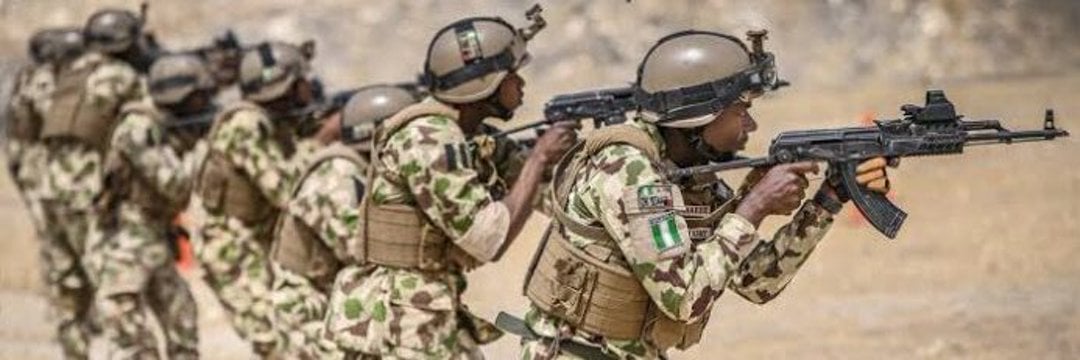
Military and paramilitary agencies received a total of N2.3tn in special intervention funding between October 2023 and September 2025, according to the latest Federation Account Allocation Committee documents obtained by The PUNCH on Monday.
The ledger shows the money was released in 23 equal tranches of N100bn each under the “Ledger of Special Intervention Programme for Nigerian Military February, 2026.”
The records from the Office of the Accountant-General of the Federation, Federation Account Department, indicate that the intervention fund operated as a transit account, with each N100bn receipt followed by a matching N100bn disbursement, leaving no balance after payments were made.
The document opened with a brought-forward balance of N100bn as of October 19, 2023. On the same date, the account recorded the first transfer, described as “Transfer from September, 2023 Allocation 1/10,” worth N100bn. That inflow was followed on November 8, 2023 by a payment of N100bn to the military.

A second N100bn tranche, marked “Transfer from October, 2023 Allocation 2/10,” was received on November 20, 2023, and was paid out on December 20, 2023.
The first phase continued with “Transfer from November, 2023 Allocation 3/10” on December 20, 2023, after which the description of the beneficiary widened from the military alone to “Military and Para Military Agencies.” That same N100bn was paid out on December 20, 2023.
The fourth tranche, from December 2023 allocation, came in on January 17, 2024 and was disbursed on February 2, 2024.
The fifth tranche, from January 2024 allocation, was received on February 27, 2024 and paid on March 1, 2024.
Further entries show that the sixth tranche, from February 2024 allocation, was received on March 20, 2024 and paid on April 12, 2024.
The seventh tranche, from March 2024 allocation, came in on April 16, 2024 and was disbursed on April 25, 2024.
The eighth tranche, from April 2024 allocation, was received on May 13, 2024 and paid on May 25, 2024.
The ninth tranche, from May 2024 allocation, was credited on June 10, 2024 and paid on June 13, 2024.
The 10th tranche in the first phase, from June 2024 allocation, was received on July 16, 2024 and paid on July 27, 2024.
This means the first phase alone accounted for N1tn, covering 10 allocations from September 2023 to June 2024.
The ledger then moved to a second phase, beginning with “Second Phase, Transfer from July, 2024 Allocation 1/10” on August 16, 2024. That tranche was paid out on August 27, 2024. The second phase continued with another N100bn from August 2024 allocation on September 16, 2024, paid on September 26, 2024. A third N100bn from September 2024 allocation was received on October 11, 2024 and paid on October 21, 2024.
A fourth, from October 2024 allocation, was received on November 20, 2024 and paid on November 27, 2024. A fifth, from November 2024 allocation, was recorded on December 13, 2024 and disbursed on December 17, 2024.
The second phase extended into 2025. The sixth tranche, from December 2024 allocation, was received on January 17, 2025 and paid on February 17, 2025. The seventh, from January 2025 allocation, came in on February 19, 2025. The corresponding payment was recorded on March 10, 2025.
The eighth tranche, from February 2025 allocation, was received on March 19, 2025 and paid on March 28, 2025.
The ninth, from March 2025 allocation, was received on April 15, 2025 and disbursed on April 24, 2025.
The 10th and final tranche in the second phase, from April 2025 allocation, was received on May 16, 2025 and paid on June 3, 2025.
Like the first phase, the second phase also amounted to N1tn, again built on 10 equal tranches of N100bn each.
By the end of that phase, cumulative receipts and payments under the special intervention programme had reached N2tn.
A third phase began shortly after. The ledger shows “Third Phase, Transfer from May, 2025 Allocation 01/10” on June 17, 2025, followed by payment on June 19, 2025. “Third Phase, Transfer from June, 2025 Allocation 02/10” was received on July 16, 2025 and paid the same day. “Third Phase, Transfer from July, 2025 Allocation 03/10” came in on August 21, 2025 and was paid on September 1, 2025. Those three entries added another N300bn, bringing the total special intervention funding to N2.3tn.
The documents did not provide a breakdown of how the N2.3tn was shared among the armed forces and the various paramilitary agencies, nor did the ledger state the projects, operations or expenditure heads the intervention funding was meant to support.
However, the scale and regularity of the disbursements show that the programme became a major financing line outside the routine monthly statutory allocations, with the special fund running continuously across three phases over nearly two years.
In a related development, the documents also showed that the Federal Government allocated N450bn as non-regular allowances for the armed forces over a three-month period in 2025, drawn from non-oil revenues.
Under a separate ledger titled “Ledger of Savings on Part Funding of Military and Para Military Non-Regular Allowances,” the funds were released in three tranches of N150bn each for April, May and June 2025.
The records indicated that on May 16, 2025, N150bn was received as “Transfer from Non-Oil on Part Funding of Military and Para Military Non-Regular Allowances for the month of April, 2025,” bringing the cumulative balance to N150bn. This was subsequently transferred in full to the sub-recurrent account on May 27, 2025.
A similar pattern was observed in June, when another N150bn for May 2025 was received on June 17, 2025 and completely transferred out to the sub-recurrent account on June 26, 2025.
For June 2025, the ledger showed that N150bn was received on July 16, 2025 and fully disbursed on July 23, 2025.
The documents further revealed that the Federal Government released N40bn for security funding in September 2025, channelled through the Office of the National Security Adviser.
Under a separate entry titled, ‘Ledger of Funding Security: February, 2026,’ the records showed that the sum of N40bn was received on September 17, 2025 as the “First tranche of Funding Security: August, 2025,” bringing the cumulative balance to N40bn.
The amount was subsequently paid out in full on September 30, 2025, with the entry described as “Payment of Funding of Security to Office of the National Security Adviser.”
The pattern is consistent with other intervention accounts captured in the FAAC documents, where funds are received and immediately transferred to designated security agencies for operational use.
The high security spending comes amid mounting concerns from businesses over rising insecurity across the country, which has emerged as the most pressing constraint to operations despite the scale of government intervention funding.
Findings from the Central Bank of Nigeria’s Business Expectations Survey for February 2026 showed that insecurity ranked as the top business constraint with an index score of 71.1, ahead of high or multiple taxes at 70.7 and insufficient power supply at 70.0.
According to the report, “Respondents identified Insecurity (71.1), High/Multiple Taxes (70.7), Insufficient Power Supply (70.0), High Interest Rate (68.6), and High Bank Charges (65.5) as the top five (5) business constraints in February 2026, highlighting factors that directly impact on operational stability and profitability.”
The ranking places insecurity above all other macroeconomic and structural challenges facing businesses, reinforcing concerns that security conditions continue to weigh heavily on economic activity, investment decisions, and expansion plans.
Outrage over killings
In a related development, outrage has continued to trail the latest wave of killings in Plateau and Kaduna states, with fresh details from multiple incidents painting a grim picture of escalating insecurity despite heavy government spending on defence and security operations.
In Plateau, accounts from residents, a youth leader, the police, the state government and the University of Jos all confirmed a deadly attack on Angwan Rukuba in Jos North on Sunday night.
In Kaduna, residents, church leaders and police sources confirmed another deadly attack on a wedding gathering in Kahir community in Kagarko Local Government Area.
The casualty figures from Plateau differed sharply. Residents first told The PUNCH that six persons had been confirmed dead after gunmen invaded Angwan Rukuba on motorbikes and opened fire on people in the area. But the President of the Berom Youth Moulders-Association, Dalyop Solomon Mwantiri, later said the death toll had risen to 27, with 14 killed instantly and 13 others dying in hospital.
The Plateau State Police Command, however, confirmed 12 deaths and said the victims included 10 men and two women, while adding that two more corpses were later found during search operations.
A resident, John Caleb, described the first moments after the Jos attack, saying, “We have been badly hit in Angwa in by unknown gunmen. So far, six people have been confirmed dead and several other casualties are at the Luna Hospital by New Road. It’s very unfortunate.”
Another resident, Janet Pam, said, “I was in my house at Angwa Rukuba when I heard the first gun shot. At first, I ignored the sound but when I heard it the second time, I came outside only to find out that it was gunmen on bike shooting at people.” She added, “They targeted those moving on the road and those selling by the roadside… I have never seen anything like this before. This is pure terrorism.”
Mwantiri, who gave the higher death toll from the Jos attack, said the community was angry that the attackers were able to strike a densely populated area.
He said, “We have counted 25 corpses killed during the attack. I’m at the scene of the incident right now and the people are not happy at all that security agents could not protect them.” He described the incident as “another sad episode in the recurring security challenges facing communities in the state” and called for immediate steps to protect lives and property.
The police said they received a distress call at about 8.30pm on March 29 reporting gunshots around the Angwan Rukuba axis, after which the Commissioner of Police, CP Bassey Ewah, personally led officers and other security personnel to the scene.
In the statement signed by the police spokesman, Alabo Alfred, the command said, “As we speak, the Police and all other security agencies within the State have organised a joint operations and are currently combing the nearby bushes to ensure that the suspects are arrested or dislodged in accordance with the law.”
The command also said the corpses had been evacuated to the mortuary and that efforts were being intensified to arrest the culprits.
The Plateau State Government responded by imposing a 48-hour curfew in Jos North Local Government Area, while the University of Jos suspended examinations scheduled for Monday and Tuesday because of the security situation in an area where many of its staff and students live.
In a statement signed by its Deputy Registrar, Information and Public Relations, Emmanuel Madugu, the university said, “In view of the late evening fatal attacks by unknown gunmen on residents of Angwan Rukuba… all examinations scheduled to hold on Monday 30th, and Tuesday 31st March, 2026 are postponed, and will be rescheduled accordingly.” It also advised members of the university community to be vigilant and careful in their movements.
Governor Caleb Mutfwang visited the affected Jos community on Monday and condemned the killings.
He said, “This is a painful moment for all of us. Angwan Rukuba is a community that accommodates people from diverse ethnic backgrounds across Plateau State. Therefore, this is not the pain of a few, it is the pain of all of us.” He also assured residents that the government would support the burial of the victims and pay the medical bills of the injured.
According to him, “We will not allow mass burial. Government will work closely with the families to give each victim a befitting burial. They did not deserve to die in such a manner.” He added, “For those currently receiving treatment, government will bear the full cost of their medical care.”
The state government also moved to re-emphasise the ban on commercial motorcycles within the Greater Jos Master Plan area after reports that the attackers came on motorbikes and fled the scene the same way.
In a statement, the Commissioner for Transport, Davou Gyang Jatau, said, “The ban on commercial motorcycles in Jos and Bukuru, originally enacted in 2012 under the Greater Jos Master Plan, remains fully in force and active.”
The government said relevant agencies had been directed to intensify patrols, prosecute offenders and strictly enforce the restriction.
Meanwhile, the violence in Plateau has drawn international attention. A United States lawmaker, Riley Moore, warned of potential diplomatic consequences if attacks on Christians persist, stating that “there will be significant consequences for Nigeria’s relationship with the United States” if the government fails to act decisively.
Moore called on the Federal Government, led by President Bola Tinubu, to urgently strengthen security measures ahead of upcoming religious events.
In Kaduna, fear and grief also spread through Kahir community in Kagarko Local Government Area after suspected bandits attacked a wedding gathering.
At least 13 persons were killed have been killed in the fresh Kaduna attack. One account said the attack happened late Sunday night at about 11.47pm, while another said gunmen stormed a wedding eve celebration at about 11pm on Saturday at Kahir Community Primary School in Kushe Ward. At least 25 persons were abducted and seven others were critically injured.
Taken together with the 27 deaths reported by the Plateau youth leader, that would bring the combined death toll in Jos and Kaduna to 40.
Residents and local leaders in Kaduna said the attackers came in large numbers and fired at people gathered for the social event.
Shehu Bala said, “They came in large numbers and started shooting sporadically. People were running in different directions. Many were hit by bullets.”
Rev. Jerry Matur, Chairman of the Christian Association of Nigeria in Kagarko LGA, similarly said, “The attackers came and started shooting sporadically. People ran in different directions. Some were killed on the spot, while others were taken into the bush.”
A community source said the assailants later moved round the village, looting shops and taking food items, provisions and medical supplies.
Residents also pointed to a wider failure of rural security. A former Kagarko council chairman, who spoke anonymously, said, “This is not just an attack; it is a reflection of how exposed our rural communities have become. There is no visible deterrence. These attackers operate with confidence.” He added that fear had begun to disrupt social life in the area, saying, “People are afraid to gather again. Weddings, night events, everything is now uncertain.”
Rev. Matur also warned that the humanitarian impact was deepening, saying, “This is becoming a serious humanitarian crisis. Women and children are the most affected, yet the response has not matched the scale of the problem.”
The Kaduna State Police Command confirmed the incident. Its spokesman, DSP Hassan Mansur, said, “We are aware of the incident and investigations are ongoing. A comprehensive report will be released in due course.”
A police source in Kagarko also said security agencies had begun efforts to determine the number of abducted persons and track down the attackers.
As of press time, operatives were said to be combing surrounding forests in search of both the gunmen and those taken away.
The attacks in Plateau and Kaduna have widened concern over the persistence of insecurity in both urban and rural communities despite huge government military spending.
Nigeria bleeding – CAN
The Christian Association of Nigeria condemned in strong terms the killing of innocent residents during the Palm Sunday attack in Jos, describing the incident as unacceptable and a grim reflection of the country’s worsening security situation.
In a statement issued on Monday and signed by the CAN President, Archbishop Daniel Okoh, he decried the violence that occurred on March 29, 2026 in Angwan Rukuba, Gari Ya Waye area of Jos North, Plateau State.
He lamented the horror of what the attack inflicted on the Christian community stating that, “Palm Sunday is meant to be a day of peace, of hope, of reflection. Instead, it became a day of bloodshed.
“Innocent Nigerians; men, women and children were hunted and killed in cold blood. Let us be clear: this is not just tragic; it is unacceptable”.
According to the Christian body, armed men reportedly stormed the community in large numbers, disguising themselves in uniforms resembling those of security personnel before opening fire on defenceless residents.
“Lives were cut short in minutes. Families have been shattered. A community has been traumatised,” the statement read.
CAN said the incident raises troubling questions about the safety of citizens and the capacity of authorities to prevent such attacks, especially on significant religious occasions.
“We mourn. We grieve. But we must also speak the truth. How did we get here? How is it that people can no longer feel safe in their own homes? How is it that, even on a sacred day, communities are left exposed to such terror?” Okoh queried.
The association stressed that Nigerians are weary of repeated violence and official statements, calling instead for decisive action against perpetrators.
“Those responsible for this atrocity must be found, arrested and made to face justice; swiftly and decisively. Anything less will only deepen the sense that life in our country is no longer protected,” the CAN president stated.
He further described the reported use of imitation military uniforms by the attackers as particularly disturbing, warning that it undermines public trust and must be thoroughly investigated.
“It strikes at the very heart of public trust and must be thoroughly investigated. Our security institutions must not only respond; they must stay ahead of these threats,” he added.
While acknowledging efforts by the Plateau State Government, CAN maintained that more sustainable security measures are needed to protect lives and property.
“The people of Plateau, and indeed all Nigerians, deserve lasting security, not periodic reassurance,” the statement noted.
The Christian body also urged worshippers to remain vigilant during the Holy Week, advising churches to take precautionary measures during gatherings.
“Be prayerful, but also be vigilant, stay alert. Work with security agencies and local authorities. Look out for one another,” Okoh urged.
He called for national reflection and urgent action to halt the cycle of violence.
“A nation cannot keep bleeding like this and expect to move forward. We owe the dead justice. We owe the living protection. And we owe our future a country where no community wakes up to gunfire on a sacred day,” he said. (Punch)
-

 Metro17 hours ago
Man threatens to release Kano governor’s nude videos, photographs
-
Sports18 hours ago
Harry Kane crowned 2026 Ballon d’Or winner
-
World News17 hours ago
Trump hits back at Obama over Saddam ‘Cheesecake Factory’ jab
-
News17 hours ago
OPHK troops destroy ISWAP enclaves in Lake Chad, kill 16 terrorists
-
Business17 hours ago
Microsoft offers voluntary exit packages to 60,000 staff
-
Politics17 hours ago
‘He was trained in sanitation’ — Shettima says Atiku can’t govern modern economy
-
Politics17 hours ago
2027 Elections: 103m voters, 35m votes and the 68% who may decide the Presidency
-
Politics17 hours ago
FACT CHECK: How Tinubu’s Image On Bread Was Edited To Depict Obi