News
Motor Parks: The New Courier Service

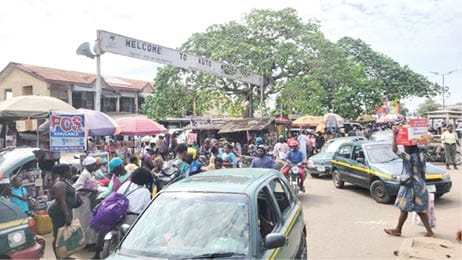
Many call it ‘waybill’ or ‘message’ in local parlance. The practice of sending parcels through commercial drivers at motor parks has become a tradition in the transportation system in Nigeria. To drivers, it is another means of getting extra funds, apart from the money they make from passengers boarding their vehicles. Weekend Trust reports.
Nigerians are increasingly turning to motor parks as a cheaper and more accessible alternative for sending packages across the country. The shift, which has become more pronounced in recent months, is reshaping the way goods are moved between cities, with transport parks now handling more deliveries than passengers.
Unlike the conventional logistics firms, such as DHL, FedEx and GIG, motor parks offer a more flexible and affordable system that connects senders, drivers, storage handlers and motorcycle dispatch riders in a chain that ensures packages reach their destinations.
With fuel price high and conventional logistics firms charging more, the informal network of drivers, storage handlers and motorcycle dispatch riders has become the backbone of intercity logistics.

At Jabi Motor Park in Abuja, a fully loaded vehicle is no longer a sign that passengers are ready to go; it often means that it is packed with parcels.
From bags of cloths to live animals, drivers now move more goods than people as Nigerians increasingly turn to motor parks for faster and cheaper delivery.
Parcels wrapped in nylon or sacks sealed with tape and marked with phone numbers now compete for space with passengers. In some cases, they take over entire vehicles.
Weekend Trust findings show that many Nigerians are turning to commercial vehicle drivers at motor parks to send goods, citing lower cost and faster delivery despite the absence of formal tracking systems.
At Jabi Motor Park, a booking agent, Musa Ali, said the volume of parcels, locally referred to as waybills, has grown so much that they sometimes outweigh passenger traffic.
“We even collect waybills of animals. Some waybills can fill up a car, leaving no space for a single passenger,” he said.
He added that some consignments are worth as much as N100,000, reflecting growing trust in the informal system rather than the formal logistic services many have come to know and patronise.
“Because of modernisation, people now use vehicles to send items instead of travelling themselves. You can send something through a car at the motor park and it gets there the same day, unlike some logistics companies that take days before getting to their final destinations,” he explained.
A driver at Utako Motor Park, Sani Musa, confirmed the shift, noting that parcels have become a major source of income for both drivers and storekeepers at various motor parks.
“Sometimes I carry more parcels than passengers. The parcels pay well, and you can take many at once,” he said.
He added that charges depend on destination, noting that a small parcel from Abuja to Lafia costs between N2,500 and N3,000, while delivery to Kaduna goes for N3,000.
“It depends on where it is going, but most small items fall within that range,” he added.
Another driver, Bello Jamil, said the growing demand had changed how drivers operate.
“Before now, we focused on passengers, but now, parcels are part of the business. For every trip, there is something in the boot: parcels,” he said.
At Jabi Motor Park, the chairman of the National Union of Road Transport Workers (NURTW), Adamu Abubakar, defended the system, saying it is faster and more affordable than conventional logistics services.
“You cannot compare commercial vehicles with logistics companies,” he said.
He explained that while logistics operators often wait days gathering enough deliveries before dispatching to various locations across the country to cut costs, vehicles at motor parks move immediately the vehicle is full.
“As soon as a vehicle is full, it takes off with your package. Sometimes it arrives the same day,” he added.
On safety and accountability, he said the union had a basic documentation process.
“When you bring your item, we record your name, what you are sending, the receiver’s name and phone number. We issue a receipt and give a copy to the driver,” he explained.
He added that the cost difference between the two operators was significant.
“What they charge N15,000 for, you can send here at N6,000,” he said.
Despite the surge in parcel delivery, Abubakar insisted that drivers do not prioritise goods over passengers.
“We do not depend on parcel deliveries; it is only to support the trip. Once a vehicle is full, it moves,” he noted.
This side hustle isn’t just a stand-alone business but one that has spiralled into a chain of other businesses. At the parks, loaders play a key role in the process.
Night handlers, storekeepers, touts cash out
Our correspondent in Ogun gathered that within the state’s motor park ecosystem, the practice has also opened opportunities for touts and storekeepers to make “cool money.”
Some drivers, upon arrival from interstate trips, hand over the parcels to storekeepers for onward delivery to the owners.
“Ordinarily, the driver ought to place calls to the person taking the delivery to come to the park for it. They do so when they are approaching the city for the person to prepare and come over, but many of them will just drop it with the storekeeper and ask you to pick it up from them.
“When you get to the storekeepers, they will still charge like N500 or N1,000. That’s aside the amount you will pay or have paid to the driver,” Bisola Adewunmi, an entrepreneur, told our correspondent.
Also speaking, Senowo said, “I ordered a beaded bag from Ilorin and I was charged N4,000 to be delivered to Abeokuta (Asero), and it was given to a storekeeper, of which I had to pay N500 before I could receive it.”
It was gathered that at many parks, touts who disguise as drivers collect parcels, charge higher rates and deduct their ‘cut’ before handing them over to any driver.
At Kano Line, Abdullahi Sani, who runs a small storage office, said the service had become essential.
“Many vehicles arrive at night and some receivers cannot come until morning. We keep the packages for them and charge between N200 and N500, depending on the size. It is how we earn a living. People trust us because we make sure nothing is missing,” he explained.
He noted that the rise in package deliveries had also increased the demand for storage services. “Sometimes, my office is full of goods overnight. It shows how much people now rely on parks,” he added.
According to a loader at Jabi park, Nurudeen Holy, he receives parcels, coordinates with drivers and contacts recipients upon arrival.
“When the drivers arrive, we help to collect the parcels and call the owners. We charge a small fee, depending on the package – from N500 upwards,” he said, adding that the volume of parcels received daily has increased significantly.
“Every day, we receive many packages from Kano, Katsina, Kaduna, Zaria and other places. It has become a norm,” he added.
However, at Nyanya Motor Park, another loader, Baba Isa, noted that while the system is fast, it comes with challenges.
“Sometimes parcels are not properly labelled and it can be difficult to identify the owner. There are also cases where people delay picking up their items,” he also said.
‘Why we use motor parks’
In Abuja, users said speed and convenience of motor park logistics services far outweighed the risks.
Irfaan Aseku said he regularly used vehicles at the park, especially Sharon buses, adding, “It is faster for me than logistics companies.”
According to him, parcels often arrive within hours once the vehicle departs.
Another sender, Ibrahim Abubakar, said the absence of formal documentation would not discourage him. “There is no receipt sometimes, but once you know the driver and have the receiver’s number, it works,” he said.
However, some users raised concerns about accountability. But Haliru Sa’adu said the system relied heavily on trust.
“If anything happens to your parcel, there is no official way to trace it. You just have to trust the driver,” he noted.
Similarly, Ihsan Umar Danjuma said the lack of tracking was a major gap.
“It works, but there is no proper tracking system like logistics companies have,” he explained.
Despite these concerns, the trend continues to grow, driven by cost and urgency.
Kabir Salisu Ashir, a driver, said parcel delivery had become part of his everyday operations.
“Every trip now involves parcels. People prefer it because it is easy, fast and affordable,” he said.
For the senders, the choice is clear. A trader in Kano, Fatima Usman, said she switched from conventional logistics firms to motor parks because of affordability.
“I sell cloths and shoes online. Before, I used DHL to send items to Abuja, but the cost was too high. Now, I use the park and pay less. My customers are happy because they get their goods quickly and at lower delivery charges,” she said.
Another sender, Ahmed Bello, who frequently sends documents to Bauchi, said the parks were more flexible. “With the logistics companies, you must go to their office and follow their process. At the park, I just hand over the envelope, pay and it goes immediately. It saves me time,” he also explained.
Downside of motor park logistics
The business of parcel delivery services that involves commercial drivers has continued to rise and gather momentum amid challenges that often led the handlers to be fined, and at worse, jailed. Weekend Trust’s findings at the popular Zuba Motor Park in the Federal Capital Territory (FCT) showed that the business comes with challenges.
The stakeholders include agents that play the role of leasing officials, who receive parcels from drivers on arrival and hand them over to the owners of the parcels. Parcels are handed over to drivers on behalf of senders, while members of drivers’ unions regulate the operation, as well as members of the vigilantes, who ensure that the parcels are legitimate and not an exhibit.
Yusuf Musa, a member of the drivers’ union in the motor park who operates on the Kano route unit of the park noted that a number of drivers had been fined or jailed over negligence.
He narrated how a driver was given a parcel by a client for delivery to Kano, which turned out to be a drug concealment.
“There is also a driver who received a stolen phone from Zuba Motor Park for delivery to Kano. He was told that the phone was faulty and would be taken to the popular mobile phone market, known as Farm Centre.
“The mistake he made was failing to ask the client to show him the phone on arrival so as to ascertain its condition. He just collected the parcel at the cost of N2,000, only for the receiver to demand N2.5 million from the driver after collecting the phone as he accused him of damaging it.
“The matter was taken to the police, where the driver was put in detention for three days and later taken to the court to be remanded in prison custody for seven days. Our team went to Kano and met with the police prosecutor, where the case was reviewed.
“We told the police that we were not hesitant to pay the N2.5 million as claimed by the mobile phone owner, but both the sender and receiver should be made to swear with the Almighty God that the phone they handed over to us was a functional I-phone, not a faulty one as we were made to believe when it was handed to us in Zuba park here.
“All of a sudden, the person who brought the phone changed his stand and explained that the phone was faulty and that the receiver was only annoyed due to the late arrival of the driver, which was the fault of the vehicle in Kaduna, on the way to Kano. Musa explained that the case had ended at that juncture, with the driver having been cheated for spending a total of 10 days in detention for a crime he never committed,” he said.
Shafiu Bello is a trader at the Zuba Motor Park but also engages as an agent in the business of facilitating parcel delivery in the park. His role is keeping the delivered parcel, as well as settling the driver who presents it on behalf of its owner.
“When the owner arrives, he or she is expected to pay a fee for the parcel before it is given to them,” he said, adding that he charges N500 for keeping a parcel.
Bello has a shade where he keeps parcels given to him, including second-hand cloths, electronic items, among others. According to the parcel agent, one of the risks of the business is when an item goes missing as they would be made to pay for the goods, usually at an inflated rate.
“We usually inform parcel owners about the arrival of their goods and demand that they show up as soon as possible to get it, but some of them would take long before coming. And when an item gets missing, they would inflate the rate of its value and demand that you compensate them,” he said.
He said some of the items were containers of water supplied from clerics in Kano for delivery to their followers who reside in Abuja, adding that it was meant for blessing.
“If such incidents take place, you would see the person coming in a hurry and demanding bigger compensation,” Bello added.
Yahaya Madaki, the deputy commander of the vigilante in Gwagwalada Council command, who also serves as a patrol officer at the Zuba Motor Park, said they received 70 parcels daily for delivery to different destinations like Kano, Katsina or Sokoto and some other states.
“My team interrogates the sender about the parcel he intends to send. When necessary, we make him open the parcel for proof, either on his will or by force if he attempts to dodge. This is as a result of previous incidents here, when items like drugs and even arms were discovered in parcels meant for delivery. Quite a number of our drivers have fallen into the lap of the National Drug Law Enforcement Agency (NDLEA) officials as a result of concealed drug items that were given to them for delivery,” Madaki said.
He said some of the affected drivers had lost their vehicles to the incidents as they could not afford to pay the fines for the crime they unfortunately found themselves in.
He said, “Five days ago, somebody presented a parcel that turned out to be drug. It was the driver who was supposed to take the delivery that insisted on knowing what the parcel contained.
“A carton was carefully concealed inside, but when it was opened, some drugs were found inside. I was immediately informed of the development. We suggested that the items be kept; and after a day, the person who brought them made a phone call, asking the driver why the item had not been delivered. He was told that the item could not be located. His response was a warning, claiming that he kept gold inside the parcel and if it was lost, the driver would be made to take responsibility. About an hour later, the man was informed that the parcel had been discovered. Instead of coming down himself, he sent somebody else some two hours later.
“We arrested the person and handed him over to the police, who were able to trace the parcel owner and he was arrested too.”
He also said that three years ago, a similar incident took place when somebody handed over a parcel from Enugu State for upward delivery to Kano, which turned out to be rifles. He explained that on arrival, the man handed over the items and paid the charges for delivery. “As he turned back to leave, he was asked about what was concealed in the items and was directed to open it. Instead of complying, he attempted to flee, but we rounded him up and forced him to open the parcel.
“To our shock, three AK-47 rifles and two pump action guns were wrapped with the woman’s hair attachment. We handed over the suspect to the police, who expanded their operation, which led to the arrest of the driver of a luxurious bus that took the delivery of the items from the South-East, as well as the person who presented the items from Enugu.
Rising costs push customers to motor parks
At Kano Line Motor Park, Yusuf Abdulwahab Isyaku, the chairman of the delivery and logistics section, said affordability and convenience made motor parks the preferred choice for many customers.
“We deliver packages to Kaduna, Zaria, Abuja, Yola, Gombe and Maiduguri. It is easier to carry goods via parks than using airplanes. For instance, a customer was charged N70,000 at the airport but we delivered the same package to Abuja at N20,000,” he said.
Isyaku said envelopes and letters cost between N3,000 and N5,000 while larger packages were priced far below what conventional logistics firms charge.
According to him, at least two fully loaded vehicles leave the park daily carrying only parcels.
Although he admitted that risks such as robbery and accidents occurred, he stressed that the park maintained strong ties with customers and worked closely with the police to check for incriminating items.
“We have seen drugs and prohibited goods, which we reported to the police,” he said.
At Naibawa Park, Ibrahim Aliyu, the station manager of the Kano State Transport Authority, said affordability and organisation made government-owned parks more attractive.
“Many people use us because we are organised and cheaper. Our prices are at least N2,000 to N3,000 lower. From here, we deliver packages to Taraba, Adamawa, Bauchi, Gombe, Kebbi, Zamfara, Sokoto, Minna and Abuja,” Aliyu said.
He disclosed that the park planned to introduce vehicles dedicated solely for goods delivery due to the rising volume of parcels they receive daily.
“Sometimes we spend up to a year without recording a missing package. We also collect senders’ and receivers’ contacts to ensure accountability,” he added.
Dispatch riders’ role
The chain does not end at the parks. Once packages arrive at their destination, motorcycle dispatch riders take over, delivering them directly to homes and offices.
One of them in Kano, Musa Ibrahim, who operates around motor parks in Kano city said, “When vehicles arrive from Kano or Kaduna, we collect the packages and deliver them to the receiver’s house. Customers prefer this because they don’t have to come all the way to the park. Depending on the distance, we charge between N1,000 and N3,000. It is faster and saves them time.”
Musa added that the growing reliance on parks had boosted his income.
“I used to depend on food delivery, but now, parcel delivery from parks is more regular. I deliver at least five packages daily,” he said.
‘Profitable but risky’
A senior driver in Abeokuta, who simply identified himself as Messiah, a member of the National Union of Road Transport Workers (NURTW), told our correspondent that the hike in fuel price contributed to the volume of parcels being received daily.
“As we speak, except some have engagements that require their presence, they would rather send message across. This has also reduced the number of passengers we carry.
“If fuel price comes down and there is a concomitant effect on the amount we charge, people would be ready to travel more,” he said.
According to him, ‘message’ can be profitable to drivers but there are many risks that go with it. “You have to be a smart driver to collect ‘messages.’ The money on it is not much compared to the risk associated with it,” he said.
He said that apart from the menace of touting, missing or misplacement of goods, some criminals use the opportunity to send contraband, which may land the driver in trouble.
He said, “We have always asked passengers to avoid patronising touts in front of parks. They should bring the goods and hand them over to the right people. If they do so and it gets lost, we will recover it because we know our drivers, except if the person doesn’t operate here.”
In Kano, despite affordability and convenience, drivers sometimes encounter armed robbers; and accidents can lead to losses. However, both park managers and customers said trust and understanding kept the system running.
Isyaku of Kano Line noted: “Some customers report missing goods to the police, but we usually settle with them, either by paying or they forgive. Apart from that, we don’t have problems.”
From Lagos, Nigeria’s commercial nerve centre to Ogun, Oyo, Osun, Ondo and other parts of the region, the practice has been entrenched in the daily activities of commercial drivers.
Weekend Trust findings revealed that each time a driver’s bus or car is fully loaded without any ‘package,’ the mood for the day’s trip won’t be pleasant.
A survey across parks in Lagos and Ogun states revealed that parcels, depending on their sizes—such as envelopes, bags, equipment or electronics—come with different charges. The charges can vary; the least is N2,000, while some drivers charge the equivalent of a passenger’s seat for any parcel required to be sent.
An expert in transport business and the secretary of the Road Transport Employers of Association of Nigeria (RTEAN) in Ogun State, Aare Tiwalade Akingbade, gave a historical background to the motor park parcel business.
Speaking with Weekend Trust, he said, “The practice has been on for long; it became popular during the introduction of GSM. You know that when GSM came on board, businessmen and women from Lagos, Onitsha and other parts of the country were able to call their counterparts to supply goods without having to travel. Traders embraced it. They would make orders for goods on the phone and it would be sent down. That’s when it started.”
Akingbade said the practice became more pronounced during the outbreak of COVID-19, which limited the number of passengers carried in commercial vehicles.
“But the boom started during the COVID-19 outbreak. Then, vehicles that should carry six passengers would carry four or three—two on a row instead of three or four. That was when people really embraced it.
“The practice is very profitable for drivers but not vehicle owners,” Akingbade noted, explaining that any money remitted through ‘messages’ is meant for the drivers and not part of the delivery for the vehicle owner.
Boluwatife Senowo, a pharmacist and resident of Ikotun in Lagos, believes that drivers make more money on parcels.
“I believe they make more money on waybill. Tell me why drivers would charge me one passenger’s fee for a small package. And they can have five to six messages or more at times to deliver per round. I think they make huge money from waybills,” she said.
Boluwatife said she had sent or received parcels from Ilorin, Ibadan, Abeokuta and Lagos at different rates.
“So far, I will say that interstate delivery is 60 per cent swift and 40 per cent chaos,” she said.
Mary Ogunsola, a civil servant, also shared her experience, saying, “From my experience with waybills, especially from Ilorin to Abeokuta, the charges usually depend on the size of the goods. For example, sending a small envelope can cost N2,500, while a bigger item like a bag of shoes may go for N4,000.
“Also, deliveries from Abeokuta to Lagos are generally faster, and the cost typically ranges between N2,500 and N3,000. In my experience, Ilorin to Abeokuta is not always fast, but Lagos to Abeokuta is usually quicker and more reliable.
“It is relatively safe, though delays can sometimes happen. I haven’t really had issues with lost or misplaced packages.” (Daily trust)
-

 Metro16 hours ago
Man threatens to release Kano governor’s nude videos, photographs
-
World News17 hours ago
Trump hits back at Obama over Saddam ‘Cheesecake Factory’ jab
-
Sports17 hours ago
Harry Kane crowned 2026 Ballon d’Or winner
-
Business17 hours ago
Microsoft offers voluntary exit packages to 60,000 staff
-
Politics16 hours ago
‘He was trained in sanitation’ — Shettima says Atiku can’t govern modern economy
-
News17 hours ago
OPHK troops destroy ISWAP enclaves in Lake Chad, kill 16 terrorists
-
Politics16 hours ago
2027 Elections: 103m voters, 35m votes and the 68% who may decide the Presidency
-
Politics16 hours ago
FACT CHECK: How Tinubu’s Image On Bread Was Edited To Depict Obi