News
Questions N3.3tn Power Bailout Can’t Answer

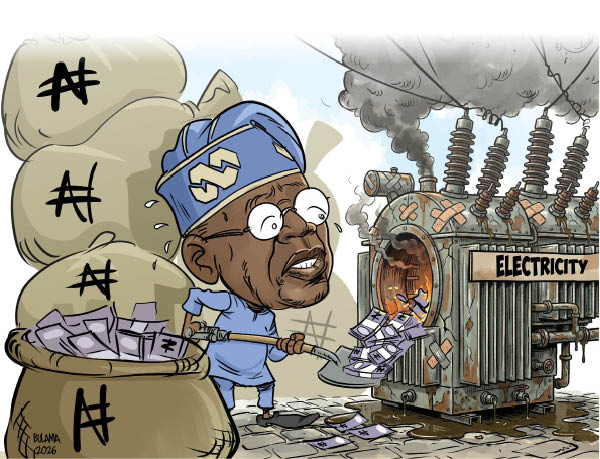
Nigeria’s power sector is once again under scrutiny following the federal government’s approval of over N3.3 trillion to clear the accumulated debts under the Presidential Power Sector Financial Reforms Programme.
This is even as persistent outages, grid instability and rising tariffs continue to frustrate households and businesses across the country.
The approval, which was attributed to efforts by the administration of President Bola Ahmed Tinubu to stabilise and expand the electricity value chain, is being positioned as one of the most ambitious financial commitments to the sector in recent years.
At the heart of the controversy lies a familiar concern: Nigeria has historically committed vast sums to the power sector with limited results, more so when the approval is meant for repayment of debts that have piled up over time and threatened to bring down the sector.

From generation shortfalls to transmission bottlenecks and distribution inefficiencies, the structural challenges have persisted despite repeated reforms and funding injections.
Nigeria’s electricity crisis appears intractable. Despite having an installed generation capacity of over 12,000 megawatts, the country struggles to deliver an average of 4,000 to 5,000 megawatts to consumers. Frequent grid collapses, load shedding and infrastructure failures have become routine.
The situation has worsened in recent months, with businesses reporting increased reliance on diesel and petrol generators due to unreliable grid supply despite the hike in tariffs.
For many small and medium-scale enterprises, energy costs now account for a significant portion of operating expenses, eroding profitability and forcing some to shut down.
The generating companies had threatened to shut down over the accumulated debts which they estimated to be over N5 trillion.
The N3.3tn intervention
Although details of the N3.3 trillion approval are still emerging, it is understood to cover a range of interventions across the electricity value chain, including generation support, transmission infrastructure upgrades and financial stabilisation of distribution companies (DisCos).
Part of the funding is expected to address legacy debts owed to power generation companies (GenCos), which have long complained about liquidity constraints in the sector.
The government has also emphasised the need to attract private sector investment and improve the overall financial viability of the electricity market.
However, critics argue that without fundamental reforms in governance, accountability and cost-reflective pricing, additional funding may not make any difference.
The N3.3 trillion to settle legacy debts in the power sector came at a time of worsening power supply and the threat by GenCOs to shut down power plants over mounting debts.
However, when the new approval came, it was further greeted with disbelief and disapproval by stakeholders. Some even described the approval as a repetition of another approval made in 2024.
Among those who have criticised the new intervention is the presidential candidate of the Labour Party in 2023 general elections, Peter Obi, who recalled that similar approvals had been made in recent years, including a N3.3 trillion package in May 2024 and a N4 trillion bond in July 2025, both of which were aimed at addressing debts owed to power generation companies and gas suppliers.
No fresh approval required for debt settlement – Reps c’ttee chair
The chairman of the House of Representatives Ad-Hoc Committee on Power, Ibrahim Al-Mustapha Aliyu, disclosed that the new funding approval is already captured under previously approved borrowings.
Aliyu, while speaking to Weekend Trust, explained that the federal government did not require a fresh legislative approval for the debt settlement, as the National Assembly had earlier approved sectoral loans covering the energy sector.
He said: “I believe that because of the approval by the National Assembly on the various sectoral borrowings and the energy sector is one of those that were captured in the various loans that the National Assembly approved to the sum of about $5bn. The energy sector activation and intervention is part of the borrowing plans.”
According to the lawmaker, the N3.3 trillion debt payment is being financed through loans already authorised by lawmakers.
He added, “The government does not need another approval from the National Assembly to approve the debt payment.”
Aliyu further justified the payment on contractual grounds, noting that the federal government had entered into binding agreements with power generation companies.
“The agreement that the federal government entered into with the GenCos, they are private investors and they need guarantees and the government gave them guarantees on behalf of Nigerians. They generate electricity and whether we use it or not, we have to pay them,” he said.
Under the Presidential Power Sector Financial Reforms Programme, the federal government said it had verified N3.3trn as a “full and final settlement” of legacy debts accumulated between February 2015 and March 2025.
In a statement recently, the Presidency noted that 15 power plants have signed settlement agreements valued at N2.3trn; while the government has raised N501bn so far to fund the process. Of this amount, N223bn has already been disbursed, with further payments underway.
According to the Presidency, the intervention is designed to ensure that funds flow across the electricity value chain, particularly to generation companies and gas suppliers, thereby stabilising electricity generation and improving supply reliability.
The Special Adviser to the President on Energy, Olu Arowolo-Verheijen, said the programme is “not just about settling legacy debts” but about “restoring confidence across the power sector, ensuring gas suppliers are paid, power plants can keep running, and the system begins to work more reliably.
“Nigeria’s electricity sector has struggled with a persistent liquidity crisis since its privatisation in 2013, largely due to a mismatch between the cost of producing electricity and revenues collected from consumers.
“Electricity tariffs have historically remained below cost-reflective levels; while distribution companies face significant challenges in billing, revenue collection, energy theft, and technical losses.
“The market structure further complicates the system. Power generated by GenCos is sold through the government-backed Nigerian Bulk Electricity Trading Plc, which acts as an intermediary before electricity reaches consumers through distribution companies.
“When revenues from the downstream segment fall short, the deficit cascades upstream, leaving generation companies and gas suppliers underpaid. These shortfalls, backed by government guarantees under Power Purchase Agreements (PPAs), have accumulated into what is now termed “legacy debts.”
The lawmaker further explained that the government created NBET specifically to indemnify generation companies and guarantee payments, but inefficiencies across transmission and distribution led to mounting obligations.
“On the side of the DisCos, the energies they have taken from the transmission company, they encountered a lot of losses and energy theft and could not pay for bulk power consumed… Now NBET will have to immediately make payment to the GenCos with an outstanding to be paid by the federal government,” he said.
Industry stakeholders note that the debts are not a single lump sum, but a complex mix of contractual liabilities arising from PPAs.
These include unpaid invoices for electricity generated, capacity payments, deemed capacity charges, foreign exchange differentials, interest on delayed payments, and gas supply costs.
Additional costs stem from operational inefficiencies such as grid instability, frequent plant cycling, and ancillary services without clear tariff structures.
Questions over actual debt size
Experts who spoke to Weekend Trust queried the actual size of the power sector’s debts.
The president of the Nigeria Consumer Protection Network, Kunle Olubiyo, argued that the N3.3trn figure may not reflect total sector liabilities.
He estimates that debts owed to generation companies and gas producers alone could reach about N8 trillion, with additional capacity-related obligations of roughly N4trn, bringing the total closer to N12trn.
The Chief Executive Officer of the Association of Power Generation Companies (APGC), Joy Ogaji, questioned how the government arrived at the N3.3trn figure.
“This raises more questions. Is this N3.3trn different from the N4trn he approved in 2025? Or is it an additional one?” she asked.
She added that no fresh reconciliation has been conducted since March 2025.
“I spoke with the GenCos and they confirmed that after the March reconciliation, no other one has been done. So, how did the government get their figures?” she asked.
Also speaking to Weekend Trust, the Executive Director of the Electricity Consumer Protection Advocacy Centre, Chief Princewill Okorie, said the intervention may not resolve Nigeria’s electricity challenges without addressing deeper systemic issues.
“This is neither the first nor will it be the last time funds are being injected into the power sector. Over the years, significant amounts of money have been committed by successive administrations. But where is the measurable impact? How was this new figure even determined, given the persistent opacity in the sector?” he said.
Okorie pointed to inconsistencies in gas supply claims among operators.
“You hear generation companies (GenCos) complaining about inadequate gas supply, yet gas producers insist they are supplying sufficient volumes. At the same time, GenCos deny receiving enough gas. So, who is telling the truth?” he queried.
He also raised concerns about constitutional and governance issues within the sector.
“When you examine the sector more broadly, deeper structural issues emerge. The electricity industry appears to have evolved in ways that conflict with several constitutional provisions,” he said.
On enforcement, he noted that “We also hear repeated claims about vandalism and electricity theft. However, enforcement remains weak. If penalties exist but are not applied, what deterrent effect do they really have?”
While the federal government maintains that settling the debts will improve liquidity and stabilise electricity supply, analysts warn that structural challenges in transmission and distribution remain unresolved.
They noted that even with the N3.3trn intervention, now confirmed by lawmakers to be backed by roughly $5bn in approved borrowing, the extent to which it translates into reliable power supply will depend on broader reforms, transparency in implementation, and sustained accountability across the sector.
‘Why FG won’t release money at once’
Speaking to Weekend Trust, the CEO of Sage Consulting & Communications, Barr. Bode Fadipe, said the money, if released, would go a long way in providing liquidity to the sector and enable improved services by electricity generation and gas suppliers.
He, however, noted that it is unlikely the government will release the funds at once but in a piecemeal despite the lack of clarity on how it will source the money.
Fadipe said, “If the government goes ahead to release the N3.3trn expeditiously, I think it will go a very long way to bring down the heat, especially in the GenCos part of the market, because they will be able to settle legacy debts with the gas companies, and then they can renew their contract for the supply of gas, and from there, of course, more megawatts will be generated by the generating companies, and we can see some bit of traction in the economy.
“Liquidity has always been a conversation point in the sector, and it will remain a major issue for conversation for a very long time to come, because even as we speak right now, the generating companies are already calling for a review of the tariff as a result of the Middle East crisis and the spike in the cost, I mean, in the crude oil price and all of those things, which naturally has affected gas supply and cost of gas,” he said.
“But I’m afraid that they may not release that amount of money into the economy like that, for several reasons. One, we are approaching the election period. Two, the economic implication of such an amount of money into the economy cannot be ignored, and I’m sure it also has its own security implications. I think they are going to release the money in piecemeal, but the earlier they do, the better, because we’re already accumulating a fresh debt.
“Unless the federal government is saying that having paid this as a full and final payment of legacy debt, then every other one that is accruing, we are paying immediately. Otherwise, we’re already accruing a fresh one, and before you know what is happening, it becomes another huge debt, and then we get back to square one.”
On what can be done to improve the electricity, he noted the sector is a cash cow, and unless the government takes the bull by the horn, political will to allow underperforming groups in the sector to collapse and those performing to survive, the country will not get out from the current predicament.
“It is going to be a cyclical experience that we’ll be having, but as soon as we get into the rainy season, the hydros will come up, more stations will be available, and then we seem to forget the pain of the dry season. By the time we get into the dry season again, the debt will not allow generation companies to increase their capacity.
“Nobody thought that the Middle East crisis would come to this point, that petrol prices would balloon. So, who knows what will happen next year? Who knows what will happen in 2028.
“I think the time has come when we need to take a firm and courageous decision and then work out a comprehensive roadmap that we cannot deviate from.
“Even this $3.3 trillion that we are talking about is still submerged in controversy. We don’t know how the government is going to pay. We don’t know how long it will take the government to pay this amount of money. Was this budgeted for in the current budget? Is it part of the current budget, or is the government going to seek alternative funding sources.”
FG explains reduction in debt claim
Meanwhile, the federal government has explained that the legacy debt was reduced from N4.7trn to N3.3trn, following “a robust review”.
A post on the X account of the Presidency said the efforts to settle the debt started with a presidential stakeholder meeting in July 2025 where the claims of N4.7 trillion were presented.
It said a thorough review was recommended by President Bola Tinubu amd on August 15, 2025, a N4 trillion fiscal cap was approved by the Federal Executive Council following which a comprehensive verification process was undertaken to verify claims.
“This resulted in a 30 percent reduction in claims, leading to a final negotiated settlement of N3.3 trillion, reflecting only valid and contract-backed obligations.”
It noted that to ensure sustainability and avoid fiscal pressure, the settlement is being implemented through a phased, market-based financing framework with the first batch being a N1.23trn bond programme.
It said under the programme which is termed Series I, Phase I and was implemented in January 2026 saw the raise of a N501bn from the domestic capital market.
It said disbursement is already underway but N223bn has been disbursed to Generation Companies and gas suppliers while N197bn is in process, largely for gas-related obligations.
“All disbursements are phased and conditional, based on verified claims, signed settlement agreements, and completed documentation.
“This reflects growing alignment and participation across the sector. The financial settlement is also being implemented alongside broader reforms designed to strengthen the sector, including targeted support to ensure affordability for poor and vulnerable households, and tariff reforms aligning higher service bands with cost-reflective pricing to support investment and improve service delivery.
“The programme is designed to restore liquidity, stabilise generation, improve reliability, and reposition the sector for long-term sustainability. It also reflects a shift from unverified claims to disciplined, transparent, and market-backed obligations.”
It added that debt payment is not a one-off intervention but a structured effort to reset the financial and operational foundations of Nigeria’s power sector.
Power sector should be restructured – Prof Oke
A Senior Advocate of Nigeria and Professor of Law, Yemi Oke, has called for a comprehensive restructuring of Nigeria’s power sector, warning that only fresh investment and a reconfiguration of ownership structures can resolve its long-standing challenges.
Speaking during an interview on ARISE News on Tuesday, Oke said the current framework of the electricity industry remains unsustainable despite repeated government interventions.
He noted that the sector has been plagued by persistent liquidity constraints, which have weakened operations across the generation, transmission, and distribution value chain.
“The sector has been bedeviled by the liquidity crisis,” he said, explaining that unresolved debts have significantly hindered performance and growth within the industry.
“N3.3 trillion being offered as full and final payment… seems to me sufficient in terms of industry reality,” he stated.
Despite endorsing the debt settlement figure, Oke stressed that broader structural reforms are urgently required, particularly those aimed at attracting new capital and technical expertise into the sector.
“We can’t escape the reality… going via another round of re-acquisitionary financing in the power sector,” he said.
According to him, Nigeria must reopen the power sector to new investors through partial or full ownership changes, allowing fresh funds, innovation, and managerial capacity to drive meaningful transformation.
“Another round of funds must come in… New entities will need to come,” he added, pointing to the need for mergers, acquisitions, and concession arrangements across the industry.
He likened the scale of reforms required to the banking sector consolidation, which strengthened Nigerian banks and positioned them for global competitiveness.
Oke further emphasised that both the generation and transmission segments require urgent restructuring, warning that several operators are currently struggling or technically insolvent.
He argued that without a deliberate effort to overhaul ownership structures and bring in credible investors, the sector would continue to underperform and fail to meet the country’s growing electricity demand.
“Until we rejig and redo what has been done, we might not likely be able to get to where we’re going,” he said. (Daily Trust)
-

 Business24 hours ago
Nigerian billionaire Abdul Samad Rabiu to pocket N806 billion from BUA Foods, Cement
-
News22 hours ago
Bauchi Shuts Cattle Markets In 4 LGAs Over Security Concerns
-
 Politics18 hours ago
How My former deputy plotted to take my seat – Gov. Yusuf
-
World News21 hours ago
Trump Accuses Iran Of ‘Dishonorable’ Conduct In Strait Of Hormuz, Warns Against Charging Tankers
-
News21 hours ago
Bandits Storm Ondo Poultry Farm, Kill Owner And Daughter During Kidnap Attempt
-
News18 hours ago
Troops Kill 10 Terrorists, Rescue Kidnap Victims In Plateau Forest
-
 Business16 hours ago
Taiwo Oyedele admits to errors in new tax laws, says corrective measures underway
-
Politics19 hours ago
Governorship aspirant steps down two minutes after declaration