Business
Dangote Refinery IPO to test depth of Africa’s $560bn capital markets

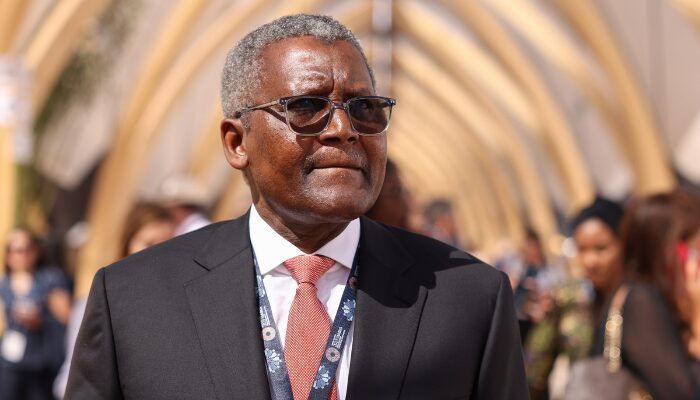
Africa’s capital markets are approaching a defining moment as Aliko Dangote prepares to list a stake in his oil refinery—an offering that could rank among the largest initial public offerings ever seen on the continent.
Dangote plans to sell 10 percent of his oil-refining business, primarily in Nigeria, with potential secondary listings in markets such as South Africa, Ghana and Kenya to fund the next phase of his expansion.
The proposed listing, expected as early as the second half of 2026, would place Africa’s largest refinery—capable of processing 650,000 barrels per day—at the centre of a high-stakes test for regional capital markets.
Built over seven years and commencing commercial production in 2024, the Lagos-based refinery is one of the most sophisticated globally. With oil prices rising amid Middle East tensions, demand for its output has strengthened, adding momentum to the listing plan.

More than a listing
This is not just another Initial Public Offering (IPO). It is being positioned as a rare, large-scale cross-border offering that could deepen integration across African exchanges.
While dual listings are not new, a simultaneous multi-market IPO of this scale would be unprecedented. It represents a broader attempt to connect fragmented markets and expand access to capital across borders.
At its core, the deal is a litmus test: can African markets mobilise enough domestic capital to fund large-scale industrial assets?
If successful, it could signal that the continent’s financial systems are ready to support billion-dollar projects. If not, it will reinforce concerns about shallow liquidity and reliance on foreign capital.
Why a pan-African listing matters
According to Ayokunle Olubunmi, head of financial institutions ratings at Agusto & Co, the impact could be transformative.
“Many African stock markets are very shallow—some have fewer than five actively traded securities. A large, well-known listing could help catalyse activity and deepen those exchanges. And because it wouldn’t be listed only in one country, it could attract both domestic and foreign investors across multiple markets,” he said.
Cross-listing could also ease access for investors constrained by market barriers.
“If a fund manager in Kenya wants exposure but finds it difficult to invest directly in Nigeria, they could buy the stock on a different African exchange where it’s listed,” he added.
Market size disparities highlight the opportunity. The Johannesburg Stock Exchange, the continent’s most valuable stock market has a market capitalisation of $1.45 trillion as of April 28, compared with $25.5 billion on the Ghana Stock Exchange and $26.6 billion on the Nairobi Securities Exchange.
Olubunmi noted that truly simultaneous listings across multiple African exchanges remain rare.
“It would support the development of African capital markets more broadly; a truly pan-African listing would be a meaningful step.”
Over the past 25 years, Africa’s equity market capitalisation has grown 27-fold to about $560 billion in 2024, while companies have raised more than $2 trillion through debt instruments, according to the Organisation for Economic Co-operation and Development.
However, despite this progress, the region remains underrepresented in global capital markets relative to its share of GDP across most indicators.
The Ambani parallel
The planned IPO is drawing comparisons with Dhirubhai Ambani’s landmark 1977 listing of Reliance, which reshaped India’s investment culture.
“It introduced equity investing to India’s middle class. The listing attracted around 60,000 investors and delivered strong returns—shares rose about 50 percent on debut and surged further afterward. It sparked broader retail participation and laid the foundation for India’s capital market growth,” Arijit Ghosh, Bloomberg’s managing editor, said on the Next Africa Podcast last week.
He noted that reliance shares rose about 50 percent on debut and were up roughly 400 percent by the end of 1978, helping attract a broad base of retail investors. Today, the company has about 4.5 million investors—roughly comparable to Nigeria’s entire registered investor base.
Can Dangote replicate that success?
The timing of the proposed listing is supportive. Nigeria’s equities market has been among the better-performing frontier markets this, buoyed by improved investor sentiment and stronger participation. Financial inclusion is also rising, with more individuals gaining access to formal financial systems.
“Nigeria hasn’t seen a major IPO in about seven years, but rising financial inclusion could help,” Ghosh said. Data from the World Bank shows that the share of adults using formal financial accounts rose to 63 percent in 2024 from 45 percent in 2021.
However, structural challenges remain. Nigeria’s market capitalisation—around $107 billion—remains small relative to its economic size, and liquidity is thin. Many listed companies are tightly held, limiting free float and increasing volatility.
“Can Dangote turn Nigerian savers into investors? That’s what we’ll see,” Ghosh added.
For retail investors, familiarity could be a key driver of participation.
“Two things matter: knowledge and tangible examples,” Olubunmi of Agusto & Co said. “A brand people already know—and have seen perform in cement, sugar and other sectors—can make equity investing feel more real and accessible.”
The listing could also strengthen Dangote’s positioning as a pan-African company,reinforcing a broader “African market” narrative rather than a purely Nigerian identity.
A catalyst—or a constraint
Africa’s richest man is positioning the IPO as part of a broader strategy to tap into the continent’s domestic capital pools, estimated at trillions of dollars across pension funds, banks and institutional investors.
His longer-term ambition is to build a $100 billion conglomerate within four years, backed by roughly $40 billion in investments across the continent.
If successful, the IPO could revive Nigeria’s dormant primary market, encourage more African corporates to list, and deepen equity financing across the region.
But the risks are equally clear. Low liquidity, limited investor education and concentrated ownership structures could constrain demand and affect post-listing performance.(BusinessDay)
-

 Politics19 hours ago
Presidency denies withholding ₦250bn NLNG dividends from states
-
News19 hours ago
FG disagrees with World Bank over H1 124% debt servicing/revenue ratio
-
Politics19 hours ago
2027: APC unveils online portal for support groups
-
News19 hours ago
5 Security Operatives Killed As B/Haram Attacks Adamawa Communities
-
Metro19 hours ago
Kidnapped Catholic Priest, three others rescued in Benue
-
Politics19 hours ago
Buhari Saw Tinubu As ‘Bad News’, Resisted His Presidency – Baba-Ahmed
-
News18 hours ago
Nnamdi Kanu’s Family Accuses UK Of Failing To Protect Its Citizen, Demands Action To Secure His Freedom
-
News18 hours ago
How Scavengers Stole N3bn Power Line Cables – Zulum