Opinion
From Emilokan to Emi-Nikan

As you read this, the door to crossing from one political platform to another is already swinging shut, even if the lock has not yet been snapped by the Independent National Electoral Commission. The tempo of who runs for what office is simmering: aspirants morphing into candidates, lawyers sharpening briefs to challenge the validity – or otherwise – of INEC’s guidelines. It is, unmistakably, a month of reckoning for the polity and its politicians.
Then came Thursday’s Supreme Court verdicts on the leadership crises in the Peoples Democratic Party and the African Democratic Congress – two judgments that were immediately advertised by interested camps as moments of clarity. But clarity is not the same thing as cure. The apex court may have trimmed the legal weeds, but it did not plant a forest. In the PDP, the court voided the Ibadan convention and, by implication, strengthened the tendency aligned with Nyesom Wike.
In the ADC, the court set aside the controversial preservative order around the leadership contest involving David Mark and Rauf Aregbesola, while returning the substantive dispute to the Federal High Court for determination. So, yes, the law has spoken. But politics has not been healed. If anything, the judgments have merely confirmed the central thesis of our present disorder: the opposition is not being defeated only by Tinubu; it is being defeated by its own addiction to procedural warfare.
The courtroom has become its campaign office, the injunction its manifesto, the certified true copy its mobilisation strategy. This does not invalidate Tinubu as the supremo of the moment. It validates him. A ruling party facing opponents who need judges to tell them who their chairmen are does not need to invent dominance; it only needs to manage the clock.

What emerges from the kaleidoscope of Nigeria’s democratic experiment is akin to a political version of Zeno’s paradox: frenetic motion that somehow never leaves the starting blocks. We are watching a runner who moves endlessly towards a finish line that is not merely distant but metaphysically unreachable. As we settle into our chairs – sturdy ones, ideally, for the ground beneath us has the rhythmic instability of a Lagos gully in August rains – we find ourselves already at the edge of the 2027 electoral calendar.
The atmosphere is thick with a pungent bouquet: expensive French cologne, the charred remains of discarded manifestos, and the metallic tang of Ghana-Must-Go bags dragged from the shadows. Yet this season, a new note intrudes: the stale, fermented odour of “Third Way” politics, soured like unrefrigerated milk in a Saharan heatwave.
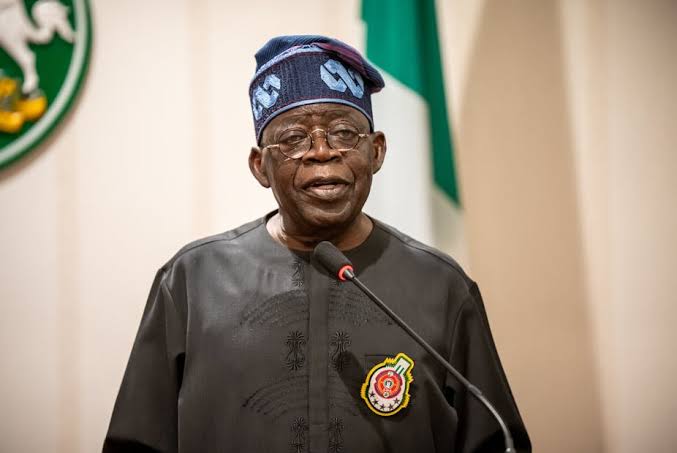
The drama of our age is the chilling metamorphosis of the incumbent’s mandate. The “Renewed Hope” of 2023 has hardened into the “Sole Reality” of 2027; Emilokan – “It is my turn” – has mutated into Emi-nìkan – “It is only me.” This is not a coup but a surrender by default. To challenge the current occupant of the Rock is no longer a political act; it is treated as a breach of etiquette, a faux pas akin to wearing rubber slippers to a royal banquet.
The “Sole Reality” exists because the opposition has dissolved into boutique politics, factional litigation and cerebral lethargy. In the kingdom of the blind, the one-eyed man is king. But this one is not merely king – he is ophthalmologist, priest and tax collector rolled into one.
There is a distinctly Trumpian teleology at play. Much like Donald Trump’s 2016 boast, “I alone can fix it,” Bola Ahmed Tinubu has cultivated the conviction that he alone is the answer to Nigeria’s riddle. He once told a BBC reporter, without blinking: “None of them is qualified except me.” This is not simply a claim to victory; it is an attempt to invalidate the very idea of an alternative.
The “Bulldozer of the FCT” treats opposition like derelict buildings in a green zone, marking them for demolition before his morning tea – or whatever potent brew of power sustains him – has cooled. He succeeds because the supposed owners of those buildings forgot to file their papers, pay their rent, or secure the deed.
Thursday’s judgments fit perfectly into that metaphor. The PDP’s Ibadan structure has been judicially declared defective; the ADC’s house remains under contest, with its tenants still arguing over possession and title. These are not minor administrative embarrassments. They are existential signals. A serious opposition does not arrive at the eve of electoral deadlines, asking the Supreme Court to supply what internal democracy failed to produce. It does not outsource coherence to litigation and then complain when the incumbent converts its confusion into advantage.
The tragedy of 2027, if one exists like conspiracy theorists want us to believe, lies not only in the Machiavellian strength of the master, but in the slapstick ineptitude of the other players – most notably the activist class. To grasp this phase of our democratic evolution, one must study the INEC timetable with the cold eye of a forensic accountant. We are weeks away from the deadline to conclude primaries. This should be the season of harmonisation- registers sanitised, digital identities uploaded, delegates known, structures settled, coalitions negotiated.
Instead, the opposition is still reading judgments. On paper, the mandatory linking of the National Identification Number to voter cards suggests Enlightenment – biometric perfection worthy of Estonia. In practice, it is a sieve separating the serious from the curious. The incumbent’s machinery navigates these silicon hurdles with the precision of a German turbine. The opposition, meanwhile, fumbles in the dark, treating technology as a conspiracy rather than a mobilisation.
In a digital age, administrative sloppiness is a terminal illness. If you are still arguing about the rules while your opponent is playing the second half, you are not a contestant; you are a spectator. What a pity: while the “City Boy” camp maps the country with cartographic precision, his opponents are still debating font sizes on press releases and chairmanship claims in originating summonses.
This is the complacency of freedom fighters turned freelance politicians. What does it mean to be floor-hugging when it is time to hit the ground running? Enter the “complicit activists” – those who treat revolution as aesthetic rather than resolution, perfecting the art of monetised indignation.
Their natural habitat is the boutique party: ADC, AAC, SDP, PRP – entities that exist largely on letterheads, WhatsApp lists and X bios. They are hobbyists outside a burning house, mocking the fireman’s hose and helmet while failing to fetch even a cup of water.
The ADC verdict is instructive. For the Mark-Aregbesola tendency, it offers breathing space, not resurrection. For the wider opposition, it exposes the absurdity of building a national rescue vehicle whose engine is still being disputed in court. A party advertised as the gathering point of the anti-Tinubu coalition cannot afford to look like a rented hall whose key is with one faction, whose receipt is with another, and whose landlord is waiting for the Federal High Court.
The Labour Party offers the most damning evidence of this vacuum. Following opposition consultations in Ibadan, its deputy spokesperson, Philip Agbese, hastened to clarify that the LP was not involved. Their attention, he insisted, is “fixed” on their national convention and the strengthening of “internal structures.”
In the face of an existential threat to multi-party democracy, this is political mauvaisefoi. While they polish the silverware of “internal democracy,” the Republic is being towed towards a mono-party horizon. By treating coalition-building as a distraction, the LP inadvertently reinforces APC hegemony. To remain atomised is to remain irrelevant; irrelevance is endorsement. Peter Obi, high priest of questionable statistics, watches his movement’s signal fade into white noise as his party resembles a rickety Danfo bus – four drivers fighting for the wheel while the conductor sells the engine for parts.
The “National Summit of Opposition Political Parties” in Ibadan last week was a diagnostic report on terminal illness. A parade of political ghosts – Atiku, Obi, Kwankwaso, Amaechi- presided over by the grand oracle of recycled relevance, OlusegunObasanjo, the ultimate political apparition. Their “Ibadan Declaration” was boilerplate indignation, resolving to “field one candidate” in what looked like a suicide pact signed in disappearing ink.
But how does one field one candidate when one cannot even field one undisputed national chairman? How does a coalition defeat a sitting president when its constituent parts are still seeking judicial oxygen? The Supreme Court has not weakened Tinubu’s supremacy; it has illuminated the opposition’s anaemia. The verdicts may have given one faction a grin and another a groan, but they have not produced the discipline, timing, funding, data, field structure, and message required to defeat an incumbent who understands power as both a chessboard and a battlefield.
They suffer from what Freud called the “narcissism of small differences,” fracturing over trivialities instead of consolidating for survival. The APC rightly dismisses them as unserious actors trying to fix a broken vehicle with palm fronds. Omoyele Sowore’s refusal to attend was a forensic takedown: when the loudest activist declines to sit with “recycled failures,” the incumbent need not campaign – he needs only wait. By next February, he will still be in office, while the opposition, as ever, “goes to court.”
A fable captures our trajectory. A village elected its king by seeing who could hold their breath longest under the murky pond. The candidates dived in. The elders had secretly given the incumbent a long, invisible straw. While others surfaced gasping, eyes red, lungs burning, the incumbent remained serene. The tragedy was not the straw, but that the challengers spent their time underwater pulling each other’s legs instead of finding their own air or exposing the ruse.
That is the story of Thursday’s verdicts. The courts did not create the straw; they merely showed who had failed to breathe. Until the noise of amateurs is replaced by the strategy of professionals, our elections will remain coronations. The 2027 calendar ticks on, but in Nigeria, time circles cynically rather than advances.
The selection has already been conceded by the sloppy and the vain; the election, next year, will be the after-party for the prepared. Enjoy the meal, Nigeria – but guard your neck. In a “Democrazy,” the guest who forgets to bring a spoon or a strategy ends up on the menu.
God bless Nigeria!
•Written By Kunle Somorin
-

 Metro16 hours ago
My wife miraculously woke up after six months in coma – Akpabio
-
Politics16 hours ago
Presidential Campaign Council: We don’t need your validation – OK Movement replies NDC
-
News22 hours ago
Tinubu Confirms Absence From UNGA, Asks Shettima To Lead Nigeria’s Delegation
-
News16 hours ago
Former Kogi governor Ibrahim Idris dies at 77
-
Politics16 hours ago
2027: Remo group warns sons against breaking Ogun zoning pact
-
Sports16 hours ago
Haaland Makes EPL Record As Manchester City Overcome Sunderland In 8-Goal Thriller
-
News16 hours ago
Niger govt unaware of miners’ arrest before deaths in NSCDC custody — Bago
-
Politics16 hours ago
Tinubu deserves second term, says Mimiko