Politics
From Delta To Gombe: 9 Toughest Senate Battles To Watch Out For

As Nigeria gradually inches toward the 2027 general elections, the battle for Senate seats across several states is already exposing deep political rivalries, broken alliances, succession battles and struggles for control of party structures.
Beyond ordinary legislative contests, many of the emerging senatorial races are shaping into high-stakes political wars involving governors, former governors, powerful incumbents and long-standing political heavyweights determined to protect their influence or stage dramatic comebacks.
From Delta to Gombe, Ogun to Imo, and Kogi to Adamawa, the unfolding contests are not merely about representation in the National Assembly. They are increasingly becoming proxy battles over political survival, succession plans, party dominance and the future control of state political structures ahead of a crucial electoral cycle.
In several cases, former allies have become fierce rivals, while unresolved political grievances, personal ambitions and shifting party loyalties are fueling tensions long before campaigns officially begin.

What is emerging across the country is a fierce scramble for relevance in a rapidly changing political landscape where incumbency, grassroots loyalty, federal connections and control of party machinery may ultimately determine who survives the approaching storm of 2027.
In this piece, we highlight nine key senatorial districts where the race to parliament is expected to be a keen contest.
NED NWOKO vs IFEANYI OKOWA

Perhaps, one of the senatorial battles ahead of 2027 that will carry more political tension is the looming clash between Senator Ned Nwoko and former Delta governor Ifeanyi Okowa in Delta North.
What is unfolding is not just a fight for a Senate seat. It is a struggle between two powerful political figures fighting for the control of not just their senatorial districts but the future direction of Delta politics.
For years, Okowa was one of the strongest figures in Delta politics with a deep connection across the state. He rose through almost every major political office, from local government chairman to commissioner, secretary to the state government, senator and eventually governor between 2015 and 2023. His political influence peaked nationally when former Vice President Atiku Abubakar picked him as the PDP vice-presidential candidate in 2023 ahead of then Rivers governor, Nyesom Wike.
On the other hand, Nwoko emerged from a different political tradition.
Though wealthy, influential and highly visible, he long operated outside the inner power circle that dominated Delta politics for years. He repeatedly struggled to break into the tightly controlled PDP structure Okowa helped sustain. In 2011, Okowa defeated him for the Delta North Senate seat. Ironically, Okowa backed his successful senatorial bid in 2023.
The former governor has described that decision as a ‘mistake’ highlighting how the relationship has degenerated.
Before Okowa’s movement into the APC, many within Delta North believed Nwoko was already firmly on course to retain the seat. His growing national visibility, defection to the ruling party and aggressive push for the creation of Anioma State had strengthened his standing across the district.
In fact, the Anioma campaign became Nwoko’s strongest political weapon. He successfully turned the decades-long agitation into a powerful emotional and identity-based movement, presenting himself as the politician most aggressively pursuing the dream at the national level.
Across Delta North, particularly among youths and sections of the political elite, that campaign significantly boosted his grassroots appeal. But Okowa’s entrance into the race has altered the political equation completely. Unlike Nwoko, whose strength lies in populist visibility and media dominance, Okowa’s power is rooted in structure, relationships, political calculation and years of patronage across Delta North.
That contrast became obvious during Okowa’s consultations with party stakeholders in Oshimili South, widely considered one of Nwoko’s strongholds. Rather than merely seek support, the former governor used the opportunity to directly question Nwoko’s motives over the Anioma agitation, accusing him of turning the issue into a political tool.
The attack was strategic.
Insiders say Okowa understands that weakening the Anioma narrative is central to weakening Nwoko politically, especially since the agitation has become the senator’s biggest selling point ahead of 2027.
Still, Okowa carries his own baggage. His critics within Delta North accuse him of concentrating projects and political appointments around his Ika axis while serving as governor. There also remains resentment in some quarters over his role as PDP vice-presidential candidate in 2023, particularly among stakeholders who believe the decision contributed to the party’s decline nationally. Yet many believe those issues may matter less when the real battle begins.
The reason is simple: structure. With Governor Sheriff Oborevwori now firmly aligned with Okowa politically, the former governor is widely believed to possess stronger control of the party machinery in the state. Several PDP structures moved almost intact into the APC following the defection of the governor and his allies, dramatically reshaping the balance of power within the ruling party.
For many APC insiders, the emerging contest is therefore not just about popularity but about who controls delegates, party organs and the political structure ahead of the primaries.
There is also the issue of unfinished political bitterness. But Nwoko is said to have the support of the Presidency. Within political circles, there is growing speculation that the senator may rely on his relationship with President Bola Tinubu and sections of the APC national leadership to counter the combined influence of Okowa, Oborevwori and the Delta political structure.
Nwoko himself appeared to hint at this recently when he warned against allowing “the same hands that almost worked against Tinubu in 2023” to take control of APC structures in Delta.
DELTA CENTRAL: OMO-AGEGE vs DAFINONE

If Delta North reflects a fight between the old political establishment and a rising disruptive force, Delta Central presents something more personal and strategic. It is a battle between returning to power and carefully managing who takes over next.
At the centre of the unfolding contest are former Deputy Senate President, Ovie Omo-Agege, and incumbent Senator Ede Dafinone.
On the surface, it looks like a straightforward fight for the APC senatorial ticket. Beneath that, however, lies a deeper struggle over relevance, party control and the future shape of Delta APC after the dramatic political realignments in the state.
For years, Omo-Agege was the undisputed face of APC in Delta.
Aggressive, influential and deeply connected at the national level, he built the party’s opposition structure almost from the ground up during the years PDP dominated the state. As senator and later deputy senate president, he transformed himself into arguably the most powerful APC figure Delta had produced under the current democratic dispensation.
His political style was confrontational because Delta APC itself survived through confrontation.
Then came 2023.
After losing the governorship election, Omo-Agege watched his successor, Dafinone, inherit the Delta Central Senate seat he once occupied. Since then, Dafinone has tried to establish himself as a different kind of politician with a less combative demeanour.
To his supporters, Delta Central has moved beyond the era of strongman politics and now needs stability and issue-driven representation.
But Omo-Agege’s possible return has unsettled that transition.
Within APC circles, many believe the former deputy senate president never truly surrendered political control. Even outside office, he still commands loyalty among old party foot soldiers and grassroots actors who see him as the authentic builder of Delta APC. That lingering influence is precisely what makes the contest delicate.
For some stakeholders, Omo-Agege’s return could eclipse emerging figures within the party and once again centralise Delta APC around one dominant personality. For others, however, sidelining him completely could fracture the structure he spent years building. The politics becomes even more complicated with Governor Sheriff Oborevwori now sitting quietly at the centre of the calculations.
Ironically, during the 2023 elections, Oborevwori openly campaigned against Dafinone despite both men coming from Okpe Kingdom. At the time, the governor argued that Okpe could not produce both the governor and the Delta Central senator simultaneously, insisting the Senate seat should rotate to another axis within the district.
But the electorate ignored that logic. While Oborevwori won the governorship on the PDP platform, Dafinone also secured victory under APC.
The equation, however, has changed completely.
Unlike 2023 when Dafinone operated from the opposition, he is now seeking re-election within the same APC structure increasingly influenced by Oborevwori following the governor’s political alignment with the ruling party. That reality has triggered fresh calculations.
Within Delta APC, there is growing belief that the governor may be more comfortable with Dafinone retaining the seat than allowing Omo-Agege stage a full political comeback in the fight for the control of the party.
Despite losing the governorship election, Omo-Agege still possesses a political aura capable of intimidating rival blocs within the party. His loyalists insist the resistance against him has little to do with accusations that he became distant from party activities after 2023. To them, the real concern is that Omo-Agege remains too powerful, too connected and too independent to fit comfortably into the new political arrangement evolving around Government House.
There are also long-term succession calculations beneath the surface.
Within political circles, there are whispers that Oborevwori may eventually eye the Delta Central Senate seat after completing his tenure as governor. If that becomes the plan, many believe the governor would naturally prefer a politically manageable figure holding the seat rather than a dominant personality like Omo-Agege with his own independent structure and national reach. That perception has strengthened suspicions that parts of the current APC structure may quietly align behind Dafinone.
Signs of that shift have already emerged. The support of influential APC figures such as O’tega Emerhor for Dafinone, alongside the growing closeness between the senator and political actors around the governor, has deepened the impression that loyalties within Delta APC are gradually being recalibrated.
Also, the support of the Minister of Aviation, Festus Keyamo for Dafinone adds a strong federal backing to his bid and signals alignment with the national power centre, while slightly weakening Omo-Agege’s long-standing dominance narrative in Delta Central.
For Omo-Agege, therefore, the battle is no longer just about returning to the Senate. It is about resisting political displacement within a party he once almost singlehandedly defined in Delta. And for Dafinone, the contest represents more than re-election. It is an attempt to prove that Delta APC can evolve beyond the shadow of one dominant political warhorse. That is why the Delta Central battle is becoming increasingly significant. What appears on the surface as a routine senatorial contest is gradually turning into a deeper struggle over succession, influence and the future ownership of APC politics in Delta State.
DAPO ABIODUN VS GBENGA DANIEL

Ogun East 2027 is no longer a normal senatorial contest. It is now an open political fight between Governor Dapo Abiodun and Senator Gbenga Daniel. These are two former allies whose relationship has broken down inside the same party.
What makes this contest an interesting development is that both men are eyeing the Ogun East Senatorial seat for 2027. Daniel is seeking re-election in 2027, while Governor Abiodun has indicated interest to contest for the same seat after his second term as governor.
A major turning point was a recent APC stakeholders’ meeting in Ijebu-Ode where Governor Abiodun was endorsed as the party’s consensus candidate for the Ogun East Senate race. Senator Daniel was reportedly shut out of the high profile meeting.
That exclusion changed the tone of the contest followed by outright rejection of the process by Daniel describing it as invalid. The move revealed that the disagreement has reached a peak. Ironically, Abiodun supported Daniel’s return into mainstream Ogun politics and even backed his senatorial emergency after he faced isolation during the period of former Governor Ibikunle Amosun. However, the relationship has now turned into competition over who controls Ogun East going forward making their impending contest a defining moment for their political careers.
GOMBE: INUWA YAHAYA VS DANKWAMBO

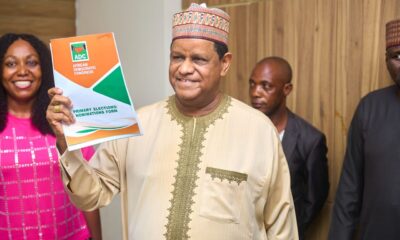
In Gombe State, the political temperature is already rising ahead of the 2027 elections as Governor Muhammadu Inuwa Yahaya has obtained the nomination form to contest for the Gombe North Senatorial seat currently occupied by former governor, Senator Ibrahim Hassan Dankwambo, who is also said to be eyeing another term.
The looming battle for the Gombe North Senatorial District is shaping up to be a dramatic rematch between two of the state’s most influential political figures — Dankwambo of the opposition Peoples Democratic Party (PDP) and Inuwa Yahaya of the ruling All Progressives Congress (APC).
Their rivalry dates back over a decade and has remained one of the defining political contests in Gombe State. In 2015, Dankwambo sought re-election as governor and faced a stiff challenge from Inuwa Yahaya. Although Yahaya lost the election, he blamed the defeat on the overwhelming influence of incumbency enjoyed by Dankwambo at the time.
The roots of their political feud, however, stretch back to 2011 when Yahaya, then commissioner for finance under former governor Danjuma Goje, signalled interest in succeeding his boss. But Goje opted for Dankwambo — who had previously served as Accountant General of Gombe State before rising to become Accountant General of the Federation — sidelining Yahaya in the succession battle.
Ironically, Dankwambo later fell out with Goje midway into his administration, prompting the former governor to back Yahaya against him in the 2015 governorship election. Despite the fierce contest, Dankwambo narrowly retained power with 285,369 votes against Yahaya’s 205,132 votes.
Four years later, Yahaya staged a political comeback, defeating Dankwambo’s preferred successor, Senator Usman Bayero Nafada of the PDP, to emerge governor in 2019. He consolidated his dominance in 2023 by defeating another PDP candidate backed by Dankwambo, Muhammad Jibrin Barde.
With both men now poised for another showdown, political analysts believe the 2027 senatorial contest could be a high-stakes replay of the fierce 2015 battle.
Observers say Governor Inuwa Yahaya may head into the race with the advantage of incumbency and political structure. Supporters point to his administration’s execution of major infrastructure projects, which they describe as unprecedented in the state’s history. His government also cleared billions of naira in outstanding gratuities owed to retirees — liabilities accumulated during the Dankwambo administration.
The APC currently maintains a firm grip on Gombe politics, controlling the governorship seat, both senatorial seats, all five House of Representatives positions, and the entire 24-member State House of Assembly.
However, despite his political dominance, critics accuse Yahaya of sidelining loyalists and running an exclusive government. Some party members and residents claim those who worked tirelessly for his electoral victories have been neglected.
Dankwambo is also facing criticism within the senatorial district. Residents across the five local government areas of Dukku, Funakaye, Gombe, Kwami, and Nafada have accused the senator of being distant and inaccessible. Some political stakeholders who supported his emergence allege that he rarely engages with constituents or consults grassroots supporters on issues affecting the district.
Still, despite the growing criticisms on both sides, political pundits believe the expected showdown between Inuwa Yahaya and Dankwambo will remain one of the most closely watched political battles in Gombe ahead of 2027 — a true clash of titans.
GOMBE: INUWA YAHYA VS GOJE

Governor Yahaya is fighting on many fronts. Aside from battling to win a senatorial seat, he is also doing all he could to stop his former political benefactor, Senator Danjuma Goje. What makes the rivalry deeply personal is the history behind it.
Before becoming governor, Yahaya rose politically through the influence and structure built by Goje, serving under him as commissioner for finance. For years, Goje remained the undisputed political heavyweight in Gombe controlling the political system. That influence saw to his installation of the Governor. But as Inuwa Yahaya settled into office and consolidated authority, the relationship gradually shifted from mentorship to rivalry.
Now, both men are fighting for control of the same APC structure.
The clearest sign yet came with the controversial “consensus” arrangement pushed by the governor’s camp ahead of 2027.
Through stakeholder meetings aligned with Government House, APC leaders endorsed new faces for major positions, including a replacement for Goje in Gombe Central. That move changed the conflict completely. For the first time, the battle was no longer hidden beneath reconciliation talks or quiet negotiations. It became an open attempt to stop Goje’s return to the Senate and weaken the political structure he had controlled for years before primaries even began.
Political watchers described the feud as a struggle for relevance. Inuwa Yahaya appears determined to complete what many around him see as unfinished political consolidation to replace the old Goje and his network with a new power structure.
That calculation explains several recent moves inside Gombe APC.
From the endorsement of preferred candidates to the growing push for senatorial rotation in Gombe Central, many of the governor’s critics believe the larger goal is to dismantle Goje’s long-standing dominance. But the governor’s supporters argued that the move reflects growing demands for balance within Gombe Central.
But Goje’s camp sees it as a carefully coordinated effort to politically erase the former governor from the system he once built. That fear is why the resistance has become intense. Across Gombe, parallel meetings, counter-mobilisation and competing stakeholder groups are already emerging. In some local governments, party members openly accuse Government House of trying to manufacture consensus through selective consultations and controlled gatherings. The distrust between both camps has now become so deep that even previous reconciliation efforts by national APC leaders have failed to produce lasting peace. And there is history behind that bitterness.
The rivalry between both men has previously triggered serious political tension in the state, including violent clashes between supporters in 2021 that exposed how dangerous the struggle for control of Gombe APC had become. That memory still hangs over the current confrontation.
What makes the crisis even riskier for APC is that Goje is not an ordinary senator politically. He remains one of the most deeply rooted grassroots politicians in Gombe, with loyal networks stretching across several local governments. Many within the party quietly fear that completely sidelining him could fracture APC ahead of 2027 and push sections of his supporters toward the opposition.
That is the paradox confronting Inuwa Yahaya.
The governor may currently control Government House, party machinery and the consensus process, but Goje still controls emotional loyalty among sections of the old APC structure. The battle now is between an outgoing governor trying to fully consolidate power before leaving office and a former governor resisting political extinction. And as 2027 approaches, APC in Gombe is increasingly caught between both forces.
ADAMAWA: FINTIRI VS BINANI
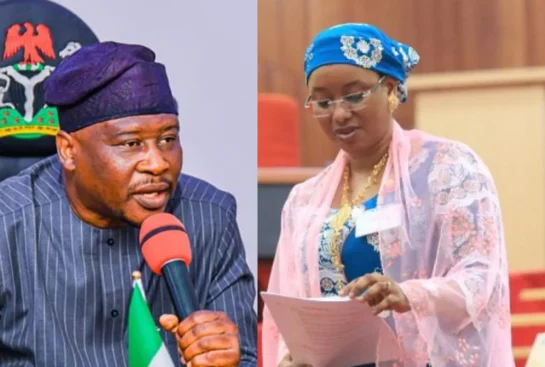
Adamawa politics is heading toward another tense showdown between Governor Ahmadu Fintiri and Senator Aishatu Binani, two figures who already shaped one of Nigeria’s most controversial governorship battles in 2023.
The contest descended into national controversy after the Adamawa Resident Electoral Commissioner controversially declared Binani winner while collation was still ongoing, a move that was later nullified by the Independent National Electoral Commission (INEC).
The electoral body eventually declared Fintiri as the valid winner after the completion of the process.
Binani challenged the outcome in court, but both the election tribunal and the Court of Appeal upheld Fintiri’s victory, reinforcing his political standing while leaving deep divisions among supporters of both camps.
That election left a lasting mark on both of them. At the time, Fintiri was in the PDP while Binani flew the APC flag. The contest was fierce and highly disputed, and it reshaped their political identities going forward.
Now, the political ground has shifted again. Fintiri has moved to the ruling APC structure, while Binani has found a new platform in the NDC after leaving the ADC amid internal crisis and a wave of defections.
This realignment has quietly set the stage for a possible second direct confrontation, this time for a senatorial seat rather than the governorship.
The stakes are different, but the rivalry remains familiar. Fintiri, who has also lost key political allies like former Vice President Atiku Abubakar after his defection, is still seen as a strong political operator, even as he navigates relationships with influential figures such as NSA Nuhu Ribadu. How he balances these shifting alliances could determine his strength in the next contest.
For Binani, the 2023 loss did not weaken her political relevance. Instead, it elevated her into a symbol of resistance within opposition circles, especially among many APC supporters and women’s political groups. Her camp still draws energy from the controversy that followed her earlier declaration as winner before the process was completed. That controversy remains a political fault line in Adamawa. Many insiders believe another face-off between both camps could reopen old wounds, especially given how emotionally and politically charged the last election was.
Meanwhile, Fintiri is currently focused on managing internal succession politics within his camp. But with multiple political fronts in trying to install his successor and contesting for election himself, it remains unclear whether he can fully contain a renewed challenge from Binani’s reorganised base under the NDC structure.
KOGI: YAHAYA BELLO VS NATASHA

The political hostility between former governor Yahaya Bello and Senator Natasha Akpoti-Uduaghan is one of the most intense rivalries in Kogi politics and across the country.
Unlike ordinary electoral contests, this battle is driven by a mix of power struggle and political dominance that latter triumph in court for the female senator.
As governor for eight years, Yahaya Bello, tried to resist the growing influence of Natasha whose media advocacy and global connection put the state government under the spotlight but for the wrong reasons.
The rivalry intensified after the 2023 senatorial election, where Natasha (PDP) defeated the APC candidate, Abubakar Sadiku Ohere, who was widely seen as the product of the then-governor Bello’s political structure.
That election was closely contested and followed by legal disputes after INEC initially announced her opponent as the winner. The contest eventually ended with Natasha’s judicial affirmation as senator, strengthening her legitimacy while deepening political resentment within the opposing camp.
The conflict also includes serious allegations made in the political space, including claims of attempts to influence Natasha to step down and accusations linked to political pressure and attacks during the election period leading to the alarm that her life was under threat. Natasha also accused Bello of dumping a heap of sand to prevent her from accessing her constituency in the guise of road rehabilitation.
These remain part of the political narrative between both politicians although Bello’s camps deny the allegation and even instituted a defamation suit again her at a Kogi State High Court sitting in Lokoja which ordered Senator Natasha to pay ₦1 billion in damages to the former Governor. The judgment was delivered on April 23, 2026, by Justice A.S. Ibrahim. She has since appealed the judgement.
At a recent interview, when Natasha was asked about the prospect of contesting the senatorial ticket against Bello, a former governor, she expressed confidence that she is not afraid despite the political hostility between them. Analysts believe that though Natasha appears to have a huge support from her constituent largely due to her impactful representation in spite of her initial suspension, a contest again the “White Lion” as Bello supporters call him, might be one of the fiercest in fight for the control of Kogi Central with very high stakes. Governor Usman Ododo is firmly behind Bello and the influence of an incumbent governor cannot be ignored in any crucial electoral contest.
KWARA: SALIU MUSTAPHA VS ABDULRAHMAN ABDULRAZAQ

The growing speculation that Kwara State Governor, AbdulRahman AbdulRazaq, may be eyeing the APC senatorial ticket for Kwara Central ahead of 2027 has quietly reshaped political calculations within the ruling party.
Although both the Governor and his friend now turned political foe have avoided open confrontation, party insiders say the situation is already developing into one of the most sensitive internal battles in Kwara APC in recent years. What makes it more complex is their shared political history.
Senator Mustapha was once part of the support base that helped AbdulRazaq rise to power and later stabilise his position within the APC.
His influence, especially among youth groups and traditional political networks, was seen as an important factor during the governor’s re-election journey.
But that alliance did not last.
After the 2023 elections, quiet disagreements reportedly began to surface between both camps, mainly over future political direction and succession plans.
Over time, those disagreements deepened and turned into a silent but growing rivalry over the highly coveted senatorial as governorship tickets.
While senator Mustapha has officially entered the race to succeed the governor following the purchase of the expression of interest form, Abdulrazaq has not made his senatorial ambition official. However, party sources said it’s already a done deal. The situation is causing serious tension among the supporters of the two politicians.
The situation is made more complicated by reports that Governor AbdulRazaq is uncomfortable with Senator Mustapha succeeding him. Insiders said the governor’s camp is instead pushing for the governorship ticket to return to Kwara North as part of the state’s political balancing arrangement.
But reaching that outcome may not be straightforward.
Mustapha, backed by some influential senators and political allies at the national level, is said to be intensifying consultations and strengthening his push for the ticket. That has quietly raised the stakes within the APC, with many party insiders believing the real battle is only beginning.
With zoning arguments, personal ambitions and permutations all at the front burner of discussion, many observers believe the coming months could produce even deeper political intrigues within the ruling party.
IMO: UZOIMMA VS IZUNASO

In Imo West, the growing tension between Governor Hope Uzodimma and Senator Osita Izunaso is becoming one of the most delicate political battles ahead of 2027.
On the surface, both men remain members of the same APC family. But underneath, there is an intense struggle over the Orlu Senate seat, control of the party structure in Imo and the future balance of power after Uzodimma leaves office.
The contest carries deep political history.
Their rivalry dates back to 2011 when Uzodimma was said to have taken the PDP senatorial ticket from Izunaso in a bitter political battle that altered alliances in Orlu politics.
Though years have passed, many insiders believe the political scar never completely disappeared. Ironically, both men later reunited politically.
In 2020, Izunaso openly reconciled with Uzodimma after years of political distance, collapsing his “Kpakpando” structure into the governor’s camp in what was then seen as a major political realignment in Imo.
At the time, the alliance sent shockwaves through the camp of former governor Rochas Okorocha. The reconciliation was strategic for both sides.
For Uzodimma, bringing Izunaso into his camp was a smart political move that further isolated rival blocs in Orlu and strengthened his control ahead of future battles.
On the other hand, the reconciliation for Izunaso was more than symbolic. It reopened the door to political survival and restored him to the inner circle of Imo power after years of uncertainty.
Back then, political calculations already centred on the Orlu Senate seat.
There were strong speculations that Uzodimma preferred Izunaso as a future senator ahead of Okorocha, especially as relations between Uzodimma and the former governor had badly broken down despite being in the same party.
Now, years later, the political equation appears to have changed again.
Governor Uzodimma is now widely believed to be preparing for a return to the Senate himself after completing his tenure in 2028.
Support groups and loyalists have already begun publicly pushing the idea, directly placing him on a possible collision path with Izunaso, who currently occupies the seat.
That is where the situation becomes complicated.
The same alliance that once helped both men strengthen their political positions may now be facing pressure from conflicting ambitions.
Within APC circles, there are growing talks that the governor may be looking beyond simply returning to the Senate. Some believe he is also positioning himself within future Senate leadership calculations, making the Orlu seat even more politically valuable.
For Izunaso, the danger is obvious. Many insiders believe his political future could become uncertain once Uzodimma fully signals interest in the seat. Others, however, argue that Izunaso is quietly trying to strengthen his own structure.
At the same time, Uzodimma is also deeply involved in succession politics in Imo, backing the argument that Owerri Zone should produce the next governor under the state’s Charter of Equity arrangement.
That means the governor is fighting two political battles at once. Shaping who succeeds him in Douglas House while also planning his own return to Abuja. How that will play out in the struggle for who controls the next phase of APC politics in Imo after 2027 between the two remains to be seen. (Daily trust)
-

 Politics10 hours ago
Adebayo emerges SDP presidential candidate at Bauchi National Convention
-
News4 hours ago
Nigeria Records Decline In HIV Cases As Demand Rises For Prevention Injection
-
Politics10 hours ago
All Eyes On Obi As NDC Zones Presidency To South
-
News10 hours ago
EFCC Declares Ex-Minister Sadiya Umar Farouq Wanted
-
 Politics10 hours ago
2 Retired IGPs, Top Cops In 2027 Race
-
Opinion8 hours ago
Who is Mohammed Hayatu-Deen?
-
Politics8 hours ago
Consensus Crisis: Yobe APC Open To Transparent Primaries – Buni
-
News4 hours ago
Stamp, seal policy valid despite court judgment, NBA insists