News
Lagos generates N2.6 trillion in revenue, maintains stable debt profile

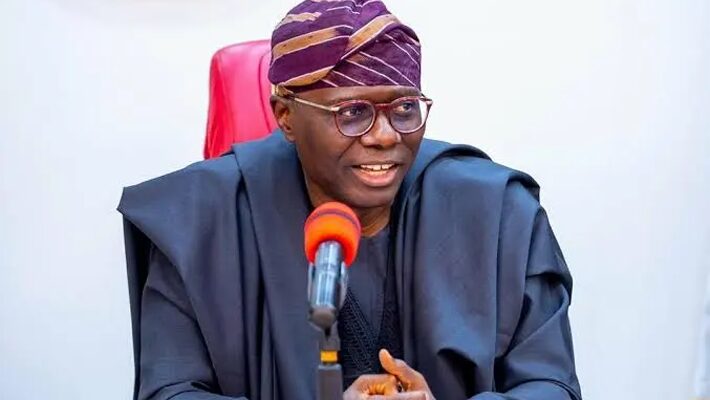
The Lagos State Government says it maintained a stable and sustainable debt profile in 2025 while generating a record N2.6 trillion in revenue, representing a 16 per cent increase from the N2.3 trillion recorded in 2024.
The Commissioner for Finance, Abayomi Oluyomi, disclosed this during the 2026 ministerial press briefing commemorating the seventh year of the administration of Governor Babajide Sanwo-Olu on Friday.
Mr Oluyomi said the state’s fiscal stability was driven by prudent financial management, disciplined borrowing, digital tax reforms and sustained revenue diversification strategies.
According to him, Lagos achieved an 85 per cent overall revenue performance in 2025, largely propelled by growth in internally generated revenue, which rose from N1.58 trillion in 2024 to N1.87 trillion in 2025, representing an 18.5 per cent increase.

He added that tax revenue collections increased from N678.13 billion in 2023 to N1.045 trillion in 2024, marking the first time the Lagos Internal Revenue Service (LIRS) surpassed the N1 trillion threshold, before rising further to N1.443 trillion in 2025, reflecting a 38 per cent year-on-year growth.
“We have continued to strengthen our fiscal sustainability through prudent debt management, improved revenue generation and strategic financial reforms that support infrastructure development without overburdening public finances,” he said.
Mr Oluyomi attributed the revenue growth to aggressive digital transformation initiatives and reforms in tax administration across the state.
“The Lagos State Internal Revenue Service remains focused on broadening the tax base, closing revenue gaps and fostering long-term revenue growth. All essential to funding the state’s expanding urban and infrastructure requirements,” he said.
The commissioner explained that the state upgraded and expanded the LIRS e-Tax platform to include stamp duties, capital gains tax filing integration, geo-tagging, Corporate Affairs Commission (CAC) integration and expatriate tracking through Nigeria Immigration Service integration.
He said the e-tax mobile application had also been migrated to the cloud to provide more secure and robust access to taxpayer data.
Mr Oluyomi added that the government expanded multiple payment channels, including mobile applications, POS terminals, USSD, WhatsApp and online payment systems, to improve taxpayer’s compliance and ease of payment.
“These innovations have simplified tax administration, enhanced transparency and improved voluntary compliance among taxpayers across the state,” he said.
He explained that Lagos had fully migrated from a hybrid tax filing process to a completely electronic filing system to improve efficiency, transparency and accountability.
Speaking on debt and funds management, the commissioner said Lagos continued to maintain healthy fiscal indicators in spite of ongoing infrastructure expansion across the state.
“The State Government is committed to infrastructure renewal, using a hybrid approach combining medium- to long-term loans and innovative financing mechanisms,” he said.
According to him, Lagos currently maintains a debt-service-to-revenue ratio of 19.2 per cent, which is below the 30 per cent fiscal sustainability threshold, while its total debt-to-GDP ratio stands at 4.11 per cent.
“Our total debt-to-GDP ratio reflects a stable and sustainable debt position that allows us to continue financing critical infrastructure projects responsibly,” he said.
Mr Oluyomi disclosed that the state successfully issued a N230 billion bond, described as the largest by any Nigerian sub-national government, at a competitive fixed rate of 16.25 per cent.
He said the bond was deployed to strategic sectors including transportation, healthcare, housing, agriculture, science and technology, innovation and environmental sustainability.
The commissioner also highlighted the state’s N14.815 billion sustainable green bond, noting that it became the first by an African sub-national government to receive certification from the climate bond initiative.
He listed projects financed through bonds and innovative funding mechanisms to include the Opebi Link Bridge, Blue Line Rail Phase II from Mile 2 to Okokomaiko, reconstruction of the Tolu School Complex and construction of the Massey Children’s Hospital.
Others, according to him, are the Lagos Central Food Security System, retrofitting of 42,000 streetlights with solar-powered technology, redevelopment of Alaba Rago International Market and construction of a 280-bed multi-specialist Ojo General Hospital.
He added that the state was also expanding Lagos HOMS schemes across Sangotedo, Ibeshe, Egan-Igando and Epe, while providing solar power infrastructure for schools in riverine communities.
Mr Oluyomi said Lagos continued to retain strong ratings from local and international credit agencies, with Fitch Ratings reaffirming the state’s AAA national long-term rating with a stable outlook.
According to him, the Ministry of Finance has also sustained prompt payment of salaries and pensions, while strengthening payroll verification and accountability mechanisms to block financial leakages.
Mr Oluyomi noted that in spite of prevailing national and global economic challenges, Lagos continued to strengthen its position as Nigeria’s economic powerhouse through disciplined financial management and technology-driven revenue systems.
“The Ministry of Finance remains central to the successful implementation of the T.H.E.M.E.S+ agenda by ensuring the financial stability required to sustain economic growth, infrastructure delivery and improved public service across Lagos State,” he said.
(NAN)
-

 Politics13 hours ago
Atiku’s Lobbyist Deletes Post On Purported Trump Commission Appointment
-
Business13 hours ago
Nigeria’s syndicated loans jump 21-fold to $2.86bn
-
Politics13 hours ago
Tinubu’s policies improving student welfare, says NANS
-
News12 hours ago
Lab test showed my wife’s fresh orange juice unfit for consumption – Osinbajo
-
Politics13 hours ago
World Igbo Congress warns politicians against threatening Igbos over support for Obi
-
Politics13 hours ago
I am confident I will become Lagos governor next year – NDC gov candidate, Doherty
-
Metro13 hours ago
Nigerian-British businessman dies after penis enlargement procedure in Thailand
-
Metro13 hours ago
Kogi chief allegedly impregnates teen, damages womb