Politics
Makinde’s 2027 gamble: President, spoiler or Oyo kingmaker?

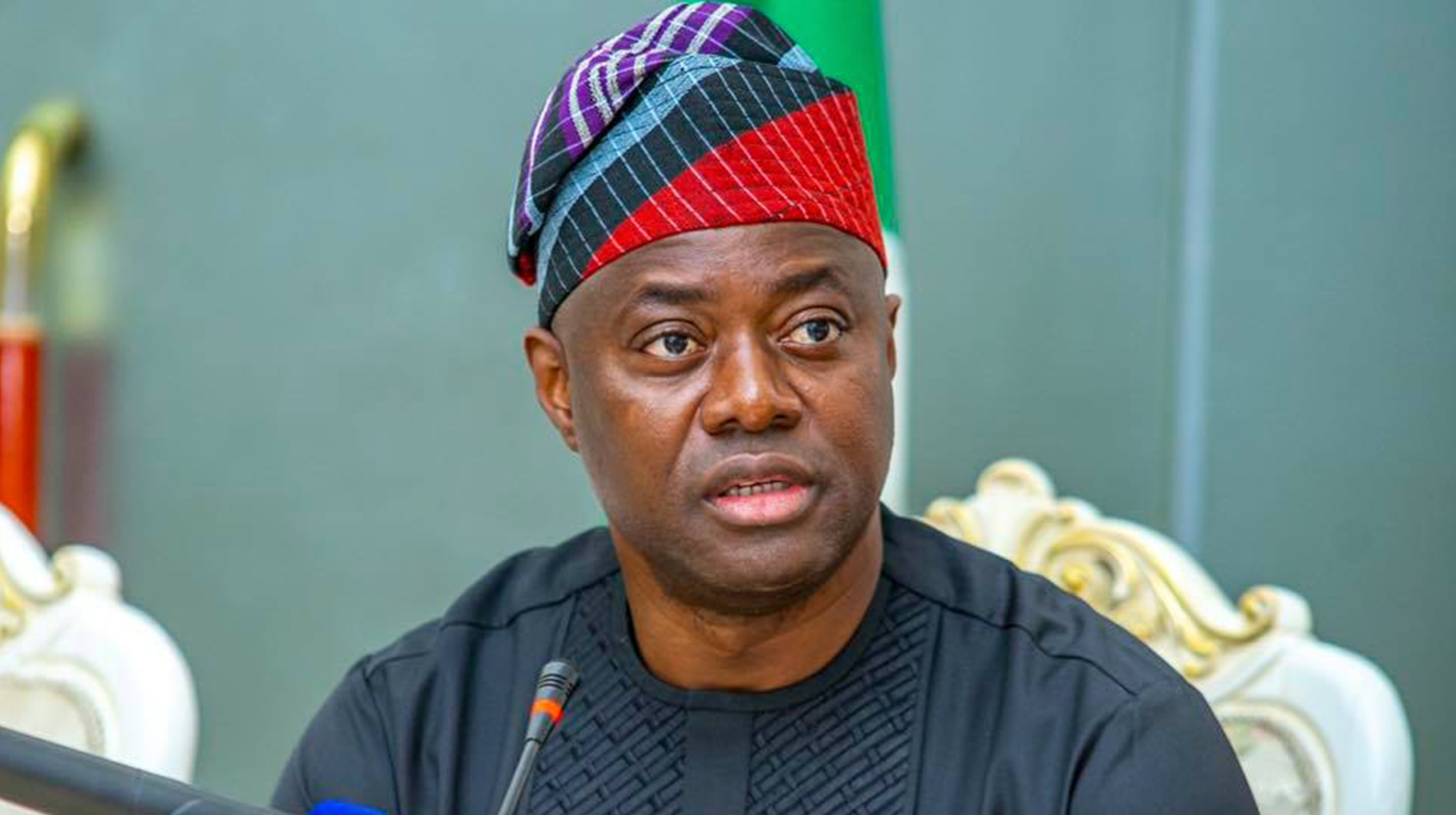
When Seyi Makinde stood before supporters at Mapo Hall in Ibadan on 14 May and declared his ambition to run for president, it was more than a rallying cry against Bola Tinubu’s ruling All Progressives Congress (APC).
It was the launch of an unusual political vehicle designed to give the Oyo State governor leverage in Nigeria’s fragmented opposition – and control over what comes next at home.
The PDP-APM Unity mega rally brought together Makinde’s faction of the People’s Democratic Partyand the Allied People’s Movement, whose leaders signed a memorandum of understanding to field joint candidates in 2027, from the presidency down to local government.
Because only registered political parties can appear on the ballot, Makinde’s presidential bid is expected to run on the APM platform while drawing on his PDP machinery in Oyo. Local reports had trailed the declaration ahead of the rally, with Voice of Nigeriaand ThisDay later reporting that Makinde had formally entered the race through the PDP-APM platform.

Makinde builds an Oyo political machine
At the rally, Makinde accused the APC of weakening opposition parties to create a one-party state. “We have been pushed to the wall with the belief that we will turn against ourselves in confusion,” he told the crowd, casting his campaign as a defence of multiparty politics against Tinubu’s incumbency.
Few in Nigeria’s political class believe Makinde has the national structure to defeat Tinubu, Atiku Abubakar or Peter Obi. But that may not be the immediate point. Makinde’s candidacy strengthens his Oyo machine, raises his value in opposition bargaining and allows him to present himself as the South West’s most serious Yoruba alternative to Tinubu.
The 2023 results explain why his move cannot be dismissed. In Oyo’s presidential election, Tinubu won 449,884 votes, ahead of Atiku’s 182,977 and Obi’s 99,110. Yet weeks later, Makinde won reelection as governor with 563,756 votes, taking more than 63% of the vote and carrying 31 of the state’s 33 local government areas. The split-ticket pattern showed that many voters could back Tinubu nationally while remaining loyal to Makinde locally.
If Makinde can transfer even part of that personal vote into a presidential contest, he could complicate calculations for all three major contenders: Tinubu among Yoruba voters, Obi among younger urban opposition voters and Atiku among PDP loyalists in the region.
Will Makinde hurt Tinubu in the South West?
“Makinde has no formidable northern political structure, where presidential elections are often decided,” says Abdullah Jimoh, an Ilorin-based journalist and analyst. “But his participation could weaken Tinubu’s South West home base.”
For Tinubu, the risk is not that Makinde defeats him nationally. It is that a popular sitting governor from the South West turns the president’s home region from a dependable base into a more contested battlefield. A fragmented South West would increase the premium on northern alliances, where presidential elections are often decided.
Makinde’s route also reflects the collapse of discipline inside the PDP. Rather than submit to a national primary process shaped by rival blocs, his faction in Oyo has aligned with APM to create a joint electoral vehicle. Insiders describe the move as both a genuine candidacy and a bargaining strategy: it keeps Makinde in the presidential conversation while preserving his influence over candidate selection in Oyo.
The model is closer to Rabiu Kwankwaso’s 2023 campaign than to a conventional presidential run. Kwankwaso’s New Nigeria Peoples Party bid did not put him near Aso Rock, but it consolidated his Kano base, kept the Kwankwasiyya movement intact, and increased his relevance in national negotiations. Makinde appears to be attempting a South West version: using a presidential campaign to deepen structure, bargain from strength and shape down-ballot contests.
“For Makinde, it is about protecting his new base with APM and locking down his structure,” says an insider in the party. “This would increase his national political value.”
The Bimbo Adekanmbi succession plan
That is why the more immediate battlefield may be Oyo. Makinde is term-limited in 2027 and has settled on Bimbo Adekanmbi, a former commissioner for finance, as his preferred successor, according to people familiar with the arrangement. Adekanmbi has already presented himself as a continuity candidate, pledging to consolidate Makinde’s gains if elected governor. 
Several state lawmakers have also begun aligning their structures with the PDP-APM platform. For Makinde’s camp, the logic is straightforward: a presidential campaign gives the governor a banner under which to hold together his loyalists, manage the transition and avoid being boxed in by a hostile PDP national structure.
But the move has revived an old charge against him. Makinde came to power in 2019 as a break from Oyo’s godfather politics, where powerful patrons often determined succession from behind the scenes. His rise was sold by supporters as proof that electoral success could be built on public appeal, competence and political strategy rather than elite imposition.
Why back Wike?
That narrative weakened after Makinde, one of the PDP’s rebel G5 governors, along with Nyesom Wike, backed Tinubu in the 2023 presidential race. By helping Tinubu in Oyo while securing his own reelection, Makinde reinforced his image as a pragmatic operator. Now, his support for Adekanmbi has prompted critics to accuse him of reproducing the system he once opposed.
Some PDP stakeholders have rejected Adekanmbi, questioning his wider appeal and warning against imposition. The Guardian reported that some Oyo PDP figures had pushed back against Makinde’s preferred choice, with rival names being canvassed inside the party.
Makinde’s allies reject the charge, saying that the succession plan is about continuity, not control – Adekanmbi can sustain the administration’s work in infrastructure, education, healthcare and the economy. Makinde has defended the choice in similar terms, saying at a recent tourism summit that party affiliation should not determine leadership and that competence matters more than party colour.
The contradiction remains potent. “Can a leader who rose by rejecting godfatherism endorse a successor without becoming part of the same system he once opposed?” asks political analyst Ogungbile Oludotun.
That question sits at the heart of Makinde’s 2027 strategy. His presidential bid may not yet make him a frontrunner for Aso Rock. However, it could make him harder to ignore – in opposition talks, in South West calculations and in the battle to decide who inherits Oyo.
For Makinde, the campaign is a wager that presidential politics can secure local control and national relevance at the same time. The risk is that the governor who built his brand against godfather politics ends the cycle looking like the very kind of power broker he claimed to displace. (The Africa Report)
-

 Politics17 hours ago
I ignored warnings before backing Gbenga Daniel for Senate in 2023 – Abiodun
-
Politics14 hours ago
Osun guber: APM, PDP candidates withdraw, endorse Adeleke
-
Entertainment19 hours ago
Wizkid To Headline 2026 Detty December Fest
-
News19 hours ago
Government official smuggles 14 family members into salary payroll, another collects 13 salaries
-
Sports19 hours ago
Super Falcons Miss Out Of 2027 World Cup After Defeat To South Africa
-
Politics19 hours ago
Osun Polls: INEC Records 1.9 Million PVC Collections
-
African News17 hours ago
Xenophobia: No request yet from S’Africa on repatriation costs — FG
-
World News19 hours ago
US sets up task force to end birth tourism, revokes over 600 visas worldwide