Opinion
Federalism and Decentralization of Power: The Tinubu Legacy Worth Tracking

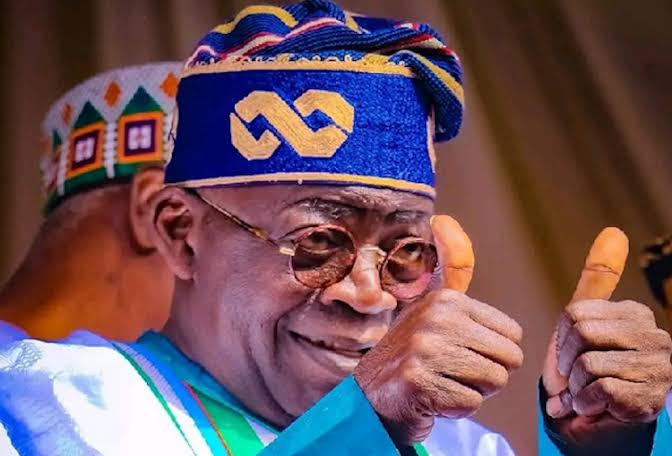
When President Tinubu’s administration is discussed in the future, many will naturally focus on fuel subsidy removal, foreign exchange reforms, tax administration and perhaps his political dexterity.
However, another legacy is quietly unfolding that may prove even more consequential to Nigeria’s long-term future: the gradual decentralization across critical sectors.
Three major areas stand out, Security, Governance, and Power.
These are arguably the most important pillars of any functioning nation and all three are gradually moving away from an over-centralized structure toward greater autonomy and local responsibility.

For years, Nigerians advocated community policing long before terrorism, banditry and kidnapping reached today’s levels.
Security intelligence is often most effective when it is local. Communities understand their terrain, recognize emerging threats and can provide intelligence that distant command structures may miss.
The decentralization of security responsibilities may not solve the problem overnight, but it is becoming increasingly clear that effective security must happen closer to the people. That is the promise of state policing.
Local government autonomy could also become one of the most significant governance reforms of this administration.
For too long, every grievance has been directed at Abuja or state capitals. Yet local governments are closest to the people.
We know our councillors. We know our local government chairmen. We can demand accountability directly.
The challenge, however, will be ensuring that competent and credible individuals occupy these offices – story for another day.
Then there is power. Reliable electricity remains the single greatest driver of economic growth, business expansion, industrialization and job creation.
For decades, the sector has been endlessly discussed, heavily funded, yet rarely fixed. Greater state participation across the electricity value chain could prove transformational for Nigeria’s economy.
These reforms are not politically attractive because they rarely produce instant results. They require patience, institutional discipline and cooperation across multiple levels of government.
But if successfully implemented and institutionalized, they could lay the foundation for a stronger and more sustainable federation.
A nation of over 250 million people, hundreds of ethnic groups and diverse economic realities cannot sustainably depend on one centre for every solution.
As an optimist, I believe that once decentralization is properly institutionalized, future administrations can build upon it. When that happens, Nigeria’s growth at both the macro and micro levels could accelerate significantly.
And that may ultimately become one of the most important legacies of this administration.
•Written By Akintunde Odeyemi
-

 News11 hours ago
IG Didn’t Order Officers To Shoot Criminals On Sight – Police
-
News11 hours ago
Jonathan, Osinbajo Met With Militants, Who Will Engage Boko Haram? – Gumi
-
News11 hours ago
North Has Lost Its Values – Ango Abdullahi
-
News10 hours ago
Mary Habila’s death in Umahi’s house suspicious — Southern Kaduna lawyers
-
Metro11 hours ago
Delta: Suspected Cultist Allegedly Shoots Colleague Who Renounced Membership
-
News10 hours ago
Five govs to adopt security outfits as state police
-
Sports10 hours ago
Sports Commission defends N6.44bn World Cup qualifiers budget
-
Opinion11 hours ago
Crime And No Punishment