Business
Where’s the beef? Inside Nigeria’s $8bn cattle economy

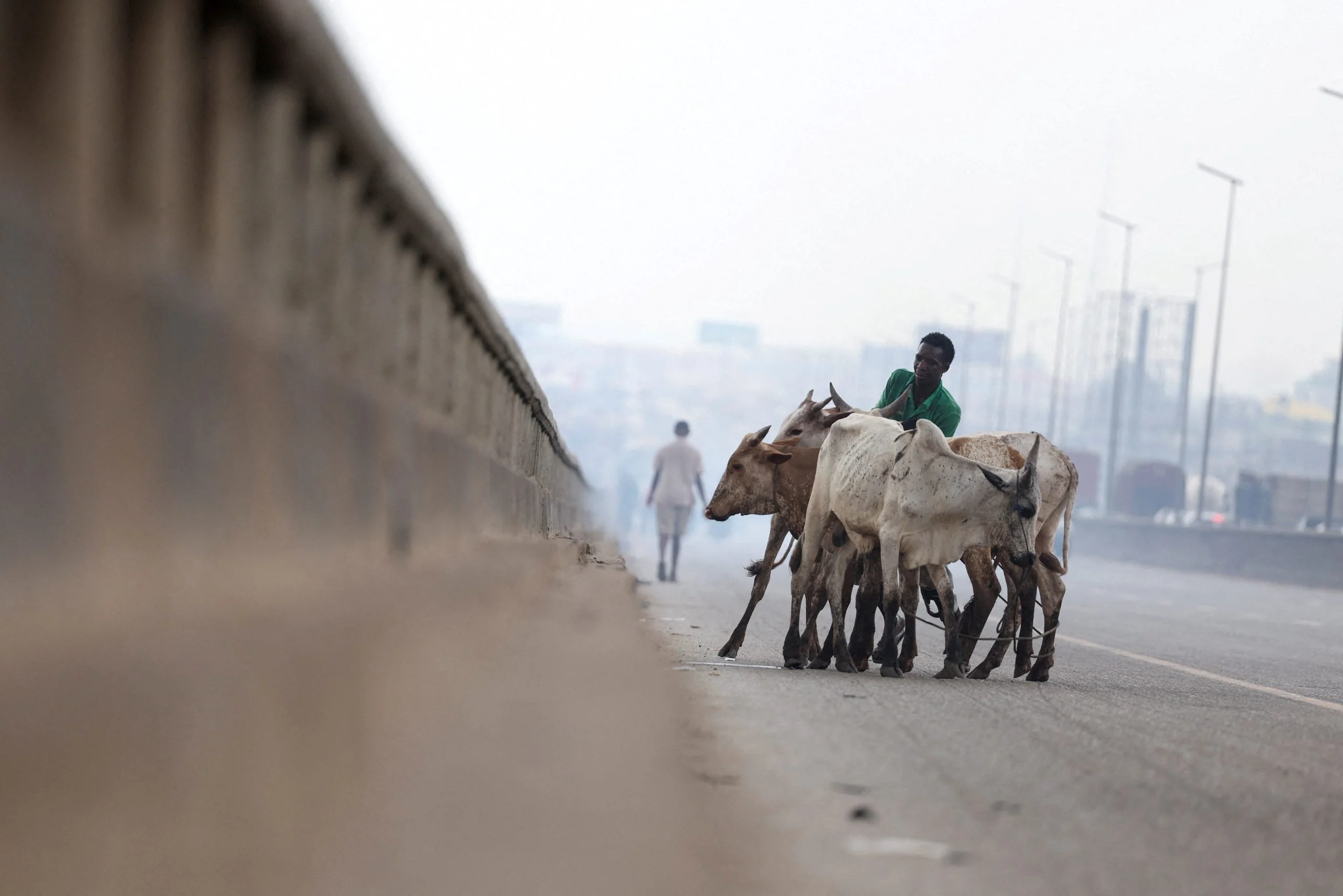
As dusk falls in Benue, north-central Nigeria, 16-year-old Adamu guides more than 160 cattle along a lonely rural road. The animals belong to a wealthy older relative living about 100km away. Adamu says he receives no wages. His reward, like that of other young pastoralists interviewed by The Africa Report, is the hope that one day he may inherit cattle of his own.
The work is risky. Armed robbers prey on herders. Farming communities often view young Fulani men with suspicion, especially in areas scarred by herder-farmer violence. Adamu says he has been insulted and driven away from villages where residents accused him of being a killer. Still, he keeps moving.
“I’m just fine,” he says in Fulfulde, as he prepares for evening prayers.
The cattle trade ties north to south
Nigeria’s cattle economy rests on this uneasy bargain. The country depends on Fulani pastoralists for beef, milk, hides, transport work, restaurant supply chains and the evening suya trade that fills city streets from Kano to Lagos. Yet the same informal system is tied to child labour, opaque ownership, land disputes and some of the deadliest communal violence in the country.

Its value is hard to pin down. Nigeria does not publish a clean cattle-only GDP figure, and much of the trade takes place outside formal records. A narrow estimate covering beef, milk, live-cattle trade and hides would put the sector at about $2bn-$4bn a year. A broader estimate, based on the government’s $32bn valuation for livestock, suggests cattle may account for $6bn-$11bn, with a central estimate near $8bn. The range is wide because animal census data is weak, informal trade is extensive and millions of cattle are imported on the hoof from Niger, Chad and Cameroon.
20 million cows contribute
What is clearer is the sector’s reach. Nigeria has more than 20 million cattle, most of them concentrated in the northern savannah. Fulani pastoralists dominate ownership and herding, though the economy extends far beyond herders themselves. Women milk cows and process dairy products. Transporters, market agents, butchers, leather workers, food vendors and abattoir staff all depend on the trade.
“Many people, especially in southern Nigeria, where oil and gas drive the economy, say the Fulani contribute nothing to the country. That is not true,” says Jallo Tukur, 63, a Kano-based pastoralist who owns hundreds of cattle across northern Nigeria. “Look around. The industry provides jobs for transporters, butchers, leather workers and abattoir staff.”
At Lagos’s largest abattoir, between 1,000 and 2,000 cattle arrive each morning, according to industry figures. Across the state, about 7,000 cattle are slaughtered daily. Depending on size and quality, a cow sells for between 500,000 and ₦3m.
“At the abattoir, it is difficult to tell who is rich or poor because of the stench and bloodstains,” says Bello Muhammad, 56, a Lagos butcher. “People who come to buy or slaughter cows wear simple clothes, so a stain means nothing.”
Some Berom men attacked our brothers, killed about five and stole more than 100 cattle
The customers range from traders and roadside food sellers to restaurant owners and supermarket suppliers. Mopelola Ayoola, 49, has run a restaurant in Lagos for more than 12 years. She buys a cow for between 600,000 and ₦1m each week. Her customers include university students, office workers and labourers.
“Over 40% of the food profit comes from the meat,” she says.
By evening, street corners fill with the smell of suya: thin slices of beef, spiced and grilled over open flames. The trade is associated with Hausa vendors, widely seen as its masters. It is also one of the clearest signs that cattle are not a narrow northern concern. They are woven into the daily economy of the whole country.
Middle Belt conflict with pastoralists
But the same roads that move cattle to market have become routes of fear. In the Middle Belt, especially in Benue and Plateau, disputes over land, water, grazing paths and crop damage have merged with banditry, weak policing and ethnic and religious mistrust.
John, a farmer in north-central Nigeria, says his community was attacked in April 2023 while residents were attending a burial for three earlier victims. He says gunmen on motorcycles opened fire on mourners and later attacked the village market. More than 50 people were killed, according to his account. He says he lost his wife and three children.
“We had no prior conflict with the herders,” he says.
Pastoralists interviewed by The Africa Reportdescribe the conflict differently. Ten said herders in the region had also been attacked, robbed or killed by farming communities. They argued that some attacks blamed on Fulani gunmen followed earlier violence against pastoralists.
“Some Berom men attacked our brothers, killed about five and stole more than 100 cattle,” says Bakindo, whose last name is being withheld for security reasons. He declined to say what followed.
Untangling disputes with herders
The competing accounts show why the conflict has proved so hard to resolve. To many farming communities, Fulani herders are associated with armed attacks, land grabs and official indifference. To many pastoralists, they are a vulnerable minority in hostile territory, losing cattle and relatives while being collectively blamed for crimes committed by armed men.
The pressure is also environmental. Desertification, deforestation and the loss of grazing land in the north have pushed herders farther south. As cattle routes narrow, farms expand and weapons circulate, a dispute over damaged crops can become a massacre.
Some critics reject the idea that the crisis is mainly about resources. They point instead to organised armed groups, religious identity and political protection. Christian advocacy groups, including in the US, have framed some of the violence as religious persecution, since many affected farming communities are Christian and many Fulani pastoralists are Muslim. Pastoralist leaders reject that framing, saying it turns an ethnic community into a security suspect.
Miyetti Allah Cattle Breeders Association of Nigeria, the main pastoralist umbrella body, was contacted for this story but did not respond.
An opaque trade, by design
The sector’s informality deepens mistrust. There are no comprehensive public records showing who owns Nigeria’s largest herds. Some wealthy cattle owners keep a low profile, and herds are often managed by poorer pastoralists who do not own the animals they move. That opacity has fuelled claims that politicians and businessmen hide wealth in cattle. The evidence is hard to test, but the suspicion is widespread.
There’s been no real political effort at fixing the problems
Successive governments have failed to modernise the system. Former president Muhammadu Buhari, himself a Fulani pastoralist, backed a Rural Grazing Area proposal to create settlements for herders with grazing land and basic facilities. Southern leaders resisted it, warning that it could worsen insecurity and entrench Fulani control over land. The plan largely stalled.
President Bola Tinubu has taken a different route, creating a Federal Ministry of Livestock Development to give the sector a dedicated policy home. The aim is to shift cattle from open grazing towards a more structured, commercial model. But critics say the ministry has yet to reduce violence or rebuild trust between pastoralists and farming communities.
“There’s been no real political effort at fixing the problems,” says David Olujinmi, an analyst at SBM Intelligence, a Nigerian risk-assessment firm. “Problems such as a lack of grazing areas for cattle.”
Relations between herders and host communities
He says the harder task is repairing relations between herders and host communities. “There’s also an erosion of trust between these pastoralists and indigenous communities. Fixing this trust deficit would take quite a lot, and there’s been no concrete political move to fix it.”
With the 2027 elections approaching, that trust deficit is becoming a campaign issue. Opposition figures in the south point to attacks in Plateau, Benue and other Middle Belt communities as evidence that the political class has failed to protect citizens. Northern leaders and pastoralist groups say such claims risk deepening ethnic suspicion.
Peter Obi, the Labour Party’s presidential candidate in 2023, has accused politicians of focusing on 2027 while communities continue to bury their dead. “Our media and leaders are focused on discussions about party issues and the 2027 elections,” he said.
Adamu knows little about those debates. He does not own a phone and has heard little about the new livestock ministry. What he knows is the road, the cattle and the distrust that follows him from one community to another.
“But they still need our cattle,” he says grimly. “And we need them as well.” (The Africa Report)
-

 Politics11 hours ago
2027: ADC campaign accuses Kwankwaso of working for Tinubu
-
News23 hours ago
Tragedy Averted As Private Jet Loses Door Mid-Air
-
Metro22 hours ago
Anglican Church suspends Archbishop ‘with immediate effect’ over alleged misappropriation of N2 billion
-
News11 hours ago
DSS arrests fleeing Maina’s son in Abuja
-
Business23 hours ago
Importation, Insecurity Threaten Nigeria’s Food Sufficiency
-
Politics11 hours ago
2027: Tinubu afraid to face Nigerians – ADC
-
Politics10 hours ago
Buhari considered it distasteful for Osinbajo to contest against Tinubu – Babachir Lawal
-
Politics7 hours ago
‘Tinubu Must Go’ Vs ‘Tinubu Must Stay’: Forces Behind Campaigns