News
Nigeria to spend over half of revenue on debt servicing in 2026 – IMF

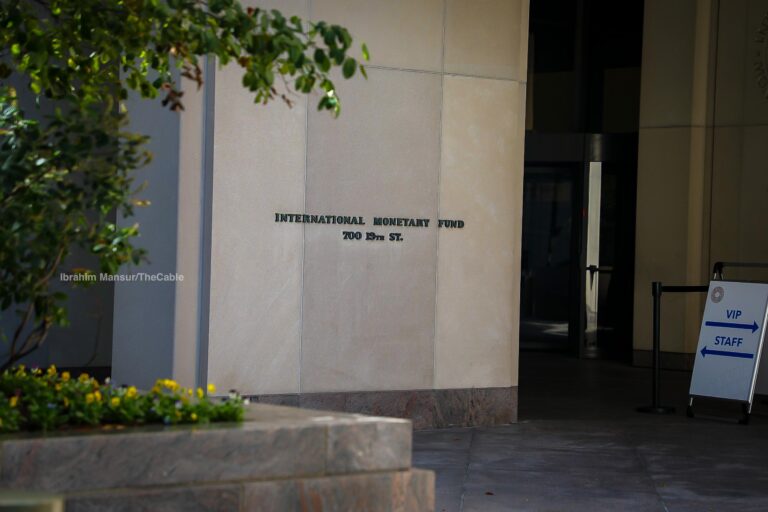
The International Monetary Fund’s (IMF) has projected that Nigeria will spend more than half of its revenue on debt servicing in 2026.
The projection is contained in the International Monetary Fund’s (IMF) latest country assessment, which estimates that the federal government’s interest payments will consume 53.7 percent of revenue in 2026, up from 53.2 percent in 2025 and 40.8 percent in 2024.
The IMF expects the interest-to-revenue ratio to ease marginally to 52.4 percent in 2027.
Also, IMF projected improvements in inflation and external reserves, forecasting average inflation of 16 percent in 2026, while gross international reserves are expected to rise from $40.2 billion in 2024 to $58.1 billion in 2026 and $62 billion in 2027.

‘NIGERIA’S DEBT IS SUSTAINABLE, BUT DEBT-SERVICE BURDEN IS A CONCERN’
Speaking on ARISE Television on Tuesday, Christian Ebeke, IMF resident representative for Nigeria, said the country’s debt remained sustainable and the risk of sovereign debt distress was moderate.
“Our latest assessment in the Article IV that we just published on June 9 basically concludes that Nigeria’s debt is sustainable. And second, the risk of sovereign stress is actually moderate. So we don’t see Nigeria as a high-risk debt-distressed country,” Ebeke said.
He said Nigeria’s debt-to-GDP ratio, which remains in the mid-30 percent range, compares favourably with many peer countries, adding that Nigeria’s debt portfolio benefits from a balanced mix of domestic and external borrowing and relatively long maturities.
According to Ebeke, the bigger concern is the amount of revenue being used to service debt.
“We actually estimate that in 2025 to 2028, the interest-to-revenue ratio, how much the federal government pays out of the tax it collects, is actually about 50 percent,” he said.
“When you have more than 50 percent of your tax collection devoted to repaying interest on your federal government debt, it leaves you very little room to actually pay for health, education, cash transfer, including security.”
Ebeke said the IMF’s focus remains on helping Nigeria strengthen domestic revenue mobilisation through effective implementation of recently enacted tax reforms.
He said the IMF’s priority is to support efforts aimed at strengthening Nigeria’s domestic revenue mobilisation while taking into account prevailing economic challenges, including high inflation, widespread poverty and food insecurity.
Ebeke added that the successful implementation and enforcement of the country’s new tax laws would be critical to improving government revenue and reducing fiscal vulnerabilities.(TheCable)
-

 Politics14 hours ago
If Buhari, A Retired General Could Not Wipe Out Insecurity, What Do You Expect Of Tinubu? – Yari
-
 Politics14 hours ago
Tinubu Campaign Spokesperson Breaks Silence On Wife’s Fresh Role At INEC
-
Politics14 hours ago
Stop sending money to relatives at home; tell them to vote for competent leaders – Obi tells Nigerians abroad
-
Business4 hours ago
I’d rather go to prison than lose my phone – Dangote
-
Business4 hours ago
FG targets ₦750tn capital market, seeks NNPC, NLNG listing
-
Politics14 hours ago
INEC Mum Over Rejection Of Tinubu Spokesperson’s Wife As Head Of Electoral Operations
-
News14 hours ago
FCT Residents Make ‘Tough’ Adjustments Over Rising Cost Of Living
-
 News4 hours ago
Tinubu Extends Tenures Of Immigration, Prison CGs