News
UCH: A 69-Year-Old Hospital Living In Its Shadows

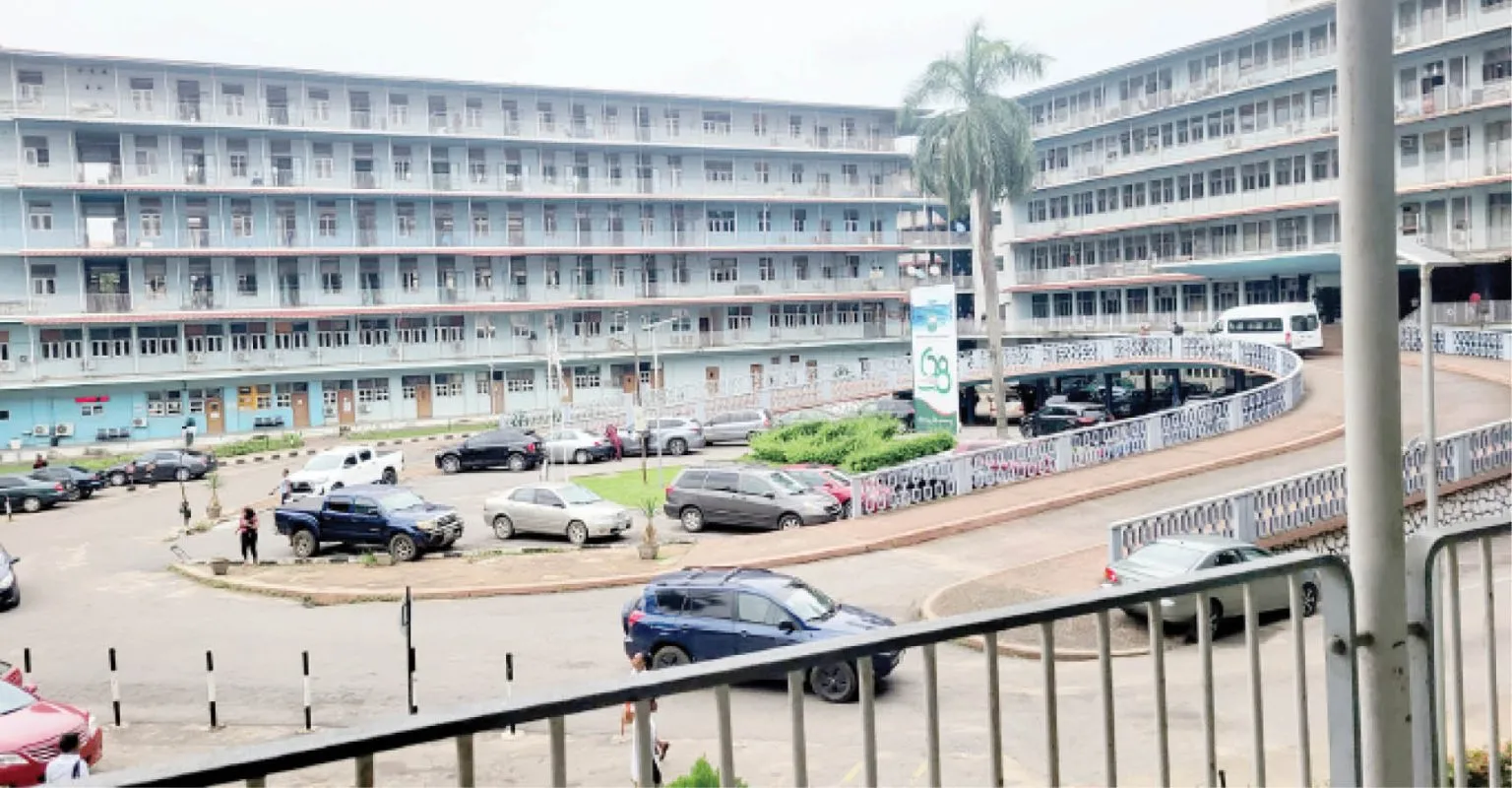
By November this year, the University College Hospital (UCH), Ibadan, Nigeria’s first teaching hospital and one of the country’s most prestigious centres of medical excellence, will mark 69 years of existence. Yet the institution is battling infrastructure decay, chronic power outages, manpower losses and years of underinvestment, raising concerns about the future of a facility long regarded as a cornerstone of Nigeria’s health care system, Weekend Trust reports.
A plaque at the entrance of the hospital’s complex recalls its origin. The foundation stone of the University College Hospital, Ibadan, was laid on November 18, 1954, by the then governor-general of Nigeria, Sir John Stuart Macpherson.
It reads: “UNIVERSITY COLLEGE HOSPITAL, IBADAN. This Foundation Stone was laid by His Excellency, the Governor-General of the Federation of Nigeria, Sir John Stuart Macpherson, Knight Grand Cross of the Most Distinguished Order of St Michael and St George, on the Eighteenth day of November in the year Nineteen Hundred and Fifty-Four.”
On arrival at the hospital, the atmosphere evokes memories of a glorious past. The sprawling architectural masterpiece still stands majestically against the skyline, a testament to the vision of its builders.

Beneath the imposing façade, however, lies a troubling reality. Weather-beaten walls, peeling paint and ageing structures tell the story of decades of inadequate maintenance and delayed upgrades. The iconic twin towers and expansive hospital blocks remain enduring symbols of a golden era but also reminders of the widening gap between UCH’s celebrated legacy and its present challenges.
Established in 1957 with an initial capacity of 500 beds, the UCH was created to provide local clinical training for medical students and health care professionals in Nigeria and the West African sub-region. Over the decades, it evolved into one of the country’s foremost referral and training centres, producing generations of doctors, nurses and specialists who have served across Nigeria and beyond.
The UCH continues to function as a tertiary referral centre, providing specialist health care services, postgraduate residency training and continuing professional education. It remains an essential clinical learning environment for students from the College of Medicine, University of Ibadan.

The hospital’s growth reflects its role at the forefront of tertiary health care delivery in Nigeria, with a current bed capacity that approaches or exceeds 1,000 beds in many records.
The establishment of UCH had lasting effects on Nigeria’s health care and education sectors. By providing local clinical training for medical students, the UCH reduced reliance on sending students abroad for clinical experience and helped to develop a large cadre of locally trained doctors, nurses and allied health professionals.
The hospital’s graduates have served across Nigeria’s health system and beyond, contributing to health care delivery, research and leadership roles. The hospital also became a referral centre for complex medical cases, research and specialist services.
UCH’s legacy includes the establishment of academic departments and research programmes that have contributed to medical knowledge and practice both locally and internationally. The hospital’s integration with the University of Ibadan has fostered research into diseases endemic to the region, and its graduates helped shape medical practice in Nigeria after independence.
Once enjoyed medical tourism
There are reports that in the late 1950s and 1960s, the UCH was a top medical centre in Africa, as the facility attracted patients from around the world, including members of the Saudi royal family.
King Faisal of Saudi Arabia, along with other members of the Saudi royal family, were said to have received medical treatment multiple times at the UCH when it was sought after for medical excellence in West Africa and around the world.
In 2020, former Minister of State for Health, Olorunnimbe Mamora, recalled that in the 1950s and 1960s, members of the Saudi royal family travelled to UCH for treatment, making Nigeria a beneficiary of medical tourism.
“In the 1950s and 1960s, Nigeria benefited from medical tourism. Some people travel abroad for treatment to get equipment or facilities that are not in the country. We need to ensure that we have facilities on the ground that will make our citizens stay back home for treatment. These include physical infrastructure, personnel and equipment.
“Our duty as a country is to put in place proper medicare facilities to take care of the health of citizens.
“Once these things are provided, medical tourism will be reduced, and it will make our hospitals attractive,” he said.
Hospital battles for survival
Nearly seven decades later, many observers believe the institution is struggling to maintain the standard that once made it a destination for patients across Africa and beyond.
When Weekend Trust visited the hospital, it was observed that several sections, including the emergency unit, intensive care areas, utility rooms, laboratories, pharmacy and medical record departments and the facility’s main structures, remain strong, but signs of ageing were visible. The paints have faded, surfaces deteriorated, and many facilities appear overdue for major rehabilitation.
A medical doctor at the hospital who spoke on the condition of anonymity said infrastructure remained one of the biggest challenges of the facility.
“We are still using outdated equipment. If other hospitals have functional MRI machines and UCH does not, people will naturally go elsewhere,” he said.
Electricity crisis
Perhaps inadequate power supply remains the most serious challenge confronting the hospital.
For more than 100 days in 2025, the UCH was disconnected from the national grid by the Ibadan Electricity Distribution Company (IBEDC) over accumulated debts running into billions of naira. During the period, the hospital relied heavily on generators, inverters, rechargeable lamps and solar-powered devices to keep essential services running. And medical workers and patients alike felt the impact.
The crisis resurfaced in March when labour unions embarked on a five-day warning strike over alleged electricity rationing within the hospital despite the restoration of grid supply.
The Council of UCH Union Leaders (CUUL), representing 11 unions, warned that surgeries were being cancelled, laboratory services disrupted and revenue lost because of inadequate power supply.
According to the unions, health care workers were being forced to operate under conditions that compromised patients’ safety.
They outlined the dire consequences of the power crisis, saying: “Surgeries are cancelled routinely, critical laboratory results are delayed, medications and vaccines are lost due to broken cold chains, and patients are being turned away.
“A teaching hospital in 2026 is being forced to operate like a facility from a bygone era. Health care workers are being forced to operate under conditions that are violating basic medical safety standards.
“Severe water shortages, increased risk of hospital-acquired infections, surgeries conducted with headlamps and laboratories handling hazardous samples without functional fume cupboards are just a few examples of the threats to life.”
During a visit to the hospital, notices pasted on walls urged staff to switch off electrical appliances after work to reduce energy cost. While many departments now rely on solar power, electricity remains inadequate for several specialised services.

Darkness at medical museum, lift deserted
When our correspondent visited the hospital on Tuesday afternoon, the Medical Museum, located on the fifth floor of the building and housing the Office of the Chief Medical Director (CMD), was in complete darkness due to lack of electricity supply.
It was gathered that the museum, which houses a collection of medical artefacts, was established not only for educational purposes but also to attract visitors and promote medical tourism within the hospital.
The facility is open to visitors only on weekdays and remains closed during weekends and public holidays.
When our correspondent attempted to access the museum, a female attendant said entry required prior approval from the hospital management.
“As a journalist, you have to write to the CMD first to request access to the museum. After that, you will pay N500,” she said.
Our correspondent also observed that the patients’ lift within the UCH complex was not operational throughout the period spent at the hospital despite the steady flow of patients, relatives and health care workers moving through the building.
The lift area remained largely deserted as most visitors relied on the staircases to access different floors of the complex.
An inscription on the commissioning plaque showed that the patients’ lift project was completed in 2011. It reads: “The New Patients Lift Project Commenced: 2010. Project Completed: 2011; Chairman, Board of Management, Olor’ogun Dr S.F. Kuku; Chief Medical Director, Prof Abiodun Ilesanmi.”
Like many health institutions in Nigeria, UCH has been severely affected by migration of health care workers abroad. In 2022, the hospital’s Chief Medical Director, Professor Jesse Otegbayo, disclosed that more than 600 health workers resigned between 2020 and October 2021.
“Every week, I receive about 15 resignation letters,” he said at the time, warning that the consequences would be felt across the health sector.
The trend has continued, placing additional pressure on the remaining workforce.
Terrible toilets, falling ceilings
Across several wards, particularly in the Southwest and Southeast wings of the complex, many toilet facilities were found in poor condition, emitted foul odours due to inadequate cleaning and lack of running water. In some cases, water was provided in buckets and plastic containers for patients and visitors.
Those unable to use the facilities often resort to open spaces around the hospital.
The situation has also encouraged the emergence of private sanitation services within the premises, with users paying between N200 and N300 to access toilets and bathrooms.
“The toilet is a mess. Many people can’t use it, so they have no choice but to go somewhere they will have to pay,” Mrs Fausat Adewunmi told Weekend Trust.
Exposed ceilings and visible wiring were also observed in parts of the outpatient clinic area, highlighting the deteriorating condition of some sections of the hospital.
Battle for bed spaces
Another major challenge confronting the hospital is inadequate bed spaces.
Although the teaching hospital has expanded significantly since it opened with 500 beds in 1957 and later moved to 1,000, demand has continued to outstrip capacity.
At the Accident and Emergency Unit, it was observed that many patients who arrived continuously in ambulances, private vehicles and commercial tricycles waited for hours before admission.
The atmosphere outside the unit was crowded, with anxious relatives sitting on pavements and walkways while hoping for available beds.
Mrs Fausat Adewunmi said she waited for more than three hours before her 91-year-old mother was admitted. “We arrived around 3pm, but my mother was not admitted until some minutes past 6pm. Some patients were even asked to return the following day,” she narrated.
Pointing towards vehicles lined up outside the emergency unit, she added: “All those private cars and Keke Maruwa you see there have patients inside waiting to be allocated bed spaces at the emergency ward.”
A middle-aged man with a broken arm also expressed frustration after spending hours waiting for treatment. He said, “I have been here since morning and nobody has attended to me. We were told to go for a scan and we did, but nothing has happened since then. They are not even giving us any explanation.”
As night falls, many relatives sleep on cardboard sheets or improvised bedding within the hospital environment. Some told Weekend Trust that they paid between N1,000 and N2,500 for spaces to spend the night.
Lamenting the situation, Mrs Adewunmi said: “UCH should be called Kosofe Local Government because nothing is free here; not even the open spaces where relatives sleep.”
Tale of woes
Mrs Adewunmi acknowledged the dedication of many health care workers but said accessing care could be exhausting, adding, “UCH is not for the faint-hearted.”
According to her, delays in treatment, inadequate bed spaces and additional expenses have become part of the experience for many patients and their relatives.
She recalled an altercation with hospital officials who wanted her to leave her elderly mother unattended.
“I clashed with them this morning when they wanted to send me out of the ward. I told them that I would leave on one condition: If my 91-year-old mother dies, the medical workers should be ready to deliver her corpse to my house.
“They later realised that I had come with an elderly patient and eventually apologized,” she noted.
Mrs Adewunmi argued that while the hospital still retains some of its reputation for quality health care, many of the standards that once distinguished it have declined.
“There was a time when patients received almost everything they needed, including gloves and surgical materials. Patients even received free meals. People were happy. Pregnant women looked forward to delivering their babies here. But that doesn’t happen anymore. Now, you pay for almost everything,” she said.
Pastor Joseph Ayobami Salako, who spent about 9 hours at the emergency unit while seeking treatment for a patient, also wondered whether the institution operated according to its age (approaching 70 years of existence). “Based on that age, the facility is low,” he said.
While acknowledging the efforts of health workers, he said facilities and emergency response systems required significant improvement. “The patient we brought to the emergency ward was attended to, but some of the equipment available were not what we expected. The workers are trying their best with what they have,” he said, adding that emergency patients should receive faster attention upon arrival.
When contacted, the Public Relations Officer of UCH, Funmi Adetuyibi, declined to comment on the findings, insisting that only the management could speak on the matter.
Our correspondent sent her a message on Thursday outlining the findings and requesting the hospital’s position on how the challenges were being handled.
However, Adetuyibi asked the reporter to call her the next day, Friday.
When contacted again on Friday, the UCH spokesperson said she had sent the questions to the management and was awaiting a directive on the response.
“The CMD is not around. He is currently attending the CMDs’ meeting in Ebonyi.
“I will give you a call immediately he responds,” she said.
When informed that the report could not wait because it was due for publication the following day, Adetuyibi said, “If your report has to go, I can’t say you shouldn’t publish it, but I can’t give a response when the management is telling me they will revert”.
‘UCH still delivers quality care’
Despite the challenges, some patients maintained that the teaching hospital remained one of Nigeria’s best health care institutions.
Mrs Mujidat Amuda, a long-time patient, described the hospital as one of the country’s leading centres for specialist care. According to her, consultants are often directly involved in the treatment of vulnerable patients, particularly children and the elderly. She, however, acknowledged that lack of adequate staff and electricity problems affected operations.
According to her, some departments now limit the number of patients they attend to daily due to manpower constraint. And power outages continue to affect laboratory tests and specialised procedures.
Despite these difficulties, she said the hospital remained a preferred destination for many Nigerians seeking quality health care.
Nigerians blame government, management
Amid growing concerns over the condition of the hospital, some Nigerians have blamed both the federal government and successive hospital administrations for its decline.
The views were expressed in reactions to a Facebook post by Historical Nigeria last year, which highlighted the challenges facing the country’s premier teaching hospital.
One commenter, Folarin Aje, attributed the gradual deterioration of the hospital largely to inadequate government funding and policy decisions, which he said had weakened the health sector.
He said the establishment of additional teaching hospitals across the country shifted attention from the UCH, while poor funding, decaying infrastructure and inadequate remuneration for health workers compounded the institution’s challenges.
“There was a belief that UCH had already attained its optimum level, so attention was steadily diverted from the institution through poor funding, infrastructural decay and poor remuneration for health personnel.
“These encouraged the exodus of seasoned health workers to countries like Saudi Arabia in search of better pay and a more conducive working environment.
“The health sector, like many other sectors, was not spared; and we are experiencing the effects today,” he said.
Another commenter, Agbafor Okechukwu, argued that while underfunding remains a challenge, hospital managements over the years must also share responsibility for the institution’s woes.
He contended that mismanagement of available resources and alleged contract irregularities within public institutions contributed significantly to the poor state of public hospitals and universities.
“While I agree that public institutions are underfunded, I do not think the management of these institutions should be completely absolved of responsibility.
If the little resources available were sincerely deployed for public good and institutional development, many of these challenges would not be as severe as they are today.
“There is a deeper problem relating to accountability, patriotism and service delivery within many public institutions,” Okechukwu wrote.
UCH mirrors Nigeria’s health care challenges – Expert
The immediate past president of the Association of Resident Doctors (ARD), UCH chapter, Dr Gboyega Ajibola, said the hospital’s fortunes were closely tied to the broader state of Nigeria’s health care system.
“UCH is a federal tertiary health institution, which means that its funding basically comes from the federal government. As a federal institution, it cannot be more than the level of the country. It cannot be more than the level of health care we have. The UCH is a reflection of Nigeria.” he noted.
Ajibola lamented the low budgetary allocation to health care despite commitments made under the Abuja Declaration.
“African countries agreed to dedicate 15 per cent of their budgets to health. Since then, what percentage of the budget has been dedicated to health in Nigeria? I am not sure it has even attained six per cent,” he said.
He, however, maintained that despite the challenges, UCH still possesses some of the country’s finest health care professionals.
“UCH has trained teachers of other professionals in this country. The training you receive in UCH is one of the best ever,” he noted.
Ajibola described electricity as the lifeblood of health care delivery. “Health care delivery is only as good as the electricity that powers it. Health care cannot run in darkness. Power is non-negotiable. Electricity powers clinics, theatres and labour wards. You cannot do anything in a theatre without electricity,” he added, saying that virtually every aspect of hospital operations depends on electricity.
On manpower crisis, Ajibola said the migration of health care workers had continued to affect service delivery.
“The Japa syndrome is still very much here with us. Indeed, we lose people every day in the UCH,” he noted, citing the Department of Medical Microbiology as an example.
“Three to four years ago, the department had 13 resident doctors, but right now, they are not more than three,” he said, adding that similar situations exist across departments, increasing pressure on the remaining workforce and affecting care for patients.
He urged the government to prioritise health care funding, improve infrastructure and strengthen welfare packages for health workers.
“If we have more allocation, if the government rightly puts money where its priority is, if we have energy rebates, and if health workers are appropriately paid, we would have an overhaul of the system.
“Work must be seen to pay the worker. If it does not, the worker will migrate to where it does,” he noted.
A medical student, Fagbe Fisayo Israel, echoed similar concerns. While acknowledging that UCH still possesses some modern facilities and dedicated professionals, he said many of its systems and equipment required upgrade.
“There are some few new ones, but most of the ones that are available are old. They are trying their best to maintain it, but I can tell you that it is not perfect,” Israel said. (Daily trust)








-

 Business4 hours ago
Muslim group urges Nigerian Govt to force fuel price down below N700 per litre
-
Metro4 hours ago
PHOTOS: Nollywood Actor Joins US Army
-
News4 hours ago
FG Moves to Track Ransom Payments Through Cashless Reforms
-
Politics4 hours ago
Court order to derecognize NDC judicial banditry – Reps Caucus
-
 Metro4 hours ago
‘I have no regrets’ – Abacha’s most feared officer Frank Omenka speaks after 30 years of silence
-
Sports4 hours ago
Dembele hits hat-trick as France dismantle Norway
-
News4 hours ago
Seven Boko Haram, ISWAP commanders arrested returning from Mecca at Katsina Airport
-
World News3 hours ago
US strikes Iran after attack on cargo ship in Strait of Hormuz