Opinion
Lagos Is Not a Captured State: A Response to Steve Osuji’s “What Can Kadiri Hamzat Do?

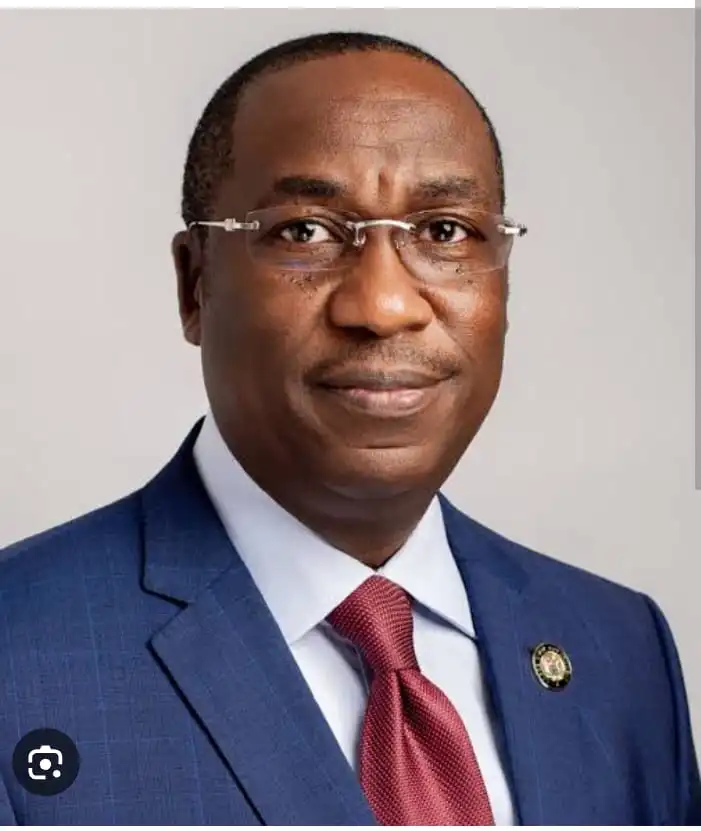
By AbdulAzeez AbdulAzeez Olumide
Opinion writing serves democracy best when it challenges assumptions without becoming captive to them. Steve Osuji’s recent commentary, “E KOH E RE: What Can Kadiri Hamzat Do?”, raises what at first glance seem like legitimate questions about leadership and governance in Lagos State. However, as the piece unfolds, the author attempts a complex rhetorical dance. On one hand, he cannot help but admire the stellar credentials of the Deputy Governor of Lagos State, Dr. Kadiri Obafemi Hamzat (KOH), correctly describing him as “well-read,” a “technocrat,” and “arguably the best man for the Lagos top job come 2027.” On the other hand, the author quickly retreats into tired, speculative tropes of political fatalism, operating under the assumption that institutional synergy must equal institutional weakness.
Mr. Osuji’s premise relies on a classic fallacy: that effective governance must always look like a chaotic, scorched-earth war between leaders and their political foundations. Lagos has chosen a different path, a path of continuity, consensus, and institutional stability. To suggest that its leaders function as mere “puppets” is not just an oversimplification of complex administrative systems; it completely ignores the deep institutional progress achieved over the last two decades.
The Flawed Anatomy of the ‘Puppet’ Narrative

The author laments the role of the Governor’s Advisory Council (GAC), turning a standard organ of political advisory and consensus-building into a sinister “GAG.” However, in a federal entity where executive-legislative clashes routinely paralyze governance in several states, the political stability of Lagos is an asset, not a liability–indeed, it is an indispensable foundation for sustainable growth.
To suggest that a leader with a PhD in IT and Computing, backed by decades of deep public-sector experience, would be a “robot” is an insult to intellect. Governance in a megacity is inherently collaborative, requiring constant coordination between ministries, technical committees, and civil service structures. Reducing this massive, multi-layered administrative machinery to “control from above” deliberately misreads how modern public administration works.
The Hard Receipts: A Track Record of Formative Reform
Osuji asks what Dr. Hamzat can do, as if the Deputy Governor is an unknown variable entering the Alausa Roundhouse for the first time. The reality is that KOH has spent decades driving the physical and digital architecture of modern Lagos through highly demanding executive roles, rather than ceremonial positions.
As Commissioner for Science and Technology, Dr. Hamzat pioneered the implementation of enterprise-level digital governance systems, including Oracle ERP, which modernized payroll management, integrated data across ministries, and stripped away the massive inefficiencies that once choked public service delivery. Transitioning later to the Ministry of Works and Infrastructure, he was central to the planning and execution of key economic corridors and iconic engineering feats, including the structural frameworks that support the Lekki-Ikoyi Link Bridge.
More recently, as Deputy Governor, he has been directly co-piloting the implementation of the state’s strategic blueprint, the THEMES+ Agenda. By focusing his technical oversight on multi-modal transportation, health, education, and technology, he has turned abstract policy into daily realities for over 20 million residents.
The Shenzhen Fallacy: Apples and Hyper-Metropolises
Osuji invokes the transformation of Shenzhen, China, since 1979 to diminish Lagos, completely ignoring fundamental macroeconomic and geopolitical realities.
Shenzhen’s meteoric rise was funded by the sovereign weight of the Chinese Central Government as its premier Special Economic Zone, backed by unmatched national fiat
Lagos, conversely, has achieved its mega-city status largely as a subnational entity, navigating decades of macroeconomic headwinds, currency fluctuations, and a historic lack of federal support before 2023. Despite this, Lagos remains the fifth-largest economy in Africa and the continent’s premier hub for tech, finance, and entertainment. To call it a “slum in comparison” is a disservice to the resilience of Lagosians and the deliberate policy frameworks making its growth possible.
The “Shut Down” Myth vs. Modern Milestones.
The assertion that the state “shut down” under the current administration of Governor Babajide Sanwo-Olu and Dr. Hamzat is utterly decoupled from reality. Over the last few years, the administration has delivered generation-defining infrastructure projects that past generations only dreamed of.
Urban transit has been completely transformed through the operationalization of both the Blue Line and Red Line Rail projects. On the coastline, the successful completion and launch of the Lekki Deep Sea Port has positioned Lagos as the premier maritime hub in West Africa. Beneath the streets, the aggressive deployment of thousands of kilometers of unified fiber-optic duct infrastructure continues to power and connect the silicon valley of Africa.
The Security Paradox.
In a telling conclusion, the author pivots from criticizing Lagos to highlighting horrific security challenges in Zamfara, Kwara, and Oyo.
While these national security challenges are deeply tragic, Osuji inadvertently highlights exactly why the “Lagos Model” works. Thanks to the proactive governance of successive administrations and the institutionalized Lagos State Security Trust Fund (LSSTF), Lagos remains an oasis of relative peace, commercial viability, and security in a turbulent region.
The last dance: Governance by Design, Not by Accident.
Mr. Osuji’s anxieties about 2027 are born out of speculative political engineering rather than objective governance analysis.
Lagos does not succeed by accident, nor does it progress through lone-wolf actors who burn down the structures that brought them to power. It succeeds through an intentional blend of technocratic competence and political consensus.
Perhaps the greatest weakness in Mr. Osuji’s argument is its underlying assumption that institutional continuity necessarily prevents visionary leadership.
History suggests otherwise.
Many of the world’s most successful governments have been built upon stable institutions, policy continuity, and experienced public servants who understood that sustainable development requires consistency as much as innovation.
Come 2027, if the people of Lagos entrust Dr. Kadiri Obafemi Hamzat with the mantle of leadership, he will govern not with his hands tied, but with his feet firmly planted on a solid, unshakeable foundation of institutional continuity.
Ultimately, if he is to be judged, he should be evaluated as every democratic leader ought to be: not by speculation about the system within which he serves, but by the quality of his leadership, the integrity of his decisions, and the tangible outcomes of his administration.
-

 Business22 hours ago
19 oil block licences to expire this year
-
Business21 hours ago
Dangote increases petrol price despite crude price decline
-
News22 hours ago
Governors spend N512bn on travels, offices
-
 News22 hours ago
States’ IGR soars 34% to N2.43tn despite economic hardship
-
Business22 hours ago
FG raises N7.62tn from bond market in eight months
-
Politics20 hours ago
Obi Camp Knocks Tinubu Over Absence From Key Events
-
Business20 hours ago
Crude imports by domestic refineries jump 151.5% in July — NMDPRA
-
Politics20 hours ago
2027: Repair Abandoned Bridge If You Need Our Votes – Kano Villagers Tell Politicians